
Cincinnati – The prevalence of employed adults with high levels of lead in their blood has fallen since the mid-1990s, according to a new NIOSH report.
NIOSH and 41 state health departments collected blood-lead level data on working adults from 1994 to 2012. The rate of adults with blood-lead levels equal to or greater than 25 micrograms of lead per deciliter of blood dropped to 5.7 employed adults per 100,000 in 2012 from 14 in 1994. Among adults with levels at or greater than 10 µg/dL, the rate fell to 22.5 in 2012 from 26.6 in 2010.
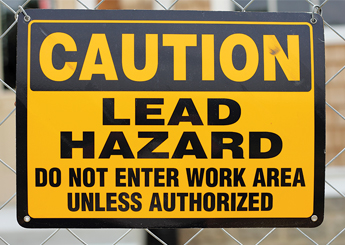
Most lead exposures are occupational in nature, according to the report. Between 2002 and 2012, occupational exposure accounted for nearly 95 percent of the annual proportion of blood-lead levels at or greater than 25 µg/dL in participating states.
OSHA’s standards for lead set a permissible exposure limit at no greater than 50 micrograms per cubic meter of air averaged over an 8-hour period. No safe blood-lead level has been identified, according to the Centers for Disease Control and Prevention.
The results were published Oct. 23 in CDC’s Morbidity and Mortality Weekly Report.