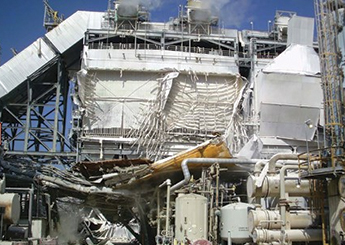
Torrance, CA – A series of process safety management deficiencies preceded an explosion that injured two workers at an ExxonMobil refinery in Southern California in February 2015, according to an investigation by the Chemical Safety Board.
CSB board members listened to investigators’ preliminary findings during a public meeting Jan. 13 near the site of the blast. After the presentation, an expert panel spoke about process safety management reforms within the state.
The chain of events before the explosion could offer lessons to other chemical facilities. Investigators said the explosion took place in the electrostatic precipitator, which had accumulated hydrocarbons over the course of several days. The blast sent large amounts of catalyst dust up to a mile away. Investigators said other debris slammed into scaffolding, barely missing a tank filled with tens of thousands of pounds of modified hydrofluoric acid.
“Hydrofluoric acid can pose a severe hazard to the population and environment if a release occurs,” CSB Chairperson Vanessa Sutherland said in a press release. “After HF acid vaporizes it condenses into small droplets that form a dense low-lying cloud that will travel along the ground for several miles and can cause severe damage to the respiratory system, skin, and bones of those who are exposed, potentially resulting in death.”