

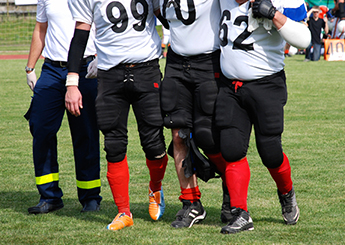
Toronto – A drop in temperature may lead to an increase in football-related concussions and ankle injuries, according to a recent study from St. Michael’s Hospital in Canada.
Researchers analyzed risk factors associated with the most common types of injuries among players in the National Football League between 2012 and 2014. In addition to climate factors, they analyzed how injury rates compared with different playing surfaces, travel times and game outcomes. Shoulder injuries were more common on natural grass surfaces than on synthetic turf, researchers said.
More significant injury rates existed in games played in 50° F or colder weather than in games played when temperatures were 70° F or warmer, researchers said.
Identifying injury risk factors could help protect players in the future, according to the researchers. They offered one possible explanation for higher concussion rates in colder weather: Equipment has less elasticity in colder temperatures, which may increase the force of impact when players hit the ground or each other.
“Early evidence suggests that musculoskeletal and repeated concussive injuries associated with football can cause long-term complications such as osteoarthritis and neurophysiological conditions,” Dr. David Lawrence, lead author of the study and a clinical fellow at St. Michael’s Hospital, said in a press release. “It’s important that we better understand these factors and prevent as many injuries as possible.”
The study was published in the March 31 edition of the Orthopaedic Journal of Sports Medicine.