

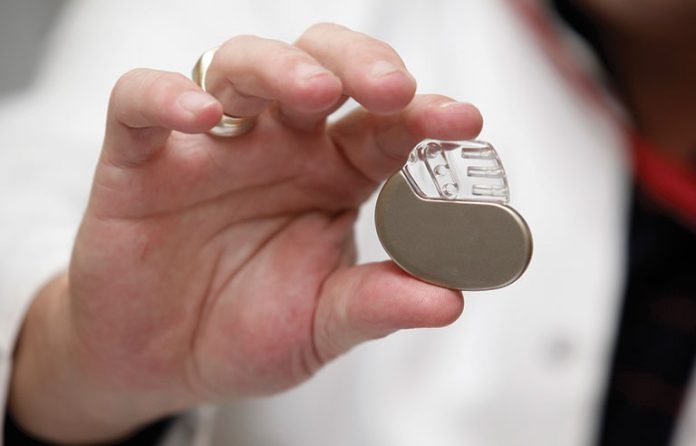
Aachen, Germany – People with pacemakers may experience a device disruption when standing very close to common household appliances and electrical tools, as a result of the electric and magnetic fields generated by these items, according to a recent study from the RWTH Aachen University.
Researchers examined the impact of electromagnetic field, or EMF, exposure on 119 patients with pacemakers at common power grid frequencies before increasing EMF until a pacemaker sensing failure was documented. Many cases showed that holding the EMF source greater than 12 inches from the patient reduced the risk of interference.
“Electromagnetic interferences with pacemakers in everyday life can occur, however, harmful interferences are rare using vendors’ recommended device settings,” study author and cardiologist Andreas Napp said in a press release. “Dedicated device programming is an effective measure to reduce the individual risk of interference. For example, doctors can reprogram pacemakers to a lower sensitivity to reduce EMF susceptibility.”
The researchers also found that additional measures may be required in environments with strong EMF exposure, including occupations in the manufacturing sector.
“Electromagnetic interference with pacemakers can result in bradycardia, or a slow heart rate,” Napp said. “The risk of interference depends on many different factors, such as the settings of the implant or strength of the field source.”
The study was published online Feb. 27 in the AHA journal Circulation.