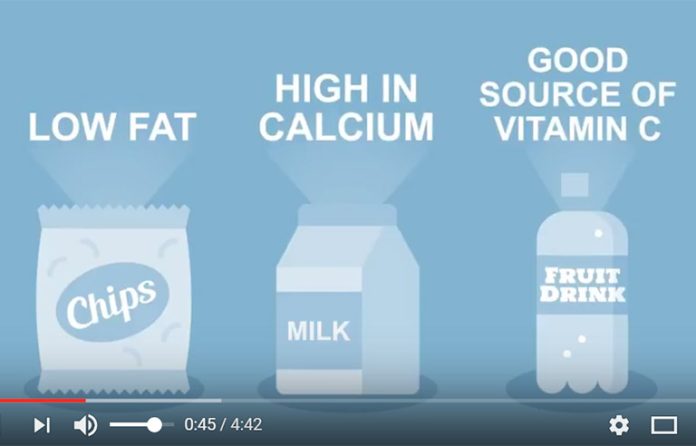
Chapel Hill, NC – A “no fat” or “no sugar” label on food packaging doesn’t necessarily tell the full story about an item’s nutritional quality, according to researchers from the University of North Carolina at Chapel Hill.
As part of a study, the researchers analyzed more than 80 million food and beverage purchases from 2008 to 2012. They found that 13 percent of the food items and 35 percent of the beverage items claimed to have a low content of fat, calories, sugar or sodium. However, products featuring at least one low-content item often included other, unhealthy ingredients and “may mislead [consumers] about the overall nutritional quality of the food,” the researchers said.
Take, for example, one popular cookie that features a “reduced fat” option: The product contains 4.5 grams of fat instead of 7 grams for the non-reduced fat option. However, both products still have 14 grams of sugar per serving.
Researchers also found foods with “low,” “reduced” or “no” nutrient descriptions that were less healthy than products featuring no such descriptions.
“Our results demonstrate that for packaged foods and beverages, purchases featuring ‘low’ or ‘reduced’ nutrients claims do not necessarily offer the better overall nutrition implied by the claim,” lead author Lindsey Smith Taillie said in a press release.
The study was published online March 15 in the Journal of the Academy of Nutrition and Dietetics.