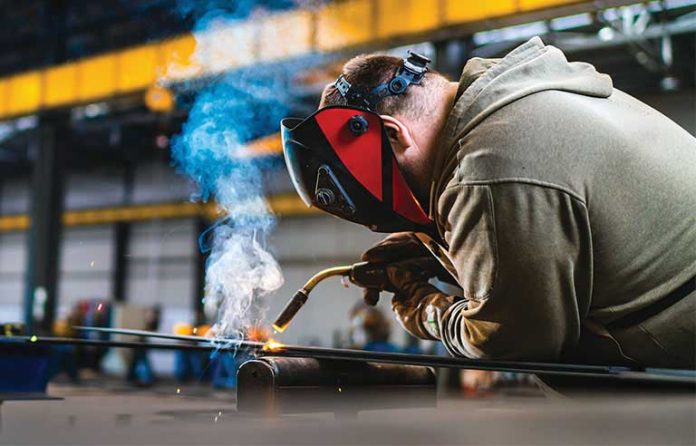
Overexposure to welding fumes and gases can cause both short-term and chronic health effects, resulting in dizziness, unconsciousness, illness and even death.
Workplaces where welding is performed must have proper ventilation to keep exposure to these airborne contaminants below permissible limits. The American Welding Society says proper ventilation depends on many factors, including:
- Size, shape and ambient conditions of the workplace
- Number and type of operations
- Contents of the fume plume
- Type and effectiveness of the ventilation
If you’re working near fumes, AWS recommends:
- Having a technically qualified person evaluate the exposure to determine if the ventilation is adequate.
- Wearing an approved respirator when ventilation is not adequate or practical.
- Opening windows, roof vents and doors to provide natural ventilation.
- Running fans – making sure to position the fan so the air is blowing away from workers.
Position of the welder’s head matters too. Workers should be reminded to reposition their work, their head or both to keep from breathing in welding fumes.