
Atlanta — Aimed at protecting wildland firefighters from exposure to COVID-19, a new website from the Centers for Disease Control and Prevention features answers to a series of frequently asked questions.
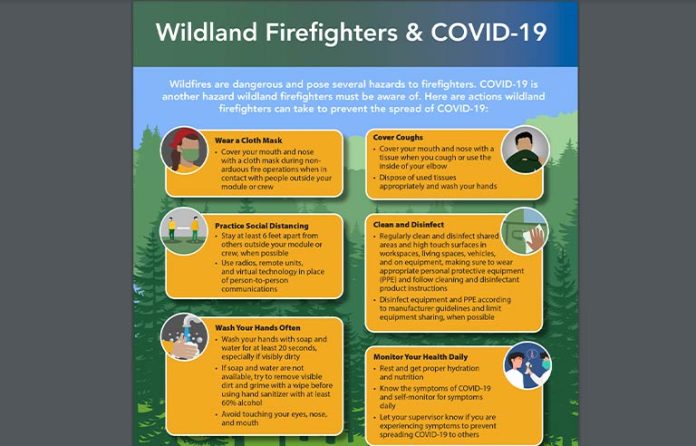
Four posters highlight key information from the answers to the 11 FAQs, which include:
- What steps can be taken by wildland fire personnel to prevent infection and spread of COVID-19? How can a crew, module or resource “isolate as unit” to better protect themselves?
- Should wildfire management agencies screen personnel for signs and symptoms of COVID-19?
- While traveling to fire assignments, what actions can wildland firefighters take to prevent infection and protect the communities that they will be traveling through?
- What about exposure to wildfire smoke and COVID-19?
- When should wildland fire personnel use cloth masks?
CDC notes that symptoms of COVID-19 and smoke exposure among firefighters can be similar, including coughing, sore throat, shortness of breath and difficulty breathing. If a wildland firefighter experiences these symptoms, the agency recommends communicating with a supervisor, self-isolating and following proper protocol.
When firefighting units travel and work together, it’s important that crew members “make an effort to operate and isolate as a unit.” Crews should avoid interchanging personnel or equipment between units, when possible, and limit the number of workers who interact with community members, such as when refueling vehicles and picking up supplies.
The FAQs and posters are available in multiple languages.