

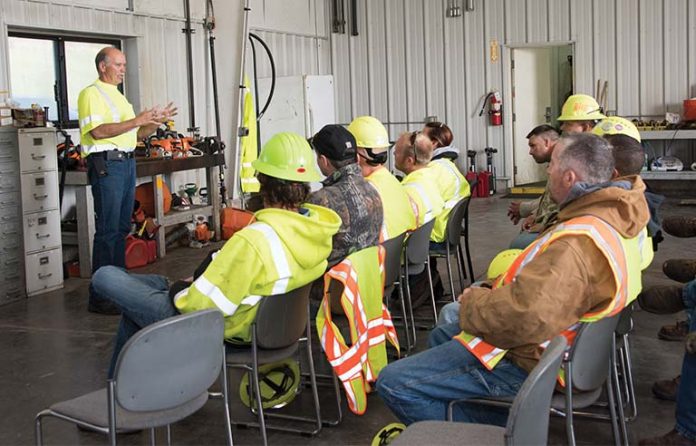
Without a doubt, the COVID-19 pandemic has changed the way many organizations deliver safety training.
That difference is apparent in the results of the 2021 Training Survey, conducted in March by Safety+Health. Around 57% of the 345 respondents said they are using virtual classroom or webcast training as at least one of their delivery methods. That’s up from 26% of the 473 respondents in the 2020 survey.
Similarly, the percentage of respondents who said they used online or computer-based training increased to 78 from 66 in 2020.
Instructor-led classroom training still took place with restrictions earlier this year, of course. Some of the respondents reported that their organization had to split their meetings to create smaller groups because of physical distancing protocol.
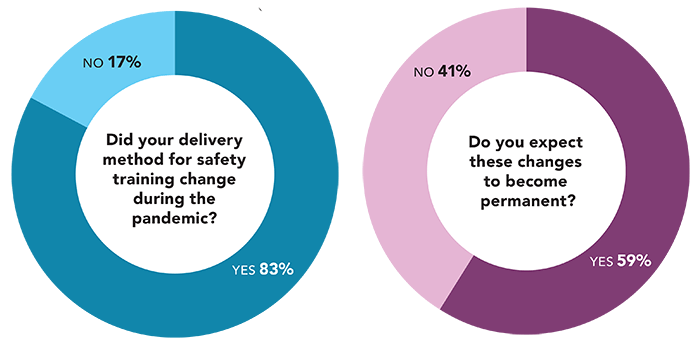
More than 2 out of 5 respondents indicated they don’t expect some or all of the changes that resulted from the pandemic to remain permanent. One respondent stated simply, “I am ready to do in-person training.”
Another wrote, “We will be trying to decrease the amount of virtual safety training we have been offering. Employees are already bombarded with too much online training for all of the requirements of their jobs.”
On the other hand, many respondents acknowledged that online or virtual training, despite some of its limitations, likely will be used more often than before the pandemic.
The benefits to organizations noted in the responses included lower cost (e.g., savings on travel) and the ability to reach more workers faster.
Virtual training “also allows more training more often,” one respondent wrote.
Others, however, wondered if “watching a screen” is as productive or as effective as in-person training. One challenge they noted is gauging whether trainees are paying attention or understanding what is being taught.
“(We) will likely use virtual meetings as a secondary option once we are able to meet in person,” one respondent wrote. “In-person meetings tend to encourage more interaction and discussion.”
Another took a philosophical approach on what the future might hold for safety training: “Nothing in the universe is static.”

|
Sponsored by Intertek Alchemy 
|
Next: 2021 Training Survey results: Types of training |
> |
Page 2 of 5
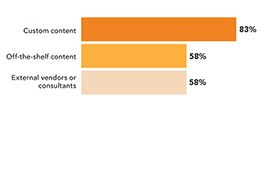
Types of training
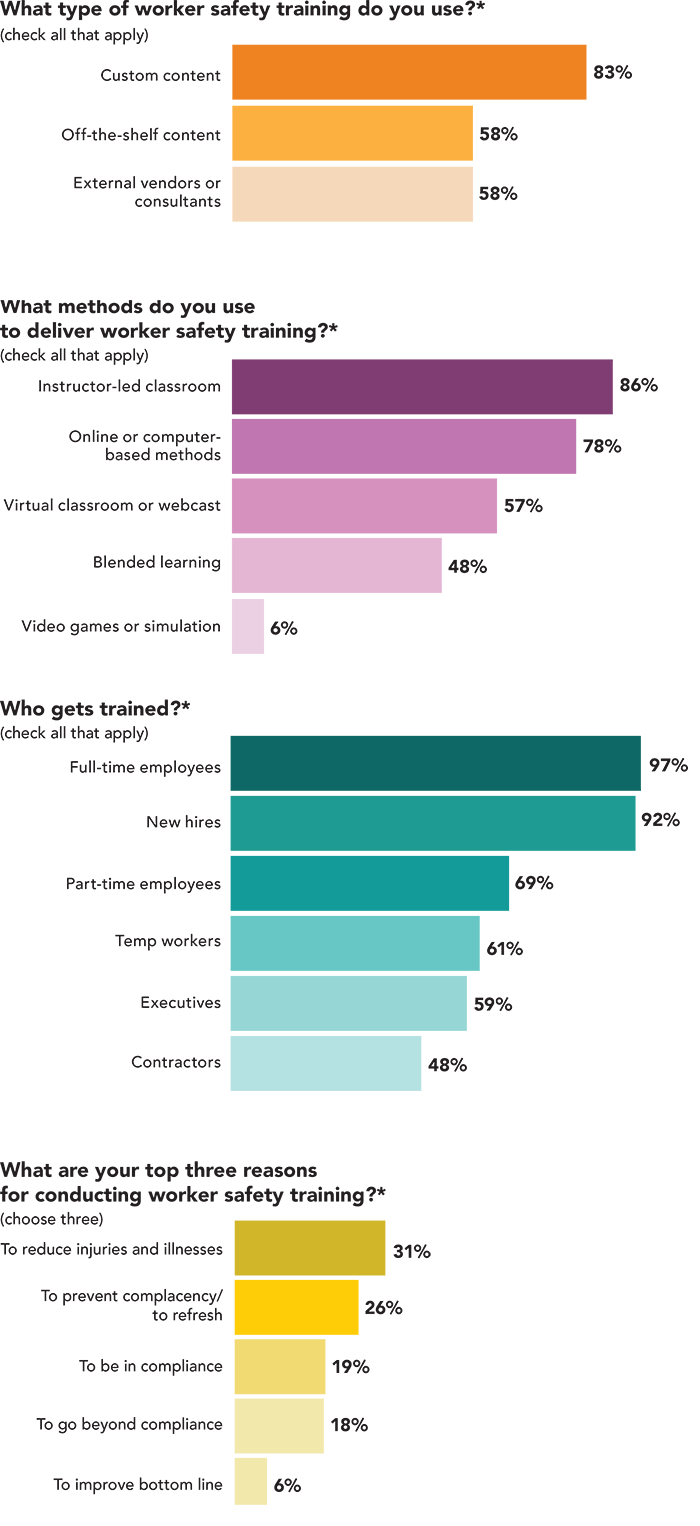
The Safety+Health 2021 Training Survey was emailed in March to 13,667 S+H subscribers; 345 responded, a 2.5% response rate.
*Denotes questions that allowed multiple responses. Percentages sum to greater than 100 because respondents could select multiple responses.
|
Sponsored by Intertek Alchemy
|
Next: 2021 Training Survey results: Training expenditure |
> |
Page 3 of 5
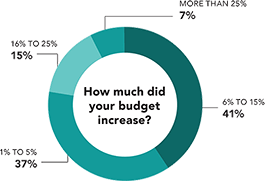
Training expenditure
Click image and magnify to enlarge
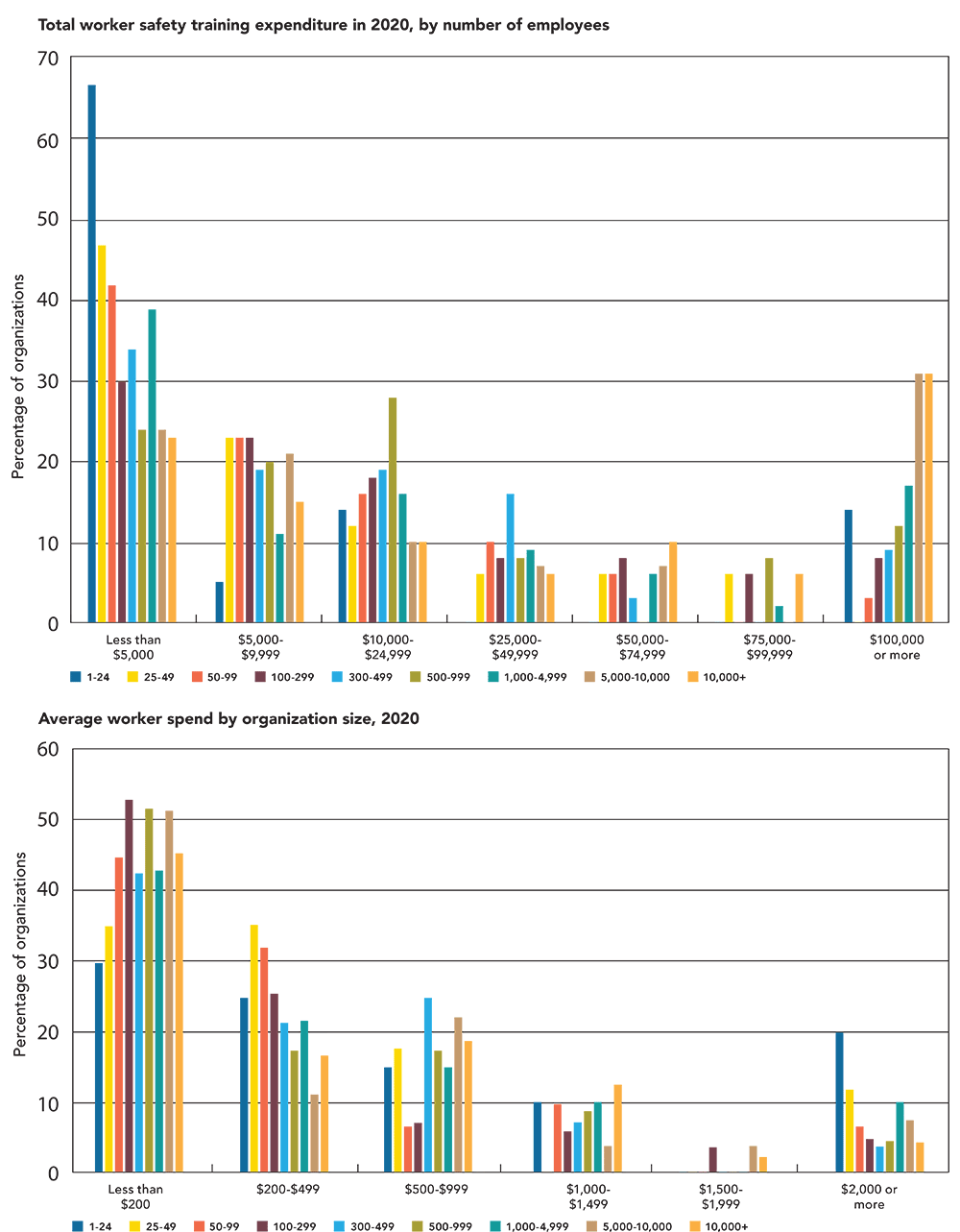
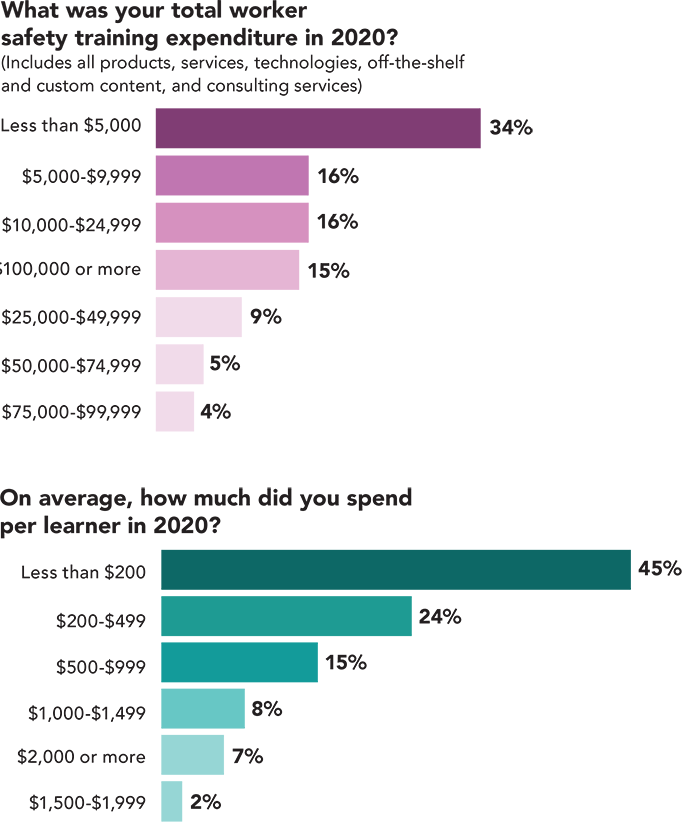
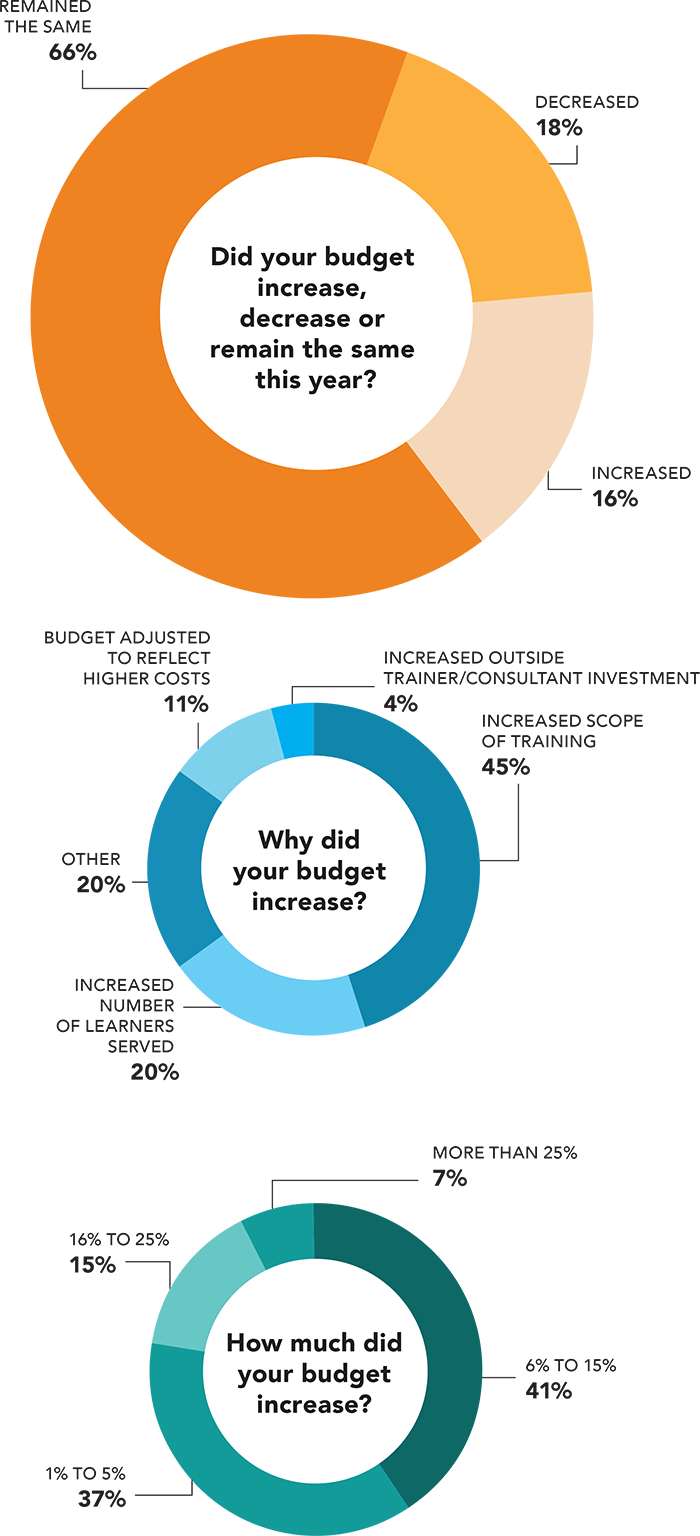
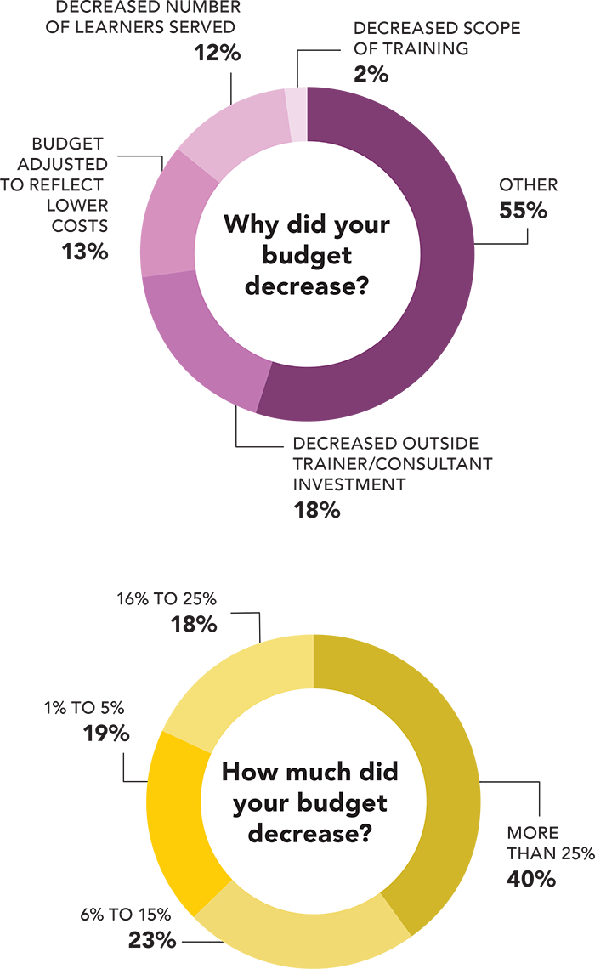
The Safety+Health 2021 Training Survey was emailed in March to 13,667 S+H subscribers; 345 responded, a 2.5% response rate.
|
Sponsored by Intertek Alchemy
|
Next: 2021 Training Survey results: About the respondents |
> |
Page 4 of 5
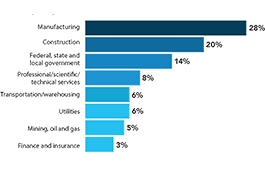
About the respondents
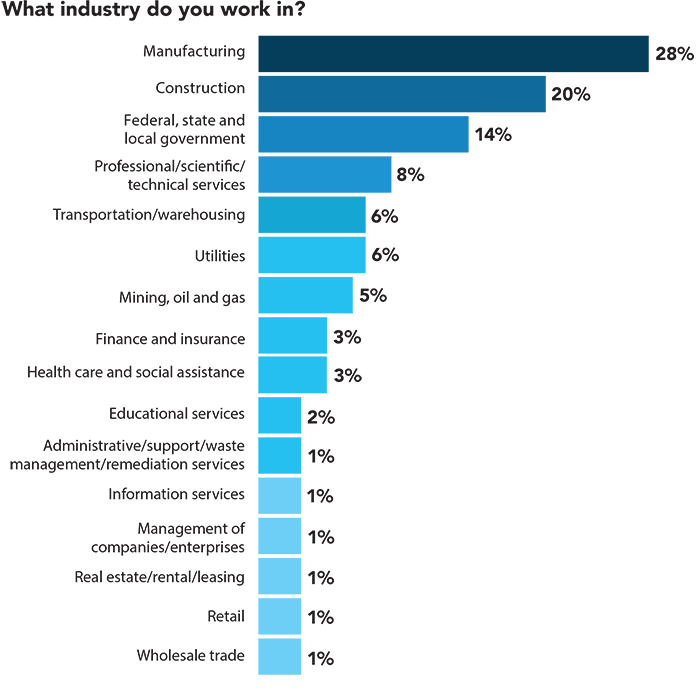
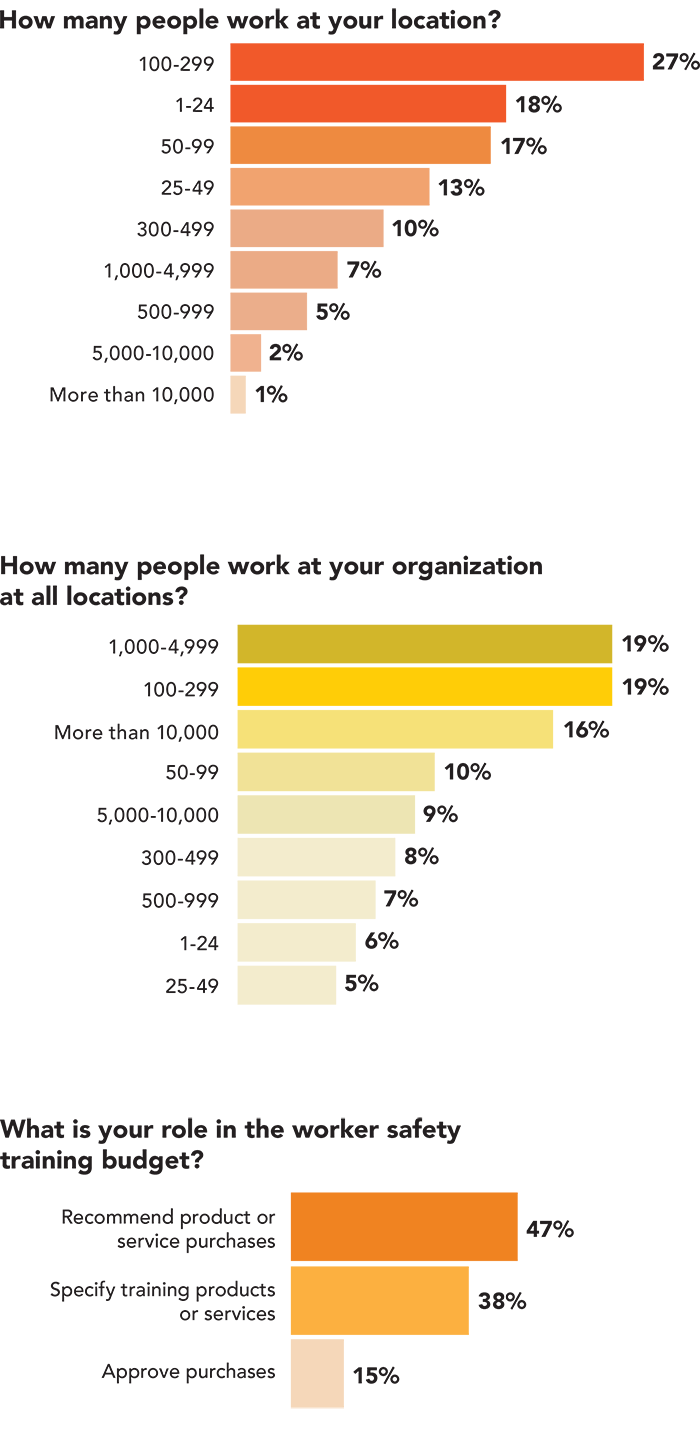
|
Sponsored by Intertek Alchemy
|
> |
Page 5 of 5
COVID-19’s effect on training
We invited respondents to tell us about how they trained workers during the pandemic. Most responses fell into three general categories. Here’s a sampling:
Continued classroom training but reduced class size
We had to hold several training meetings (classroom style) in order to maintain social distancing due to limited amount of space.
Instead of a large group, it is two or three people at a time.
We had to split our monthly employee safety training meeting into two meetings due to space and social distancing.
Reduced class size due to COVID – temporary change.
Smaller group learning is effective.
More classes with fewer individuals. I can’t wait to go back.
Switched to online training and will likely keep using it
I think the virtual training (Zoom, Microsoft Teams) will be here to stay. I don’t think that watching training on a screen is as productive as in-classroom/hands-on learning. But it is cost effective and requires less detail work to conduct a class.
There will be more virtual and blended trainings going forward.
Virtual training is efficient and allows more flexibility for different shifts.
We feel the virtual training will be a factor in the permanent changes to training. Currently we do not forecast the employees returning to a “normal” in-office schedule.
We have started virtual meetings and are going to continue with this process. It has been a positive for us all.
Zoom, video conference training, virtual auditing and the non-contact communications have shown more efficient ways to conduct some of the typical safety functions.
Zoom and GoToMeeting have showed us that distance learning is feasible and sometimes preferable in containing travel costs. I will be recommending a combination of both in-person and online once this pandemic ends.
We started using Teams meetings for interactive tele-learning. We will expand on the use of this medium as it is both cost effective and a great way to ensure employees are engaged in the learning process. It’s up close and personal – much like classroom training, but without the constraints and non-productive time of gathering a diverse group of field personnel, travel costs, etc.
Many instructor-led courses will probably remain web-based.
Live virtual training reduces travel, lodging and allows the employee to be back in their normal roles at the end of the training.
Developing our own online training solution. Developed in microlearning modules available on all platforms, this will reduce face-to-face interaction, reduce the time requirements on our safety personnel, increase our efficiency and reduce our cost. Training will be delivered to all employees and contractors and the modular design will allow us to pick and choose modules for refreshers.
Switched to online training but will go back to classroom
Once we are able, we plan to go back to in-person and hands-on training.
Instructors and participants both seem to enjoy live in-person training instead of Zoom meetings.
We moved to all online, but many of our staff did not find that forum to be beneficial.
Virtual training learners do not retain the knowledge compared to in-person training. We will be trying to decrease the amount of virtual safety training we have been offering. Employees are already bombarded with too much online training for all of the requirements of their jobs.
Hope we learn that video interaction, without first personal interaction, is not productive. Must get back to one-on-one communication.
We have been forced to provide more computer-based training with less in-person, hands-on group-based learning. It is hoped as the pandemic improves that we can conduct more classroom, instructor-led training to ensure that the subject matter is clearly understood and not just read and acknowledged.
Will eventually go back to classroom opportunities as it drives the majority of our effective training.
|
<< Return to the beginning of the article |
Sponsored by Intertek Alchemy |

