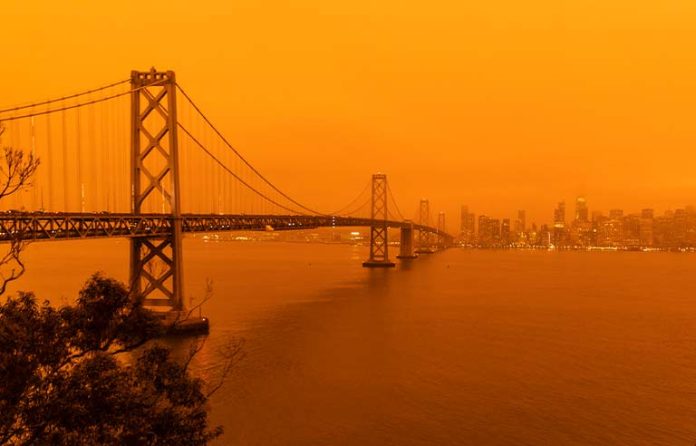
Oakland, CA — The California Division of Occupational Safety and Health – also known as Cal/OSHA – is reminding employers to protect workers from unhealthy air resulting from wildfire smoke.
According to a July 13 press release, more than 4,000 wildfire incidents have been recorded in the state this year and more than 100 structures have been damaged.
The state’s standard on protection from wildfire smoke requires employers to change the location of work, modify work schedules or provide proper respiratory protection (e.g., N95 respirators) during unsafe conditions.
When wildfire smoke affects a worksite, Cal/OSHA says employers must check the air quality index throughout a work shift for fine particles in the air – known as PM2.5 – which can cause coughing, wheezing and difficulty breathing, as well as worsen existing heart and lung conditions. Along with fine particles, wildfire smoke can contain harmful chemicals and gases.
If the AQI for PM2.5 is 151 or greater, employers also must:
- Inform employees of the poor air-quality level and the protective measures available to them.
- Provide training and instruction on the health effects of wildfire smoke.
- Implement modifications to the workplace, if feasible, to reduce wildfire smoke exposure.
- Require unvaccinated workers to wear face coverings if work is moved indoors, in accordance with Cal/OSHA’s emergency temporary standard on COVID-19.
If the AQI for PM2.5 surpasses 500 because of wildfire smoke, respirator use is required. Employers must implement a respiratory protection program and make sure workers use respirators.
More information and resources are available on Cal/OSHA’s Worker Safety and Health in Wildfire Regions webpage.