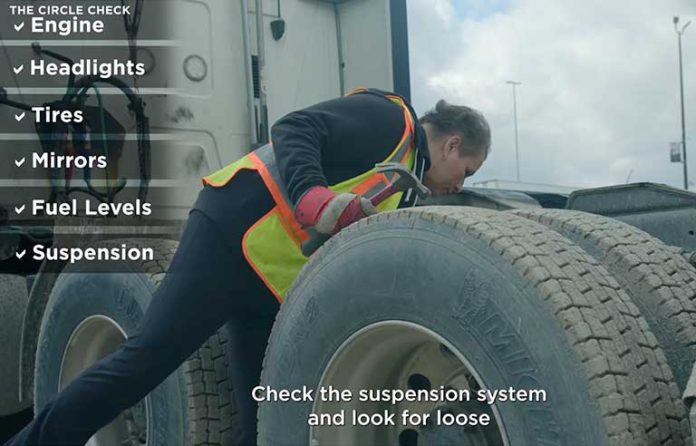
Toronto — Truck drivers “have to understand winter hazards and how they affect their vehicles and their ability to drive.”
That’s the message from the Infrastructure Health and Safety Association in a new video series on winter driving safety. Brad Bird, manager of health and safety education and accredited programs at IHSA, narrates the series, which examines four principles of safe winter driving:
- Being alert and prepared
- Inspecting your vehicle
- Maximizing traction
- Seeing and being seen
Wintry weather conditions can increase the likelihood of an incident by contributing to reduced visibility and poor traction, IHSA says.
“Drivers of large commercial vehicles are often required to work in poor winter conditions more often than other drivers in order to meet shipment schedules and supply chain demands,” Bird says during one video. “We know we can’t change the weather, but we can adjust our driving so that we can reduce the risk of having a collision as a result of winter driving hazards.”
Tips from IHSA include:
- Make sure you’re well rested before your shift.
- Before departing, confirm weather and traffic conditions for your route.
- Allow plenty of time for a pre-trip inspection of the vehicle.
- Wipe off vehicle headlights, brake lights, taillights and turn signals before travel, and be prepared to do so frequently during heavy storms.
- Accelerate slowly and don’t spin your wheels; before you turn off the ignition, move the vehicle back and forth 4-5 feet to pack heavy snow for easier starting.
- Safely pull over to a rest stop during unsafe conditions or when feeling physically or mentally fatigued.
IHSA is a sector-focused safe workplace association designated under Ontario’s Occupational Health and Safety Act.