Responding is Dan Huntington, fall protection industry expert, Kee Safety, Buffalo, NY.
When it comes to rooftop safety, compliance is only the starting point. Meeting OSHA requirements is essential, but regulations alone don’t create a culture of awareness or accountability. True safety culture is built on proactive engagement, shared responsibility and ongoing communication. For facility managers, the challenge – and the opportunity – is to go beyond what’s legally required and foster a mindset that results in safety becoming second nature.
The first step is involving workers in the process. Safety culture isn’t created in a vacuum or dictated top-down – it thrives when everyone has a voice. Workers who routinely access rooftops often have firsthand insight into risks that may not show up on a checklist. Encourage them to share observations and suggestions, not only during formal assessments, but as part of daily conversations. This turns safety from a set of rules into a dialogue, reinforcing that everyone is responsible for maintaining safe work conditions.
Visual cues also play a critical role in sustaining awareness. Rooftops are often dynamic environments – crews change, tasks vary and weather shifts. Signage, color-coded zones and clear markings can help reinforce safe paths of travel, identify hazards and keep fall protection top of mind. These visual reinforcements, when paired with ongoing training, ensure safety expectations are accessible and actionable.
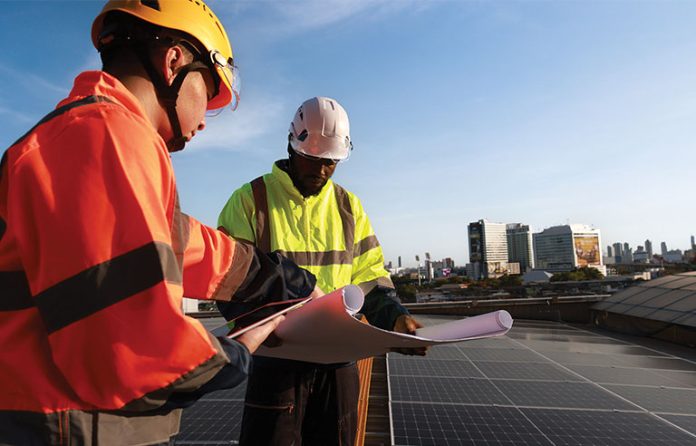
Leadership commitment is another major driver. Workers notice when safety is prioritized by leadership – not just in policy but in practice. When facility managers routinely walk the roof, inspect safety measures and follow the same protocols expected of the crew, it sends a powerful message. Leadership presence, particularly in high-risk areas, helps close the gap between compliance and culture by modeling safety as a core value rather than a checklist item.
Another key to advancing a safety-first culture is integrating safety into everyday planning – not only during special events or audits. This means scheduling regular rooftop assessments, especially after equipment installations, repairs or seasonal changes that may alter the work environment.
It also includes updating procedures as risks evolve. A culture of safety remains flexible and responsive, adapting to new challenges rather than relying on outdated assumptions.
Finally, recognition goes a long way. When teams are acknowledged for reporting hazards, suggesting improvements or consistently following safety protocols, it reinforces the behaviors that sustain a strong safety culture. Simple gestures – such as a “thank you” from a supervisor or calling out good practices in a team meeting – can have a lasting impact.
Ultimately, moving beyond compliance requires viewing rooftop safety not only as a rule to follow, but as a value to uphold. When facility managers lead by example; engage their teams; and make safety a visible, evolving part of the job, they help build environments where safety awareness is constant – and where everyone goes home at the end of the day.
Editor’s note: This article represents the independent views of the author and should not be considered a National Safety Council endorsement.