

Washington — Transportation officials must “keep all the streams going at the same time” to safely implement a proposed overhaul of the Federal Aviation Administration air traffic control system.
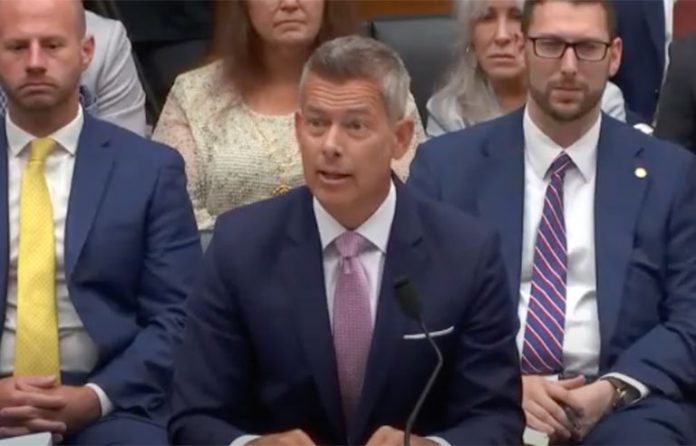
Transportation Secretary Sean Duffy made that statement as part of his testimony during a July 16 House Transportation and Infrastructure Committee hearing addressing the Department of Transportation’s fiscal year 2026 budget request.
In May, Duffy unveiled an outline of DOT’s plan to modernize air traffic control amid multiple high-profile aviation incidents nationwide.
The White House is seeking to allocate $26.7 billion to DOT, a 5.8% increase from the previous fiscal year. That total includes around $18 billion for FAA to hire and train new air traffic controllers and update air traffic facilities and radar.
“The key is we’re going to deploy these assets when we still have airplanes in the sky, and doing that safely is the No. 1 priority,” Duffy testified. “That’s what we have to do. We’ve got to choreograph, and we’ve got to implement correctly.”
On Jan. 29, a commercial airliner collided with a U.S. Army Black Hawk helicopter, an incident that killed 67 people in the nation’s capital. On May 5-6, hundreds of flights into and out of Newark Liberty International Airport were either delayed or canceled, according to the flight tracking website FlightAware.
Multiple reports cited several compounding issues behind the delays, including an air traffic controller staffing shortage, aging technology and inclement weather.
Duffy stressed that “time is of the essence” to set the project in motion, citing “dilapidated” infrastructure nationwide. In response to questioning from Rep. Troy Nehls (R-TX), Duffy identified “the heart of making the system more efficient and safer” as installing updated automation platform software. The secretary said the software systems guiding ATC nationwide date to 1995 and 2000, respectively.
Nehls offered support to Duffy and referenced monthly meetings the lawmaker has with aviation safety and industry stakeholders covering ATC modernization.
“We owe it to the American people and the people that travel, we owe them the gold standard,” Nehls said. “We want to claim the gold standard. And we certainly owe it to the 67 lives that were lost over the Potomac (River). We must do better, and we can do better, and it’s going to require all of us to work together.”
Duffy fielded various questions about air traffic control personnel. He told Rep. Valerie Foushee (D-NC) that FAA hopes to hire 2,000 air traffic controllers this year and up to 2,500 next year.
Pressed by Rep. Hank Johnson (D-GA), however, about how many air traffic controllers have left FAA since Jan. 20 – the beginning of President Donald Trump’s second term – Duffy was noncommittal.
“Please don’t tell me you don’t know,” Johnson said.
Duffy confirmed that he didn’t have a figure before addressing ATC retention efforts under the proposal.
On the topic of safe truck parking, Rep. Rick Crawford (R-AR) lauded DOT’s efforts to prioritize the matter while allocating more than $275 million in grant funding to expand truck parking.
“We have our trucks parking on on-ramps, off-ramps and any location they can find,” Duffy said in response to Crawford, “and I think it’s important for us to think through how do we provide more truck parking to provide safety for the truckers but also the other traveling public.”
Responding later to questioning from Rep. Brian Babin (R-TX), Duffy said: “We’re going to continue to work with all of you to make sure that our truckers are treated fairly and our public is safe.”