
Watertown, SD — A new safety resource for communication tower workers uses the STCKY (stuff that can kill you) approach to help them identify high-energy hazards.
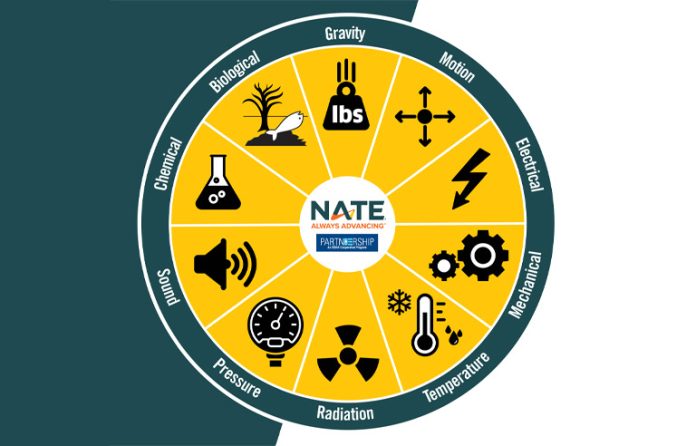
The guide, published by NATE: The Communications Infrastructure Contractors Association, explores 10 energy sources that can injure or sicken telecommunication workers and offers common examples of each:
- Gravity – work on structures or equipment at height, rigging/lighting, and unstable ground conditions
- Motion – vehicles, machinery and equipment, along with swinging items
- Electrical – tools; exposure to live wires, equipment or electrical shock from other contact sources; batteries; and environmental lighting
- Mechanical – mobile equipment, hand tools and equipment
- Temperature – extreme hot/cold environments
- Radiation – ionizing and non-ionizing radio frequency devices
- Pressure – equipment under pressure; pressure vessels and pipes; and stored energy in components/members, rigging and cables
- Sound – high levels of noise and vibration
- Chemical – toxic, carcinogenic and corrosive chemicals; fibers, dusts, vapors and fumes; sensitizing agents; and hazardous atmospheres
- Biological – contaminated surfaces, soils and workers, as well as wildlife, insects and vegetation
Each entry includes suggestions for direct controls – “the strongest and preferred form of control when dealing with a high-energy hazard” – as well as indirect or alternate controls such as training, signage and personal protective equipment.
NATE says the resource “provides a comprehensive methodology to systematically identify, assess and mitigate hazards by focusing on energy sources present in the workplace.”