
Winter weather affects many aspects of day-to-day outdoor work – particularly how workers need to be protected, safety experts say.
“Cold weather can be really dynamic, and it doesn’t have to be just snow and ice,” said Ken Lulow, a consultant for Bellevue, WA-based Puget Sound Energy. “Cold can come from just rain, and wind is a huge factor that intensifies the current conditions that affect the body and its ability to produce heat and protect its extremities.”
Lulow would know. He spent 16 years on electrical service crews in the Pacific Northwest and nine years as an electric first responder.
“When temperatures drop, the body works harder to stay warm, materials behave differently and simple tasks become high-risk exposures,” said Mike Kalinowski, regional director of safety for W.E. O’Neil Construction in Chicago and chair of the Chicagoland Associated General Contractors’ safety and health committee. “The goal is to plan ahead, prepare crews, and protect both people and productivity the right way – ahead of time – before something bad happens.”
Know the signs of cold stress
Working in cold weather can put workers at risk of cold stress injuries. That’s why planning and preparation are key.
“Everyone onsite needs to be aware of the signs of cold stress,” said Kalinowski, who recommends reaching out to workers in multiple ways:
- Information during new employee orientation
- Ongoing training for current workers
- Stand-downs (taking place at the same time) at all jobsites
During training, go over the four major types of cold stress injuries: hypothermia, frostbite, trench foot and chilblains.
OSHA notes that certain risk factors can make people more susceptible to cold stress. They include poor physical condition or existing health conditions such as diabetes, high blood pressure and hypothyroidism (low activity of the thyroid gland).
Layer up
The best way to keep cold at bay? According to OSHA, layers of loose clothing provide good insulation.
A moisture-wicking base layer – made of breathable material – pulls sweat away from the body so it can evaporate.
An insulated middle layer (think thermal sweatshirts or vests made of wool, fleece or synthetic material) helps trap heat, even when wet.
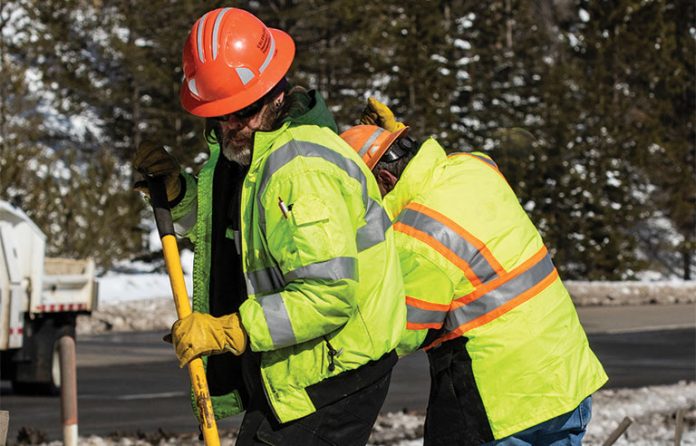
The outer layer should provide protection from wind, rain, snow and sunlight, but allow for ventilation to prevent overheating.
When layering, avoid cotton clothing. “When it gets wet, that stays in your layers,” Kalinowski said. “It results in a lot more concerns and hazards for your extremities.”
Waterproof and insulated footwear with adequate traction, paired with heavy socks, offer good protection for the feet. OSHA also recommends hats or hoods to reduce the amount of heat lost via the head; a knit mask to cover the face/mouth; and insulated, water-resistant gloves.
And keep a change of clothes and an extra pair of boots on hand. “It can go a long way if you end up stepping in a puddle and water gets over your work boots,” Kalinowski said.
Go beyond
Lulow encourages safety professionals and employers to “get out into the field and ask their people, ‘What type of tasks do you do where you feel the most risk or exposure is during cold weather?’
“Maybe they’re working with their hands or working with metal. From there, you can identify what layers of PPE or engineering controls we can put into place.”
OSHA suggests using radiant heaters, providing warming breaks, scheduling jobs for the warmest part of the day (when possible), rotating workers and making warm beverages available.
“We’ve given insulated gloves out, given hand-warmers out,” Kalinowski said. “It’s no different than when it’s hot and you’re giving out electrolyte drinks. We’re trying to make them more accessible.”
Hydration and nutrition
Even if it’s cold out, when people work hard, they sweat. They also need fuel. “One thing I don’t think we talk about enough is the hydration and nutrition aspect,” Lulow said.
It’s a balance. First, prioritize hydration, because low temps can limit the thirst sensation. According to CPWR – The Center for Construction Research and Training, warm, sweet and noncaffeinated beverages help replenish the body and promote hydration.
Long hours outdoors may lead some workers to turn to energy drinks. “A lot of times, those are full of sugar,” Lulow said. “Sugar is great for the short term, but it’s basically lighter fluid. You’re going to burn through it fast when you’re out there working in those conditions.”
When eating, he added, “you need some healthy fats, proteins and good carbohydrates that are going to sustain your energy and keep you warm.”
Be ready for changing conditions
Winter weather can change rapidly. Here’s how to prepare:
- Pay attention and communicate. Kalinowski said his organization keeps a close eye on the weather forecast. Using a communication system allows for all employees to know how and when the conditions are changing. “It identifies the weather a day, two days before something comes into play,” he said. “It gives our project teams more time to prepare.”
- All hands on deck. Keeping an eye on weather forecasts allows Kalinowski and his teams to make decisions about each jobsite. “Do we need extra bodies to shovel and move snow to create clear paths and exits?” he said they’ll ask themselves before inclement weather moves in. “Should we shut down the job?”
- Pack for the worst. “Just about every line worker I know has a bag,” Lulow said. Known as a “go bag” or “storm bag,” it has full changes of clothing and other cold-weather gear.
- Take a pause. When a winter storm hits, don’t rush. Instead, stop to change clothes for the conditions. “It’s important to have those pauses to make sure we’re prepared,” Lulow said. “If we’re not, there’s no harm to retreat and get the resources we need before you go back out.”
Cold stress and first aid
Frostbite, trench foot, chilbains and hypothermia are four cold stress injuries that can result from prolonged exposure to cold, wet conditions. Here’s a look at each condition, along with first aid tips.
Frostbite is most common on fingers, toes, ears, cheeks and the nose. It’s caused by freezing of the skin and underlying tissue. Symptoms include numbness; tingling; pain; and skin that is cold, hard and appears waxy. Experts say workers experiencing frostbite should be taken to a warm place as soon as possible. Co-workers should alert medical personnel. Unless necessary, a person with frostbitten toes or feet shouldn’t walk. Other first aid tips:
- Remove any clothing or accessories that xmight hinder circulation. (If clothing is wet, wait until you’re indoors.)
- Use a loose, dry cloth to protect the frostbitten area until medical help arrives.
- Don’t rub the affected area – you could damage the skin or break blisters.
- Don’t warm the frostbitten area with direct heat, as this can cause burns.
For mild frostbite, rewarm the affected area with water (99° to 108° F) for 15-30 minutes, the Mayo Clinic says.
Trench foot (also known as immersion foot syndrome) can occur after prolonged exposure to cold temps and moisture. Symptoms include redness of the skin (depending on the severity of the condition and the person’s skin color), swelling, leg cramps, blisters/ulcers, numbness and bleeding under the skin. If experiencing symptoms of trench foot, NIOSH says to remove footwear and wet socks, dry the feet, and avoid walking, which can further damage tissue.
Chilblains are caused when exposure to the cold damages the capillaries in the skin. Symptoms may include redness (again, depending on the severity of the condition and the person’s skin color), inflammation, itching and blisters. Affected workers should slowly rewarm their skin and avoid scratching it. Corticosteroid cream can relieve swelling and itching. Check for blisters or ulcers, then clean and cover any you find.
Hypothermia sets in when the body’s core temperature drops below 95° F. It can bring on uncontrollable shivering, slurred speech, confusion/disorientation and fatigue. Call emergency medical services right away if a worker is displaying symptoms. Then move to a warm, dry shelter and have the person remove all wet clothing. The Mayo Clinic advises against trying to warm a worker’s arms and legs if they’re experiencing hypothermia, as it can add stress to the heart and lungs. The clinic also says to not rewarm a hypothermia victim too quickly, “such as with a heating lamp or hot bath,” as the person may go into shock or heart failure.