

Responding is Angel Miranda, RMA/service manager, and Sandi Gregory, office and marketing manager, Gas Clip Technologies, Cedar Hill, TX.
One of the most overlooked aspects of confined space safety is rescue preparedness. Many employers focus heavily on entry procedures and permitting requirements but spend far less time evaluating whether a rescue can be performed safely and quickly.
A common mistake is relying solely on emergency services without confirming their capabilities, response times or confined space training. Local emergency responders may not have the specialized equipment or technical rescue experience necessary for a particular confined space configuration. Employers should verify rescue capabilities in advance and ensure responders can realistically reach the worker within a time frame appropriate for the hazards involved.
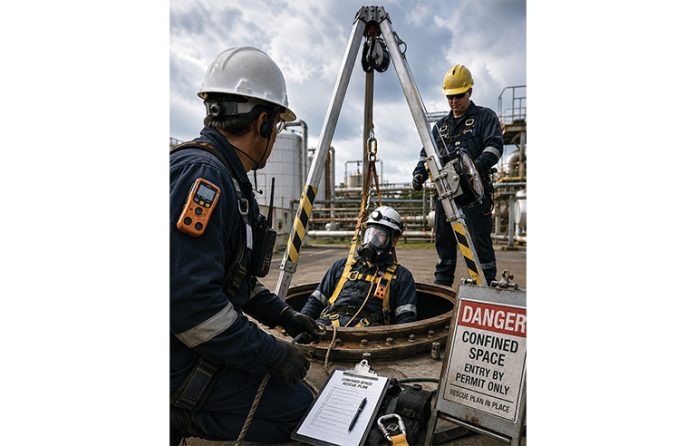
Another frequently overlooked factor is non-entry rescue planning. Whenever possible, employers should prioritize rescue methods that don’t require another worker to enter the confined space. Retrieval systems, lifelines and mechanical lifting devices can significantly reduce the risk of multiple casualties during an emergency.
Space configuration is also often underestimated. Vertical entries, horizontal tunnels, narrow openings, internal obstructions and long travel distances can complicate rescue efforts. Rescue planning should account for how an unconscious worker would be removed from the space under realistic conditions.
Communication failures are another major concern. Rescue plans should clearly define who contacts emergency responders, how communication will occur during an incident and what information must be relayed. Attendants should be trained to recognize distress signals and initiate emergency procedures immediately.
Finally, rescue plans should be practiced regularly. A written procedure alone isn’t enough. Conducting drills helps identify equipment limitations, communication gaps and timing issues before an actual emergency occurs. Effective rescue planning depends on preparation, coordination and realistic evaluation of the hazards involved.
Editor’s note: This article represents the independent views of the author and should not be considered a National Safety Council endorsement.

