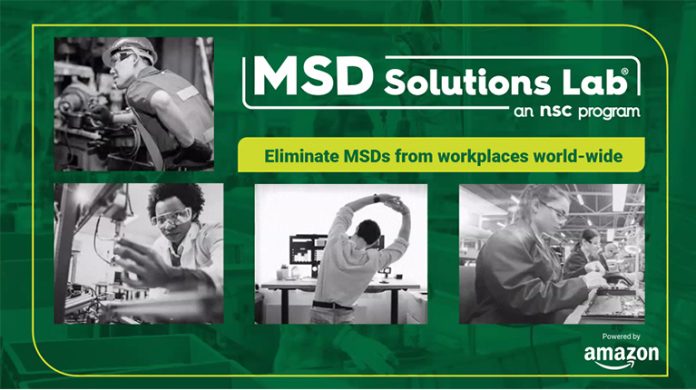
Washington — The National Safety Council recently celebrated the fifth anniversary of its MSD Solutions Lab, launched with the aim of reducing work-related musculoskeletal disorders and improving worker well-being.
NSC marked the occasion on June 23 during its annual Workplace Safety Summit, which included discussion of how hundreds of employers are addressing MSD risk.
The most common workplace injury, MSDs – such as tendinitis, back strains and sprains, and carpal tunnel syndrome – affect nearly a quarter of the world’s population. They’re the leading cause of worker disability, early retirement and limitations to gainful employment, the council says.
Since the lab’s inception, almost 300 organizations in 22 countries have signed the MSD Pledge, committing efforts to reduce MSDs. Those organizations represent more than 3 million workers. The lab has also published over 50 publicly available educational resources, research reports, toolkits and case studies.
“What began as a bold idea has grown into a global community of employers, researchers, safety leaders and innovators working together to advance practical solutions and share best practices,” said Paige DeBaylo, the lab’s director.
One of the key benefits of signing the pledge, DeBaylo added, is participating in the MSD Solutions Index benchmarking study. The index gives organizations the opportunity to learn best practices from others within and outside their industry to more effectively address MSDs.
Over the past three years, 72% of the employers who signed the pledge improved their overall safety scores, while 78% raised their safety culture scores.
The participants also have experienced a 46% decline in their total recordable incident rate over three years.
The lab has invested more than $1 million through grant programs that advance workplace safety innovation and practical injury prevention solutions. It’s also launched annual Safety Innovation Challenges to identify emerging prevention technologies.
“The risks facing workers have continued to evolve,” NSC CEO Lorraine M. Martin said. “Our commitment has to evolve as well. What brings us together is that shared dedication.”
DeBaylo noted that many of the organizations that have committed to addressing MSDs have moved from awareness to execution.
“Sometimes that means implementing advanced technologies, and other times it’s just making practical adjustments to workstations, tools or processes that might create meaningful improvements,” she said.
The lab is supported by funding from Amazon.