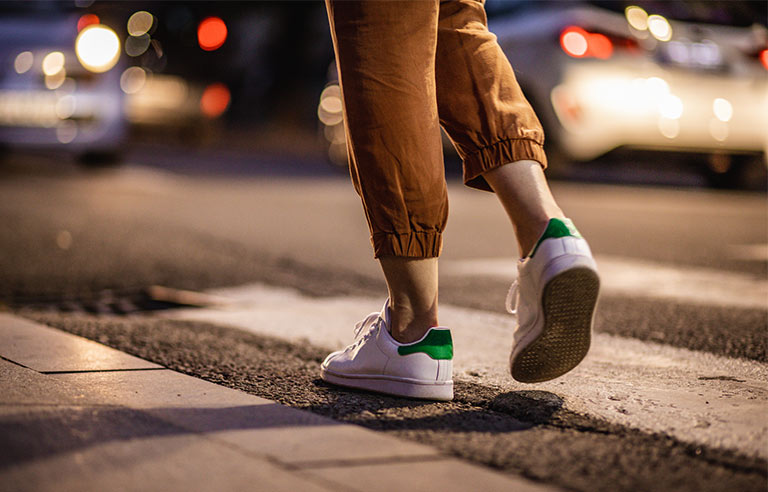
Pedestrian deaths have soared more than 80% over the past 15 years in the United States, with “almost the entire increase” of incidents occurring on urban arterial roads and after dark, a new report shows.
Researchers from the AAA Foundation for Traffic Safety and the Collaborative Sciences Center for Road Safety conducted case studies in three cities with “varying levels and trends” in pedestrian deaths: Albuquerque, NM; Charlotte, NC; and Memphis, TN.
A large majority of the incidents occurred on busy city roads at night, which aligns with national trends, the foundation says.
“More alarming,” AAA adds, is that a “disproportionate number” of the deaths occurred in socially and economically disadvantaged neighborhoods. Most happened more than 4 miles from the city center.
“Many residents in these areas depend heavily on walking, especially to reach public transportation,” AAA says. “Cities continue to grapple with several challenges when it comes to implementing the necessary infrastructure upgrades needed to make roads safer in these communities. AAA urges city planners, public health professionals, legislators and traffic safety practitioners to work together to reverse these deadly trends.”
Other interconnected factors identified include:
- A lack of safe crossing locations
- High pedestrian crossing volumes
- Poorly lit roads without continuous sidewalks
- Questions over road ownership (state vs. local)
“Reducing the spike in pedestrian deaths requires data-driven investments where they matter most,” said Jake Nelson, director of traffic safety advocacy for AAA. “If safety is truly a top priority for decision-makers, we should expect greater investments in historically underinvested communities where a disproportionate number of pedestrians are hit and killed.”
The groups advise drivers to exercise caution at night and not to rely on pedestrian detection systems to prevent an incident. Those systems often struggle at night, the report points out. Also, avoid engaging in risky behaviors such as speeding, texting, and driving while drowsy or distracted or under the influence of cannabis or alcohol.
“Drivers are responsible for yielding to pedestrians, but those traveling on foot should also be vigilant,” AAA says. “Pedestrians should use caution by staying on sidewalks and using crosswalks as often as possible. Always obey traffic signals, look both ways before crossing the street, and do not walk and text.”