
The presentation of OSHA’s Top 10 list of most frequently cited standards is a mainstay of the annual NSC Safety Congress & Expo.
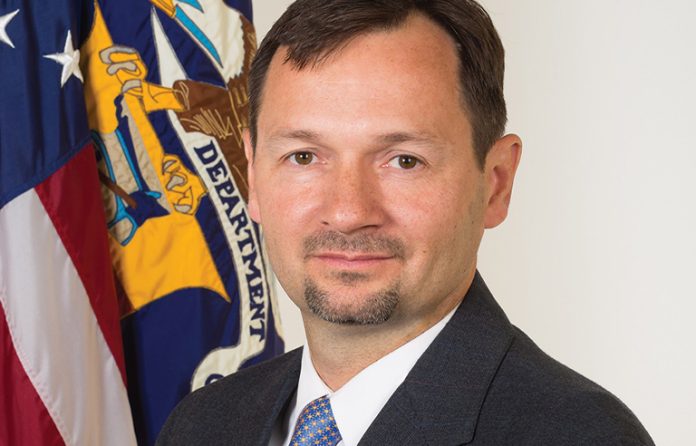
In 2025, the list was unveiled by Eric Harbin, administrator of OSHA’s Dallas Region. He shared information and anecdotes about each of the Top 10 standards and stayed after the presentation to answer questions from safety pros in attendance.
Now, halfway through fiscal year 2026 and in advance of the next Top 10 presentation, which is slated to take place in September in Indianapolis, Safety+Health Associate Editor Kevin Druley reconnected with Harbin. The conversation touched on falls, lockout/tagout, OSHA restructuring and enforcement, compliance assistance aimed at “meeting employees where they are in their safety journey,” and more.
The following is an edited transcript.
S+H: Fall Protection – General Requirements (1926.501) is No. 1 for the 15th fiscal year in a row. Fall Protection – Training Requirements (1926.503) has appeared in the Top 10 for nine consecutive years. Why do falls continue to be a problem?
Harbin: So, this is a complex question, and it often involves insufficient prevention actions. One of the primary challenges is poor organizational practices such as a lack of comprehensive workplace policies.
OSHA and the State Plans offer free consultation services to help organizations identify and correct safety deficiencies. Additionally, OSHA’s website provides a wealth of safety information and resources for various industries that are accessible to anyone.
OSHA organizes outreach events and safety awareness initiatives. A prominent example of this is the National Safety Stand-Down to Prevent Falls in Construction, which has successfully expanded its impact beyond just the construction sector. To foster a strong safety culture, it’s essential that all team members – regardless of experience – understand the fundamentals of safety and fall prevention. This awareness cultivates confidence in the organization and reinforces a safety-first mindset.
In dynamic work environments like we see in construction, maintaining this focus can be challenging. OSHA emphasizes three critical elements to enhance workplace safety:
- Plan – anticipate potential hazards and develop proactive strategies.
- Provide – ensure access to the necessary safety equipment and resources.
- Train – educate all employees on safety protocols and the importance of compliance.
There are additional strategies that can be used. Employers can identify critical equipment and prioritize safety checks systematically; collaborate with their team members, covering each other’s vulnerabilities; avoid unnecessary complexity and simplify instructions and procedures; empower team members to take ownership of specific checks; plan ahead for potential issues; brief the team on the safety check process, roles and expectations; stick to the safety check routine consistently; be open to feedback and corrections; reinforce safety compliance through programs that promote a safety-conscious culture; and clearly articulate the purpose of the safety checks, understand how it matters and how it contributes to overall safety. By integrating these practices, organizations can build a more resilient safety culture, reduce risk and enhance overall employee well-being.
S+H: What steps is OSHA taking to help employers abate fall hazards?
Harbin: In 2012, OSHA began to collaborate with NIOSH, the NORA construction sector, and CPWR – The Center for Construction Research and Training to raise awareness about common fall hazards in the construction sector. To further emphasize this commitment to fall hazard awareness, OSHA launched the annual National Safety Stand-Down to Prevent Falls in Construction in 2014. Every May, dedicated alliances and local partners from across the country come together to engage with their members and the public, honoring the safety of our nation’s workers and their families. This is a voluntary event where employers directly address employees about safety concerns such as focusing on fall hazards and fall prevention. The stand-down isn’t restricted to the construction industry. Any nonconstruction workplace can participate in hosting a stand-down. Participants have included commercial and residential construction companies, general industry, unions, government agencies, and safety equipment manufacturers. Anyone interested can find more information on OSHA’s website, searching for “stop falls stand-down.”
S+H: As you discussed in your presentations, preliminary data shows that Fall Protection – Training Requirements and Scaffolding (1926.451) are separated by just two violations. How common are occurrences like this?
Harbin: You raise an interesting point, and it’s something we can be on the lookout for. Falls are the leading cause of death and serious injury in construction, and OSHA’s falls emphasis programs allow us to target all work at height, including on scaffolds. A correlation between the two violations may be an indicator that equipment misuse and lack of training are a common co-occurrence.
S+H: OSHA is working toward an update on its Lockout/Tagout standard (1910.147). How might a move toward computer-based controls for hazardous energy (and other changes in the update) impact lockout/tagout citations?
Harbin: You might recall OSHA issued a Request for Information in May of 2019, looking for public input on using advanced controls, circuit-type devices – which previously were excluded – and addressing new hazards from robotics, aiming to modernize the rules without adding burden, gather data on current technical use and potentially clarify safe alternatives to traditional energy isolation. The impact of the new rule on lockout/tagout citations can only be determined if the rule is published.
S+H: Which other trends or takeaways from the Top 10 stand out?
Harbin: The violations of each standard on the Top 10 list represent hazards that are easy to identify and fix. The top cited standards may shuffle around on the list, but from year to year, many of the same hazardous conditions are being identified in workplaces. OSHA will be looking for ways to engage with employers, meet them where they are, and provide assistance with improving safety and health management plans, which is the mechanism for systematically identifying and fixing hazards.
S+H: It’s been a year since OSHA restructured the agency’s regional operations and created a new region. What impacts has the agency seen since?
Harbin: Well, the Birmingham (AL) Region, which I believe is the one you’re referencing, serves Alabama, Arkansas, Kentucky, Louisiana, Mississippi, Tennessee and the Florida Panhandle. The addition of this region has strengthened the agency’s ability to provide service to employees and employers in the southeastern United States. OSHA already has many productive and successful relationships with stakeholders in this region, and we’ll continue to build on that success in the coming years.
S+H: How can organizations integrate safety and health management systems into their business operations? What steps can they take to ensure safety is a core cultural value?
Harbin: The first step your organization can take is to review the “10 Easy Things to Get Your Program Started.” This is a list of very basic items to start your workplace on the path toward responsible safety and health management. If you need help, consider contacting OSHA’s On-Site Consultation Program. Consultants from the program provide free assistance to small businesses that includes establishing and improving safety and health programs.
S+H: What do new compliance officers and enforcement staff learn at the OSHA Training Institute to assist them with conducting inspections?
Harbin: At the OSHA Training Institute, compliance officers receive comprehensive, performance-based training that prepares them for conducting effective workplace safety and health inspections. During the training, compliance safety and health officers, or CSHOs, are introduced to OSHA’s mission and trained on OSHA’s standards and regulations, learning the specific requirements that apply to various industries and work environments. Training also includes hands-on experience with inspection equipment and tools, case file documentation, and legal aspects to ensure enforcement aligns with federal laws. They also learn how to effectively interview employees and employers to gather crucial information to understand and evaluate workplace safety and health hazards.
S+H: What updates can you give about national emphasis programs in development? How can NEPs have an influence on the standards in the Top 10?
Harbin: Current OSHA national emphasis programs are available on OSHA’s website. Search for “enforcement memos.” We’re always looking at how the agency can be most effective by getting our compliance officers to where we can have the most impact on worker safety. Part of that is looking critically at our existing NEPs to see if they’re effective in raising awareness about the right issues.
So, our emphasis programs are under continuous review and consideration for how we can improve where we think our resources need to be to have the most impact on worker safety and health.
The list of Top 10 most cited standards reflects the sites that OSHA inspects. If you look at our NEPs and other planned inspection programs, such as construction targeting, site-specific targeting or regional emphasis programs, they’re designed to get CSHOs to worksites where we know there’s a potential for serious hazards that can get people hurt or killed. This is built into the system when an emphasis program is conceived and created. We believe this is reflected in the violations identified during these inspections and demonstrates the worth of our emphasis programs. Examples are the Falls in Construction NEP, where compliance officers are often citing violations of Fall Protection – General Requirements, which is No. 1; Ladders (1926.1053), which is No. 3; and Fall Protection – Training Requirements, which is No. 6. Similarly, if you look at our Amputation NEP inspections, you’ll find a significant number of violations related to the Lockout/Tagout and Machine Guarding (1910.212) standards. All these standards are in the Top 10 list of the most frequently cited standards.
S+H: What are some common misconceptions about agency enforcement?
Harbin: So, employers may not be aware that OSHA has a broad approach in reducing workplace injuries and illnesses – and not just enforcement. Our efforts include education, training, compliance assistance and, of course, enforcement inspections. Employers may be under the impression that they cannot approach OSHA to clarify compliance matters. OSHA places a strong emphasis on collaborating with small businesses by meeting employers where they are in their safety journey, whether they’re just beginning or established leaders in the industry. By actively listening to our stakeholders, we strive to enhance greater collaboration and provide essential tools, resources and recognition for success at every stage. Additionally, we’re increasing the use of compliance assistance to ensure all businesses have the support they need to maintain safe workplaces.
S+H: Where can employers turn for assistance?
Harbin: The No. 1 thing employers can do is develop and implement a safety and health management program that allows them to recognize and fix safety and health hazards. Many employers may need assistance with that, and we really do want to help. OSHA’s On-Site Consultation Program offers free and confidential occupational safety and health advice to small and medium-sized businesses in all states across the United States, with priority given to high-hazard worksites.
The consultation program is separate from the OSHA inspection efforts, and employers can find out about potential hazards at their workplace, improve programs that are already in place and even qualify for a one-year exemption from routine OSHA inspections. No citations or penalties are issued, and the employer’s only obligation is to correct serious job safety and health hazards.
In addition, OSHA’s compliance assistance specialists provide advice, education and assistance to businesses, particularly small employers, trade associations, local labor unions and other stakeholders who request help with occupational safety and health issues. We work with professional organizations, unions and community groups concerning issues of safety and health in the workplace.
S+H: Anything else you’d like to add?
Harbin: I was honored to be able to present the Top 10 and “OSHA’s Most Interesting Cases” at the NSC Safety Congress & Expo. I hope that employers and workers get a lot out of it. We find it a very meaningful experience for us. We hope to help in any way we can so workers and employers can understand what is commonly out there and take steps to do what they can to reduce workplace safety issues.