

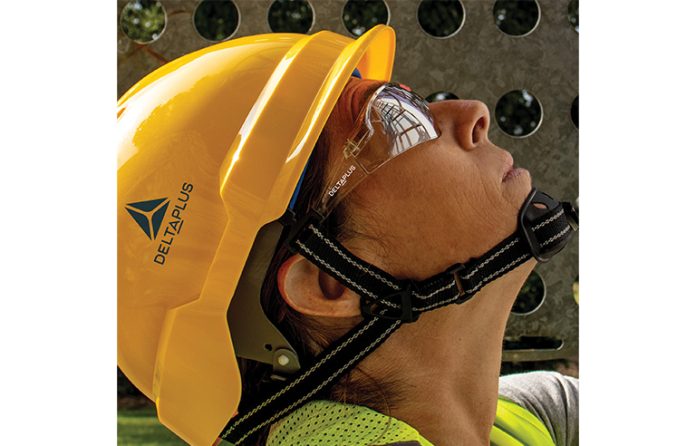
Responding is Isabelle Dupuis, regional marketing manager, North America, Delta Plus, Vaughan, Ontario.
Selecting the correct lens color for safety eyewear is a critical, yet often overlooked, element of workplace eye and face protection. Although all ANSI Z87.1-compliant lenses meet the same impact-resistance standards, lens color plays a significant role in visual performance, comfort and overall safety. Choosing the wrong lens color for a specific work environment can lead to eyestrain, reduced visibility and increased safety risks.
Lens color directly affects how the eye processes light, contrast and glare. Factors such as light transmission, depth perception and visual clarity vary by lens tint, making certain colors better suited for specific lighting conditions and tasks. When lens color is properly matched to the work environment, it can improve reaction time, reduce visual fatigue and support sustained focus throughout long shifts. Conversely, an inappropriate lens choice may cause discomfort, headaches and/or squinting, increasing the likelihood of errors or missed hazards. In some cases, discomfort leads to poor compliance, with workers removing their safety glasses altogether.
Clear lenses provide the highest light transmission and are best suited for indoor or low-light environments. They allow accurate color recognition and maximum visibility under artificial lighting, making them appropriate for manufacturing, warehousing, laboratories, health care settings and night operations. However, clear lenses offer little glare reduction and should be avoided in bright outdoor environments, where excessive light can cause eye fatigue and visual discomfort.
Gray (smoke) lenses are designed for bright outdoor conditions. They reduce overall brightness evenly while preserving natural color perception, making them effective for glare control. These lenses are commonly used in construction, road work, utilities and outdoor logistics. Gray lenses aren’t recommended for indoor or shaded environments, as reduced light transmission can impair visual acuity and slow hazard recognition.Delta Plus
Amber or yellow lenses enhance contrast by filtering blue light, improving depth perception and clarity in low-contrast or variable lighting conditions. They’re particularly useful in warehouses with uneven lighting, for inspection and quality control tasks, and for early-morning or late-afternoon work. However, amber lenses can distort color perception and provide limited glare protection, making them unsuitable for color-critical tasks or intense sunlight.
Mirror lenses offer maximum glare reduction by reflecting light away from the eye. They’re intended for extreme brightness and high-glare environments such as marine, desert, snow or high-altitude work. Although effective outdoors, mirror lenses aren’t recommended for indoor settings or tasks involving frequent transitions between environments with different light levels, as they can significantly reduce visibility in shaded areas.
Best practices for safety eyewear selection include verifying ANSI Z87.1 markings on both the lenses and frames, selecting lens colors based on lighting conditions rather than job titles, and providing multiple lens options for workers who move between environments. Training employees on when and why to switch lens colors is essential for improving comfort, compliance and overall safety.
Ultimately, lens color is a functional safety feature – not a style choice. Selecting the right ANSI-approved lens can improve visibility, reduce eyestrain and lower the risk of workplace injuries.