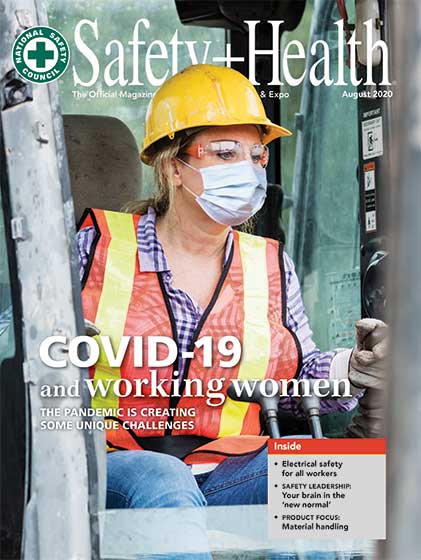
In women-dominated industries such as health care, as well as those in which women aren’t well represented, including construction and the trades, female workers are facing unique challenges amid the COVID-19 pandemic.
In 2018, the highest numbers of nonfatal on-the-job electrical injuries occurred in industries and occupations that traditionally don’t receive extensive electrical training.
No matter how they’re defined, soft skills are vital to a safety professional’s career growth and development. “Technical knowledge will only get you so far,” one expert says.
“As many organizations begin to shift their focus from virus response toward returning to work, a blind spot is emerging,” says Josh Mrozowsky, vice president at DEKRA.
In addition to wearing facemasks themselves, safety and health leaders need to convince others to wear them, says E. Scott Geller of Safety Performance Solutions Inc.
On the day of the incident, the owner of a gutter and siding installation company and his 47-year-old employee were installing guards on the existing gutters of a two-story home. The owner of the company did not provide fall protection, and the victim was not wearing any.
The next time you fuel up at a gas station, consider this: Most pump handles contain 11,000 times more germs than a toilet seat in a public restroom. And the keypad on the pump? The buttons typically have 15,000 times more germs than a public toilet seat, according to a tip sheet from KeepTruckingSafe.org.
Ticks can carry potentially life-threatening infectious diseases. Most active during warmer months (April-September), they reside mostly in grassy, brushy or wooded areas – putting virtually all outdoor workers in the United States at risk of exposure.
Heat-related illnesses accounted for 783 worker deaths and nearly 70,000 serious injuries in the United States from 1992 to 2016. And in 2018 alone, 3,950 workers experienced days away from work as a result of nonfatal injuries and illnesses from on-the-job heat exposure.
When selecting protective eyewear, most higher-quality options have various features and upgrades, including impact re-sistance, anti-fog technology, ultraviolent resistance and polarized lenses. What do each of these technologies provide and why should workers want them in their safety glasses?