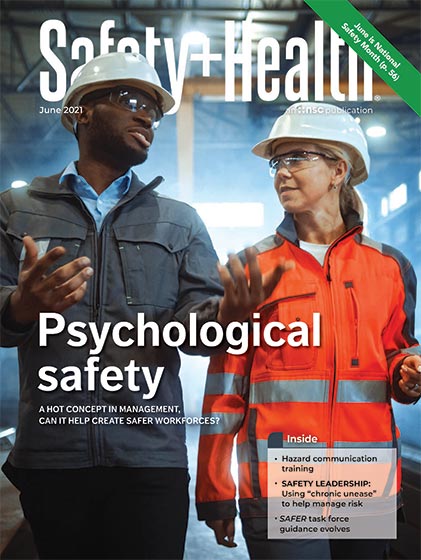
June is National Safety Month. On this, the 25th anniversary of the observance, the COVID-19 pandemic remains front and center of the discussion about how to keep workers safe.
As with all workplace safety and health efforts, staying safe in the future world of work will be the combined effort of employers taking the right steps to reduce risk and employees doing their part to look out for themselves and each other.
The “blue line” is defined as the path workers take to get their work done. The National Safety Council adds: “Blue line reviews are field observations of work by leaders with the goal of better understanding how work is actually performed.”
Not all risks hold equal weight. For example, focusing efforts on reducing the frequency of safety-related incidents doesn’t necessarily lead to a reduction in the severity of incidents.
Increased workloads, long hours, layoffs, work-life balance – these are just some of the reasons why you might be feeling stressed at work. And you’re not alone: Results of a survey conducted by the American Psychological Association in January show that 84% of U.S. adults were experiencing at least one emotion associated with prolonged stress, including anxiousness, sadness and anger.
Spot the hazard, assess the risk, make the change – these are common risk mitigation practices for employees working in and around the manufacturing production process. But what about the energy that can’t be seen?
Data analytics has a lot to offer on an industrial worksite from an efficiency, safety and cost-savings perspective. But, my employees are concerned with the level of data collection this requires and their privacy. How can I address this?
This white paper from the safety and compliance experts at J. J. Keller contains vital info about written safety plans to help you understand the requirements and how they apply to your organization.
Struggling to figure out how to remove or minimize human error in the workplace? The simple answer is to adopt a three-step technological approach of “monitor, inspect and manage” to create an ecosystem of safety-focused operations that remove the human element’s risk.