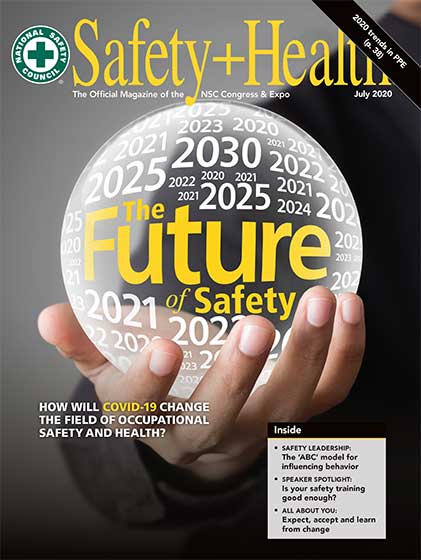
Safety+Health gathered perspectives from prominent voices in safety on the question: Do you believe the COVID-19 pandemic will have a lasting impact on occupational safety and health and, if so, how?
A single OSHA press release about fines levied against a company can have the same effect as 200-plus agency inspections when it comes to future compliance by the offending employer, as well as those nearby in the same industry, a Duke University researcher recently concluded.
Angelica Grindle and Erika Gwilt, who specialize in client engagement at DEKRA, discuss how antecedents, behavior and consequences help us understand what influences and controls behavior.
“It’s the components of your training program that ultimately ensure its success or failure,” says safety professional Daniel J. Snyder, who offers advice on ensuring employees are adequately trained.
As the economy gradually begins to function in this new normal, some workers who traveled for business before the COVID-19 pandemic may be returning to that lifestyle.
As the economy gradually begins to function in this new normal, some workers who traveled for business before the COVID-19 pandemic may be returning to that lifestyle.
As many employees begin returning to a more typical work environment, employers must remember to prioritize safety. Here are 10 steps the National Safety Council – based on recommendations from its SAFER task force – says employers should take before reopening.
Muncie, IN — Making personal hygiene and cleanliness a priority are among the 13 healthy behaviors and habits one Ball State University professor says can help lower your risk of contracting and spreading COVID-19 – and help you stay healthy in the future.