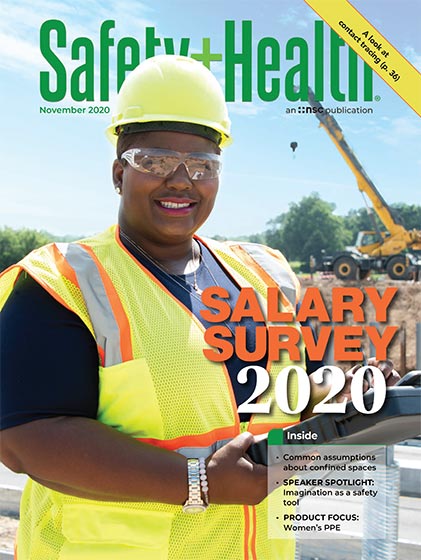
Although it has long-standing roots in public health practice, contact tracing is a new concept for many employers trying to keep workers safe during the COVID-19 pandemic.
Paul Angelo, principal consultant at DEKRA, says the recent increase in virtual interaction is an opportunity for leaders “to revisit the key concepts of engagement.”
When used the right way, imagination “offers the possibility not only that catastrophic outcomes can be avoided, but creative new solutions to safety challenges can be implemented,” says I. David Daniels, president and CEO of ID2 Solutions LLC.
Use of compact fluorescent lightbulbs can save money, conserve energy, reduce waste and lower greenhouse gas emissions, according to the Environmental Protection Agency. However, CFLs contain mercury – a potent neurotoxin that, in small amounts, can cause serious health problems. At room temperature, mercury is a liquid and can readily evaporate into the air.
Nearly half of all work-related injuries involving mechanical power presses result in amputation, statistics compiled by OSHA show. Around 60% of amputations involve a worker’s fingers or arm getting caught or compressed by a press or other machinery such as a conveyer, according to data from the Bureau of Labor Statistics.
A 49-year-old subcontracting pipefitter was hit in the chest and knocked backward by a pressurized 12-inch diameter vertical section of a polyvinyl chloride pipe during a hydrostatic pressure test of a fire suppression system.
Wearing a facemask to help prevent the spread of COVID-19 can present obstacles to communication, “an important and complex transaction that depends on visual and, often, auditory cues,” says Debara L. Tucci, director of the National Institute on Deafness and Other Communication Disorders.