

Case report #: 71-275-2026
Date of report: March 31, 2026
Issued by: Washington State Fatality Assessment and Control Evaluation Program
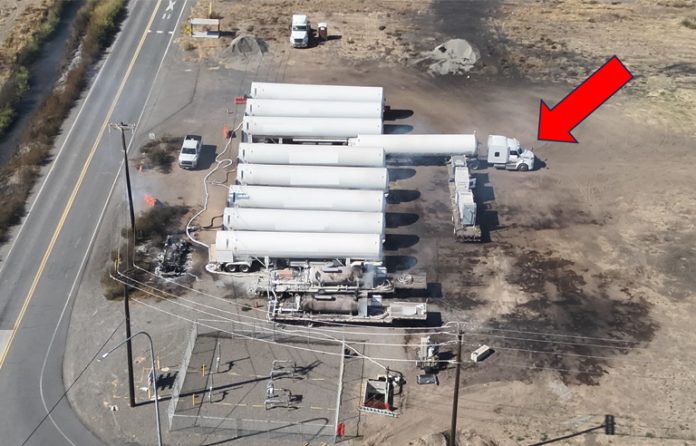
A technician had worked for his employer, a natural gas supplier, for about five years. On the day of the incident, the technician was offloading liquified natural gas from a tanker semitrailer at a temporary, mobile LNG transfer station. The trailer belonged to the technician’s employer but was being hauled by a driver from a contracted motor carrier. The technician connected an 18-foot transfer hose from the trailer control cabinet to a queen storage trailer and began the LNG transfer. Unexpectedly, the driver started his truck and drove forward 17 feet while the transfer was still in progress. This disconnected the hose coupling from the queen. LNG vapor leaked and formed a large, thick cloud in the work area. A co-worker outside saw the cloud and attempted to warn the technician. Around the same time, the driver realized what was happening and rushed from his truck cab to press the emergency shutdown button at the back of the trailer. Just then, the vapor cloud contacted an unknown ignition source and exploded. The driver ran to a nearby field. The co-worker called 911. He found the technician badly burned but alert and moved him to a safer place. First responders transported the technician and driver to a hospital. The technician died two days later from burn shock. The driver was treated for minor burns and released the next day. Investigators found that the driver believed he could move his truck when a technician gave him paperwork before the transfer was complete. He did not exit his cab or complete a pre-trip inspection before moving the truck, and the transport trailer’s wheels were not chocked before the transfer hose was coupled to the queen trailer.
To prevent similar occurrences, employers should:
- Equip trucks with electronic interlock brake systems that lock the truck’s wheels when the trailer’s control cabinet doors are open to prevent vehicle movement while LNG transfer is in progress.
- Make sure technicians and drivers visually verify that the truck’s parking brake is set, the ignition is off and keys are removed, and the trailer’s rear wheels are chocked before coupling the transfer hose.
- Develop a step-by-step verbal communication procedure for technicians and drivers to follow before, during and after an LNG transfer.