
Responding is Kyle Lewandowski, safety solutions sales manager, Fastenal, Tulsa, OK.
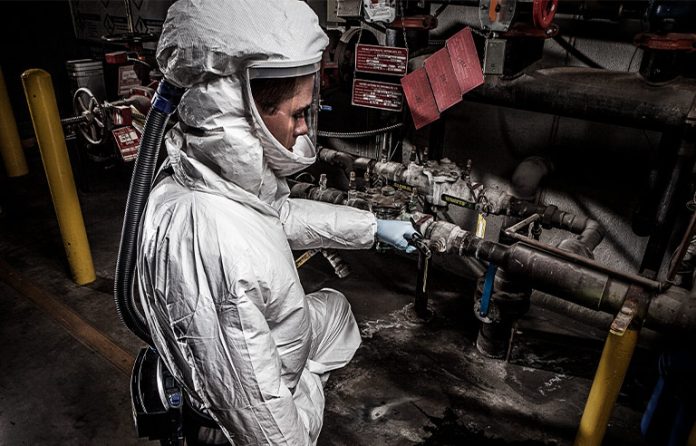
Selecting protective clothing is often treated as a compliance exercise: Does the suit meet the standard? Does it check the box? Is it cost‑effective?
Those questions matter but, on their own, they’re not enough.
To truly protect workers, you need to align protective clothing with real job tasks, real environments and real human behavior – not only minimum regulatory requirements.
Don’t stop at the hazards
Risk alignment begins with identifying the hazards workers face. For protective clothing, that can range widely. Sometimes the goal is simply to keep workers clean in dusty or dirty environments. Other times, it’s preventing exposure to hazardous chemicals or protecting someone entering a confined space with a known risk.
The mistake many program managers make is stopping at that first layer. Identifying the hazard is necessary, but it’s just the starting point. The next step is understanding how long the task takes, how strenuous it is and what the environment looks like while it’s happening.
One example: A chemical suit that resists a contaminant may still create risk if it traps heat, restricts movement or makes the task generally unbearable.
Compliance doesn’t guarantee adoption
One of the biggest gaps between policy and practice is adoption. A suit that meets compliance standards but makes a job miserable is unlikely to be worn correctly – or at all.
Let’s say a person’s working in southern Louisiana in August. Heat and humidity aren’t side issues – they’re core risks. A fully laminated, waterproof suit protects against exposure, but it can also feel like wearing a trash bag. That discomfort increases fatigue, heat stress and the likelihood of shortcuts.
Risk alignment means asking a hard but honest question: Will employees actually wear this for the full task? The right way? Every time?
If the answer is no, the suit is introducing risk even if it’s considered compliant.
Match materials to the task
Now, let’s look at breakthrough time. Different materials can protect against the same chemical but offer vastly different exposure windows. A lower‑cost suit might provide 10 minutes of protection. A premium option might provide an entire shift. Neither is inherently right or wrong.
If a task takes five minutes and is performed once a day, a shorter breakthrough time may be appropriate. If the task involves extended exposure or high exertion, that same choice could be dangerous.
Risk alignment is about matching protection to duration, frequency and exertion, not defaulting to the cheapest or the most robust option without context.
Consider the human factors
Protective clothing is worn by people, not processes. Body size, exertion level, heat tolerance and task complexity all influence risk.
A worker standing in a confined space to take a reading faces a different risk profile than someone shoveling material out of a tank for 20 minutes. Clothing that ignores those differences can increase the likelihood of heat illness, fatigue and even near‑miss incidents.
No one likes to be the “PPE police.” So, the goal is to select equipment that works with workers, not against them.
Editor’s note: This article represents the independent views of the author and should not be considered a National Safety Council endorsement.