Geneva — Cardiovascular disease and mental health disorders stemming from on-the-job psychosocial risk factors may contribute to hundreds of thousands of worker deaths each year, recent research from the International Labor Organization suggests.
A team analyzed the impact of work design; how work is organized and managed; and the broader policies, practices and procedures that govern work on employee health and safety for a report titled, The psychosocial working environment: Global developments and pathways for action.
The researchers identified several psychosocial hazards tied to these elements, including:
- Job strain
- An imbalance between effort and reward
- Job insecurity
- Long working hours
- Bullying and harassment
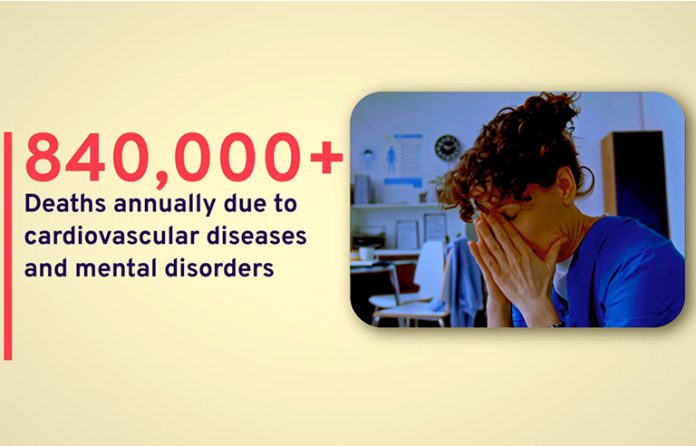
They found that adverse health conditions related to these hazards were responsible for over 840,000 worker deaths annually.
“This is not because of physical accidents at work, like falls from height,” Manal Azzi, team lead on OSH policy and systems at ILO, said in a video associated with the report. “This is because of pressures at work.”
Of notable concern was long working hours, which was associated with increased risk of cardiovascular disease and stroke. ILO reports that 35% of employees work more than 48 hours a week.
Additionally, the team found that 23% of workers have experienced at least one form of workplace violence or harassment in their careers.
The researchers said that assessing risks and preventing them from growing is the “central objective” for employers. They suggest prioritizing organizational interventions such as workload management and, when necessary, using “immediate intervention” for cases of harassment and violence.
“Although not all psychosocial hazards can be fully eliminated, the associated risks can often be reduced by improving work design, organization and management,” the report states. “This includes reviewing workload, task allocation, supervision and other elements of the working environment, while strengthening workers’ capacity to recognize and respond to risks.”
In a press release, Azzi added: “Psychosocial risks are becoming one of the most significant challenges for occupational safety and health in the modern world of work. Improving the psychosocial working environment is essential not only for protecting workers’ mental and physical health, but also for strengthening productivity, organizational performance and sustainable economic development.”