

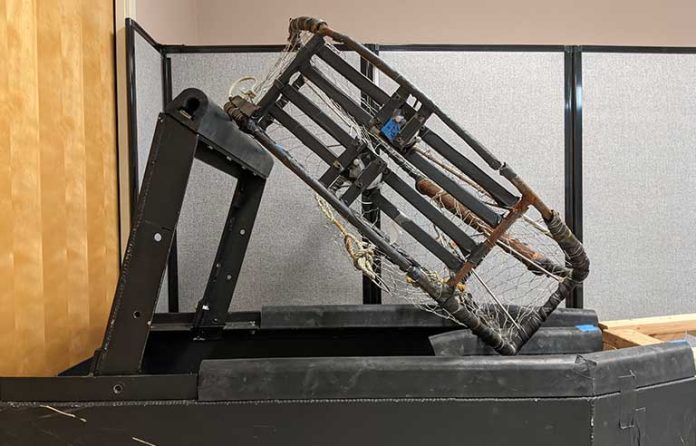
Corvallis, OR — A device designed by crab fishers can effectively limit injuries associated with lifting and dumping crab pots on commercial fishing vessels, results of a recent study show.
Called a “banger bar,” the metal device is installed atop a crab-sorting table to make it easier to empty pots hauled up from the ocean floor. No industry standards on these bars exist, Oregon State University researchers note.
The researchers, in collaboration with the Fishermen Led Injury Prevention Program, used various sensor technologies on a study participant’s body to test exertion levels under five banger bar conditions: no bar, a triangular bar and a flat bar placed at three different heights. (The researchers asked two commercial Dungeness crab fishermen and a fabricator to verify the accuracy of the study setup and pot-handling methods before they collected data.)
Findings show that the highest flat-bar setting and the triangular bar proved best for reducing strain on shoulder and lower back muscles, specifically the trapezius, deltoid and erector spinae muscles. Also, the biceps and triceps showed less strain at the higher bar height.
According to a 2019 survey of 426 workers in the Dungeness industry, more than 1 out of 5 said they had sustained an injury in the past year. Of those injuries, 23% were sprains/strains, and 55% limited the worker’s ability to work.
“Bringing science and evidence about interventions helps inform these deckhands, captains, owners and fabricators to quantify the benefit or the risk,” study co-author Laurel Kincl, an associate professor of environmental and occupational health at OSU, said in a press release.
The study was published online in the Journal of Agromedicine.