

Workplace Exposure
- Absorbents
- Advisory Committees
- Advocacy Groups
- Aging Workers
- AI
- Animal/Insect Safety
- Artificial intelligence
- Asbestos
- Beryllium
- Bureau of Labor Statistics
- Cancer
- Chemical Safety
- Chevron Refinery Fire
- Cold Weather
- Combustible Dust
- Confined Spaces
- Construction
- Construction Safety
- Contractors
- Cranes
- Disease
- Disinfectants/Cleaners
- Driving
- Driving Safety
- Drug abuse
- Drug testing
- Drug use
- Drugs
- Drugs
- Eco-friendly/Sustainable
- Education
- Education/Training
- Electrical
- Electrical Safety
- Emergency Response Planning
- Ergonomics
- Exercise
- Eye Protection
- Eye Protection
- Eye/Face Protection
- Eyewashes/Showers
- Eyewashes/Showers
- FACE Reports
- Facility Safety
- Fall Protection
- Fall Protection
- Fatigue
- Federal Agencies
- Fines/Penalties
- Fire Safety
- First Aid/AEDs
- First Aid/Emergency Response
- Foot Protection
- GHS/HazCom
- Hand Protection
- Hand Tools
- Hand/Arm Protection
- Hazard Communication
- Hazard Communication
- Hazard/Safety Alerts
- Hazards
- Head Protection
- Head/Face Protection
- Health Care Workers
- Hearing Conservation
- Hearing Loss
- Hearing Protection
- Heat
- Heat Protection
- High visibility
- Holiday Safety
- Home/Community
- Hours of Service
- Housekeeping
- Human Behavior
- Incentives
- Incentives
- Incident Investigation/Reporting
- Indoor Air Quality
- Industrial Hygiene
- Inspections
- Instruments/Monitors
- Instruments/Monitors
- Ladder Safety
- Ladders/Lifts
- Latex
- Lead
- Leadership
- Leading/Lagging Indicators
- Lighting
- Lighting/Flashlights
- Lockout/Tagout
- Lone Worker Devices
- Lone Workers
- Machine Guarding
- Machinery
- Major Incidents
- Material Handling
- Material Handling/Warehouse Safety
- Materials Handling
Next Webinar
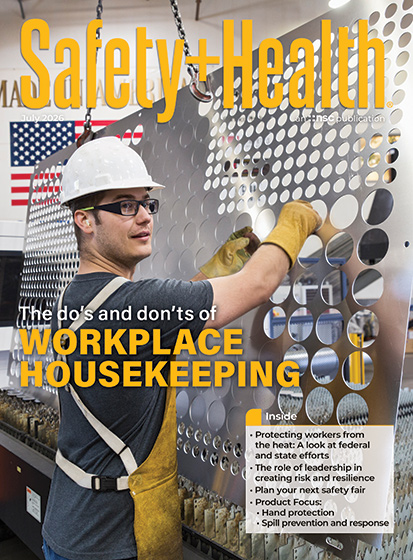
Current Issue
Get our email newsletters
Join 92,000 other Safety & Health Professionals who rely on S+H to keep them up to date on the topics that matter most.
Earn recertification points

Take a quiz about this issue of the magazine and earn recertification points from the Board of Certified Safety Professionals.