
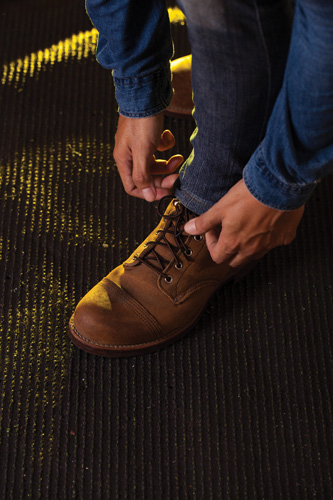
Well-fitting, appropriate footwear is critical to keeping workers comfortable while protecting them against on-the-job injuries. The Canadian Center for Occupational Health and Safety offers information to help make the right selection.
According to CCOHS, good footwear should have the following qualities:
- The inner side must be straight from the heel to the end of the big toe.
- The shoe must grip the heel firmly.
- The forepart should allow freedom of movement for the toes.
- The shoe should have fastening across the instep to prevent the foot from slipping while walking.
- The shoe should have a low, wide heel.
When considering protective footwear:
- Consider shock-absorbing insoles for jobs that require frequent walking or standing on hard surfaces.
- Shoe and boot uppers are offered in a variety of materials. When you’re selecting an upper, take into account workplace hazards and individual characteristics of the foot.
- A steel midsole should protect against penetration by sharp objects while being flexible enough to allow the foot to bend.
- Look for a sole made from the proper material and is the correct thickness for the hazards and flooring present in the workplace.
CCOHS offers advice for trying on footwear:
- Don’t expect a shoe or boot that is too tight to stretch over time.
- Have both of your feet measured – many people have one foot that is larger than the other. You should buy protective shoes that fit your larger foot.
- Try on footwear in the late afternoon, when feet are likely to be swollen to their largest size.
- Make sure steel toe caps cover the length of the toes from the tips to beyond the natural bend of the foot. A soft pad covering the edge of the toe cap can improve comfort, but if the toe cap cuts into the foot, either the size or style is incorrect.