
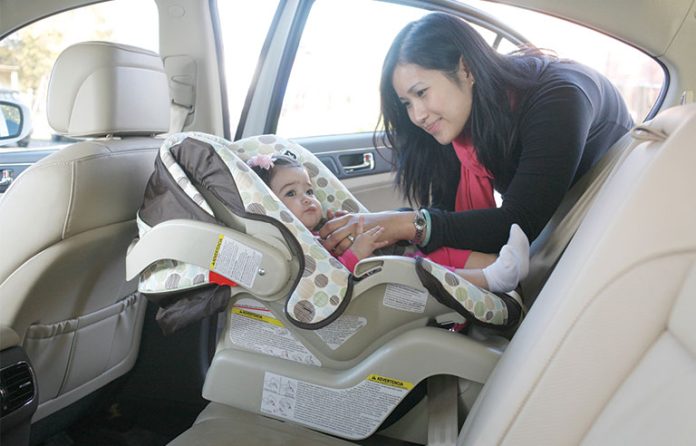
Columbus, OH — Rear-facing car seats are effective at protecting young children in rear-impact collisions, according to a recent study from Ohio State University’s Wexner Medical Center.
To address parents’ concerns about children facing the impact of potential crashes involving the rear of the family vehicle, OSU researchers sought to test the effectiveness of rear-facing safety restraints in rear-impact collisions, which make up more than 25 percent of all vehicle crashes.
The study featured 12 tests of four rear-facing child seat models at a collision speed of about 17.5 mph. “The effects of carry handle position, occupant size, presence of anti-rebound bar, Swedish style tethering, and lower anchor vs. seat belt installation were also investigated,” the researchers wrote in a technical paper published April 3.
When used correctly, researchers found, those safety features absorbed crash forces while controlling the motions of the child, “making rear-facing car seats a good choice in this scenario.”
In an April 3 press release from OSU, lead study author Julie Mansfield said it’s important for parents to follow recommendations for the right type of car seat for their child’s age, height and weight.
“The rear-facing seat is able to support the child’s head, neck and spine and keep those really vulnerable body regions well protected,” Mansfield said. “These regions are especially vulnerable in the newborns and younger children whose spine and vertebrae haven’t fused and fully developed yet.”
The study was published in SAE International in April.