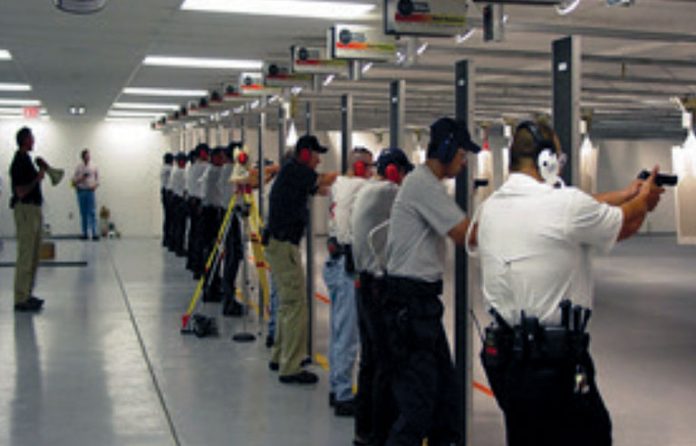
Washington — OSHA has published a fact sheet and Quick Card intended to help employers protect workers from exposure to lead at indoor firing ranges.
According to the Bureau of Justice Statistics, more than 1 million local, state and federal law enforcement officers work in the United States, and are required to undergo regular firearms training. The OSHA resources state that workers at indoor firing ranges may face exposure to lead or lead dust through numerous channels, including:
- Gun smoke when lead bullets are used.
- Bullet impact at the target area.
- Handling spent cartridges.
- Dry sweeping and using vacuums not equipped with high-efficiency particulate air filters.
- Changing ventilation system filters and vacuum bags and other maintenance.
- Ingestion by handling food while lead dust is on hands or nearby.
“Lead can enter the bloodstream by breathing or ingesting lead particles,” the Quick Card states. “Once in the bloodstream, lead can damage various organs and cause health problems.”
OSHA requires employers to protect workers from lead exposure under standards for general industry (1910.125), shipyards (1915.1025) and construction (1926.62), setting a permissible exposure limit of 50 µg/m3 of lead over an 8-hour, time-weighted average for all employees covered. OSHA also has established that employers must initiate certain compliance actions at a level of 30 µg/m3.