

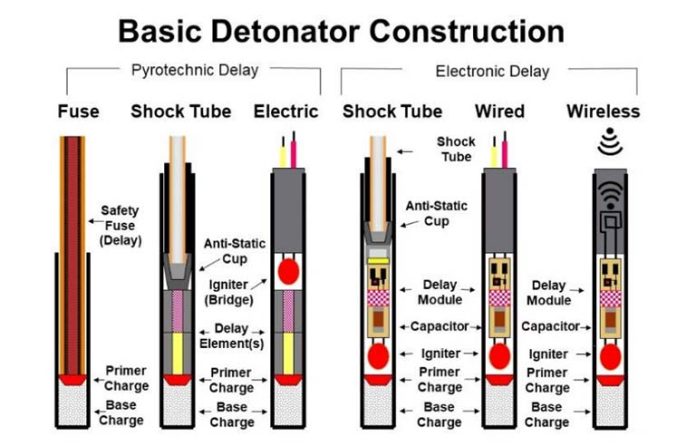
Arlington, VA — In an effort to dispel confusion between electronic and electric detonators, the Mine Safety and Health Administration has issued a safety alert.
Developed in conjunction with the Institute of Makers of Explosives, the alert notes that despite the similar appearances and functions of electronic and electric detonators, “they are very different.” Distinctions include:
- Unlike electric detonators, the wire leads of electronic detonators don’t attach directly to a match head or bridge wire.
- Electronic detonators feature additional protection from extraneous energy sources, such as a spark gap device to protect against static discharge events, as well as current limiting resistors.
- Although both types of detonators are susceptible to damage by an electromagnetic pulse, electronic detonators typically have built-in protection from EMPs.
- Whereas electric detonators can be used with any appropriate firing device, electronic detonating systems remain unique and must never be interchanged. Users should understand and follow manufacturer guidelines for training and overall use.
- Digital Partners -
The alert instructs users to always clear blast areas of personnel, vehicles and equipment before connecting to the firing device or blast controller. Keep the blast area clear until the charge on an electronic detonator has had time to bleed off.