
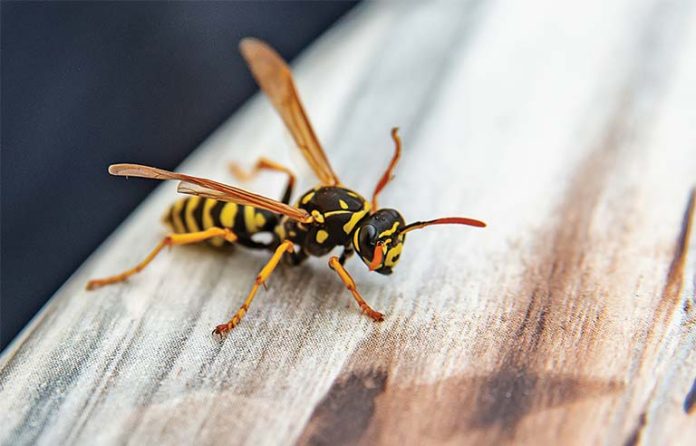
Outdoor workers are unique in that they regularly share their workspaces with wasps, bees, hornets and other stinging insects. It’s important for workers to know how to respond to and treat stings, especially because some people may be allergic.
“Workers with a history of severe allergic reactions to insect bites or stings should carry an epinephrine auto-injector and wear medical ID jewelry stating their allergy,” NIOSH says.
The agency provides these tips to help protect against stings:
- Wear clean, light-colored clothing that covers as much skin as possible.
- Don’t use scented soaps, shampoos and deodorants before work.
- Avoid working near flowering plants when possible.
- Keep work areas clean. Some insects are attracted to discarded food.
- Stay calm if a stinging insect is flying around. Swatting at it may cause it to sting. If multiple stinging insects approach, go indoors or to a shaded area.
- If an insect is inside your vehicle, stop slowly and open the windows.
Has a worker been stung? If so:
- Have someone stay with them to make sure they don’t have an allergic reaction.
- Wash the sting site with soap and water.
- Remove the stinger using gauze wiped over the area or by scraping a fingernail over the area. Don’t squeeze the stinger or use tweezers.
- Apply ice to the sting area to help reduce swelling.
- Don’t scratch, as this can increase swelling, itching and risk of infection.