

|
CHOOSE A PROFILE
|
BROWSE ALL PROFILES
|
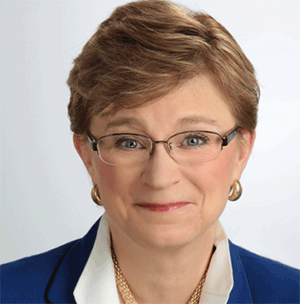
Introduction by
Lorraine M. Martin
President and CEO
National Safety Council
Over the past year, I’ve had the honor of speaking with several safety leaders about what makes safety personal to them. Time and again, they’ve told me how witnessing unsafe conditions led them to become dedicated advocates for safety in the workplace. Listening to their stories, I’m continually reminded that strong safety leadership is much more than adhering to workplace regulations – it’s making sure everyone gets home safe at the end of each and every shift.
That’s what it means to be a CEO who “gets it”: a leader who ensures safety remains their organization’s top value by building a strong safety culture and encouraging workers to use their voice to speak up about safety issues, near misses and possible improvements.
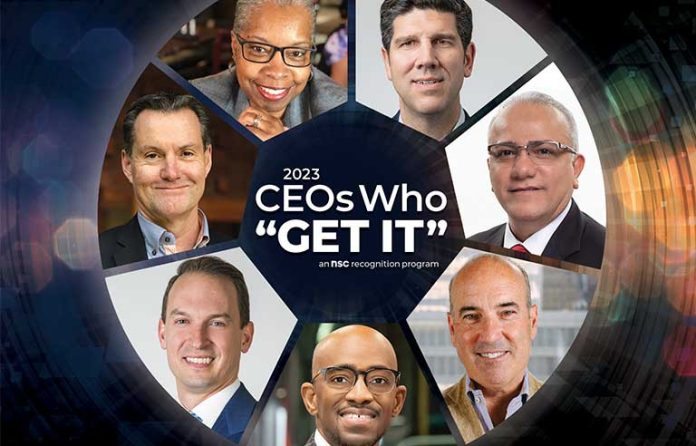
The seven CEOs being honored this year have proven their dedication to the value of safety across a wide variety of industries and locations. They’ve integrated new technologies, broadened the scope of their programs to include psychological safety and bolstered worker engagement. Their impressive achievements have not only enhanced the safety of their workers, organizations and communities, but undoubtedly saved lives.
A CEO who “gets it” is inherently an innovator. Take CEO Paul Danos, whose company uses a custom-built safety tracking tool, as well as cutting-edge virtual reality and augmented reality technologies, to enhance worker training. Similarly, Jane E. Cheeks of the City of Houston successfully advocated the implementation of a new safety manage-ment system that has improved safety outcomes across city departments.
In the past several years, the importance of looking at a worker’s mental well-being has moved to the forefront. Our psychological safety – how included we feel within the organization and how comfortable we feel speaking up and identifying issues without fear of reprisal – has an enormous effect on our physical safety. A passionate advocate for transportation industry safety, Ryan I. Daniel of St. Cloud Metro Bus established a program aimed at improving worker well-being, morale and camaraderie. And Les Hiscoe of Shawmut Design and Construction has prioritized Total Worker Health at his organization with trainings on mindfulness and inclusive management.
A good safety leader understands that safety is a dialogue between workers and management. They listen to their workers’ ideas and concerns and embrace their views when refining their organization’s safety culture. Look at Ali Al-Baqali of Aluminium Bahrain, who shook up the organization’s top-down safety strategy when he named every worker a safety manager and created a task force dedicated to out-of-the-box worker ideas. At S&C Electric Co., Anders Sjoelin built a safety culture so strong and worker-focused that 95% of workers surveyed said they feel they have a voice or ownership role in their safety program.
Finally, a CEO who “gets it” never stops looking for ways to improve the safety of their workers. Brian Cox of Stack Infrastructure has continued to grow his safety team, adding nearly a dozen full-time safety workers; a vice president of environment, health and safety; and safety consultants to ensure safety always remains top of mind.
Each of these seven extraordinary individuals has shown their workers, organizations and communities that nothing should matter more to an employer than safety and health. Their dedication to finding new solutions, creating stronger cultures and engaging workers more deeply in the work of saving lives is truly inspiring.
On behalf of the National Safety Council, congratulations to all of the 2023 honorees.
Browse individual CEO profiles by clicking on a photo below or by pressing the navigation buttons at the top of each page.
-
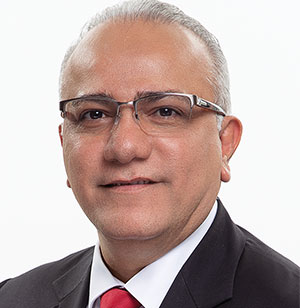 Ali Al Baqali
-
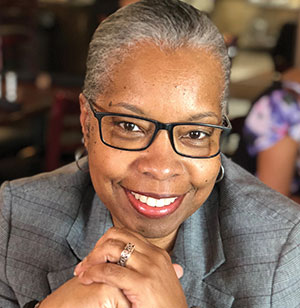 Jane Cheeks
-
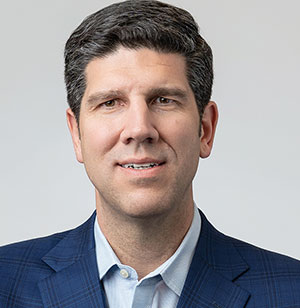 Brian Cox
-
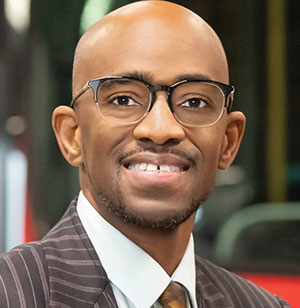 Ryan Daniel
-
 Paul Danos
-
 Les Hiscoe
-
 Anders Sjoelin
Does your CEO ‘get it?’
Tell us why on the submission form and your CEO could appear among the 2024 selections.
CEOs Who “Get It” through the years
Browse CEO picks from the class of 2015 through the present.
Ali Al-Baqali
CEO
Aluminium Bahrain B.S.C.
Kingdom of Bahrain
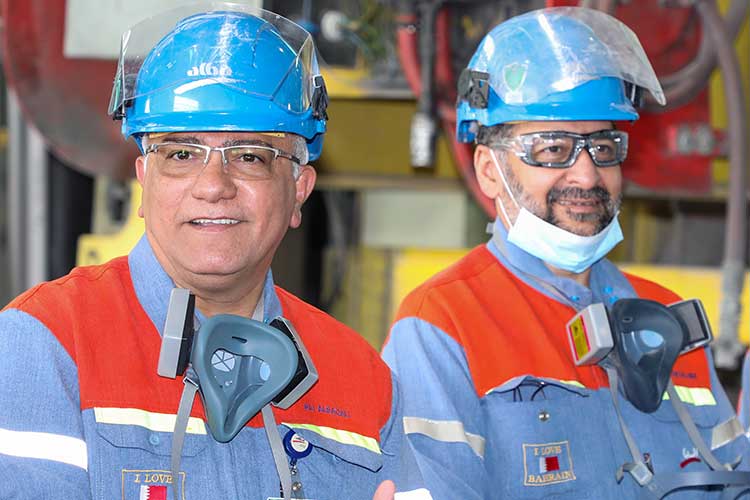
Aluminium Bahrain (Alba) produces high-quality products in the form of standard and value-added products, which are exported to more than 240 global customers through its sales offices in Europe, Asia and a subsidiary office in the United States. The company has more than 3,100 employees.
Describe your personal journey to becoming a CEO who “gets it.” What experiences or lessons brought you to where you are now?
In the past 15 years, I have worked closely with two different CEOs as a member of the senior management. One chose to focus on cost savings over safety, thus resulting in devastating outcomes in many arenas. My predecessor chose to focus on safety rather than cost, and that has yielded higher safety milestones that were never achieved before, in addition to other milestones. At the time of my assignment, I choose to cultivate the same safety approach that I witnessed while being the deputy CEO, but it was again too challenging, as everyone used to work toward achieving safety results rather than focusing on doing everything right.
This past experience made me believe that safety is not a destination, but a journey that never ends. My biggest nightmare was the thought of losing a person, which drove me to do more every day, every hour and every minute to ensure appropriate systems are in place, maintained and followed to safeguard all stakeholders in Alba through a solid and unbreakable safety culture.
What is the biggest obstacle to safety at your organization? How do you work to overcome it?
Alba comprises 3,100-plus full-time employees and 4,000 contractor workers working in the vicinity of 1.2-square miles, with the majority doing manual and interactive work. This scale of people – most of whom are working with machinery and equipment – needs vivid systems, supervision, procedures, knowledge, skills and much more, coupled with safety culture being consistent to all individuals who are working in and around this organization. This is what we do on daily basis! Building a sound safety and health management system is one of the fundamental areas, alongside having clear objectives and targets.
Therefore, building robust systems and empowering employees are key to overcoming the obstacle of constructing a health and sound safety culture. It is worth mentioning that our first safety principle states that “ownership of safety and environment is everyone’s responsibility.”
Why is safety a core value at your organization?
Safety excellence has been put at the top of Alba’s strategy. I have seen the difference between poor and good safety performance, and how it can affect the company – whether it is on the operational and financial fronts or employee morale. I believe that one injury is too many. Our aim is to produce aluminium safely, and I can confidently say that we have been achieving zero lost time injuries in the past few years. These results clearly demonstrate that when you get safety right, everything else will be right!
How do you instill a sense of safety in employees on an ongoing basis?
The shortest answer would be maintaining a positive safety culture and constantly being visible (as a management team) on the shop floor. We endeavour promoting positive safety culture, rewarding good ideas and excellent safety performance, recognizing individuals (full-time employees and/or contractor workers), conducting regular safety inspections, and organizing comprehensive and interesting safety campaigns on a regular basis to keep the safety momentum running – all the while reviewing and auditing our safety policies and procedures as well as monitoring performance at regular intervals, to ensure we have the right systems at the workplace.
We also take any safety incidents, such as damages, near misses, etc., and use them to extend our knowledge and skill requirements while providing the best remedial management actions to prevent their reoccurrences in the future.
How does your organization measure safety? What are the leading indicators that show you how safe your organization is, and where do you see room for improvement?
At Alba, there are many leading and lagging indicators that we monitor closely to give us the pace of our current safety performance. We monitor inspection reports, behavioral observations, incident trends with all categories, employee safety suggestions, the number of meetings we conduct related to health and safety, the outcome of the audits, and much more. The most prominent leading indicator is the number of employees involved in all of our programs.
Basically, the secret of a successful health and safety management system is finding the right balance between the top-down and bottom-up safety approach. Employee involvement caters for 50% of the success of any health and safety management system, thus giving employees a chance to drive the safety culture. At first glance, this might sound scary for the top management in any organization, but the fact remains that employee involvement will help in adopting the management programs, as well as the culture that we strive to achieve.
What role does off-the-job safety play in your organization’s overall safety program? What types of off-the-job safety and health programs does your organization offer to employees?
Our health and safety programs are built on engaging employees, contractor workers and the community. We continuously promote the philosophy of coming to work safely, working safely, going home safely and staying safe at home! Moreover, we have a dedicated committee (community service) that is designed to promote Alba and its strategies in the community. The community service team has done an extensive number of campaigns over the past few years, such as cleaning public beaches, visiting children and older adults in hospitals, and promoting traffic safety in collaboration with the Directorate of Traffic here in Bahrain.
We have encouraged employees to produce safety videos jointly with their families. Those videos were a great contribution and impacted all members in the organization. In fact, our workforce has a great deal of talent that has been presented widely in the past few years, thanks to the bottom-up approach that was adopted by management.
What have you done to support employee mental health and well-being within your organization?
Although we have come a long way in nurturing a sound health and safety management system, and hence a positive health and safety culture, we believe that safety is a journey and we should constantly nurture it! Indeed, employee mental health and well-being have surfaced during the past few years, as going through the COVID-19 pandemic has brought a new challenge. We run a program that is dedicated to cultivating the well-being of employees at the workplace that is part of our environmental, safety and health policy. We aim to develop more such programs that target employee mental health, knowing that this is the need of the hour, especially post COVID-19.
Jane E. Cheeks
Director of Human Resources
City of Houston
Houston, TX
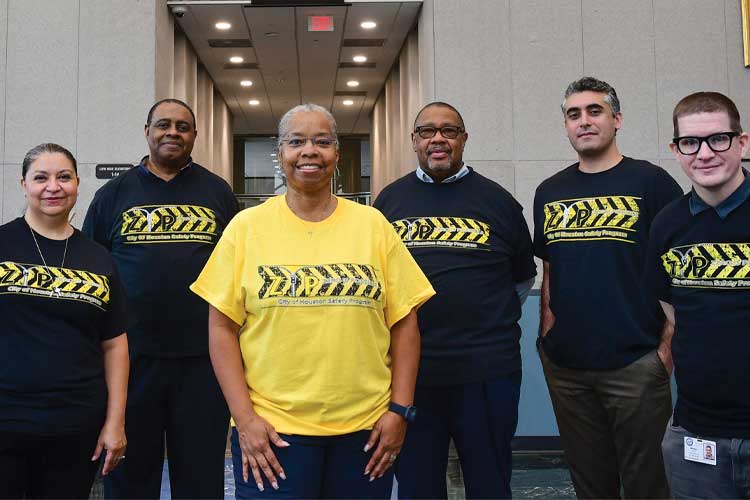
The City of Houston provides the services and programs necessary to take care of the nation’s fourth largest city and its residents. With a workforce of over 21,000 in 26 departments, the city’s responsibilities include maintaining infrastructure, providing public health services, maintaining parks and providing recreational facilities and activities, managing three airports, supporting neighborhoods and their residents, promoting public safety, enhancing sustainability, supporting businesses and entrepreneurship, and a host of other activities.
Describe your personal journey to becoming a CEO who “gets it.” What experiences or lessons brought you to where you are now?
When Mayor Sylvester Turner confirmed me as the human resources director, safety was at the forefront of what I wanted to accomplish. We had a phenomenal team, which I believe had been stifled in its creativity. I wanted to unleash their capabilities in a manner that the city had never seen, and I wanted us to stop being so reactive to things and start being proactive to address what was necessary. I also think it’s important that we realize that it’s usually our employees who can actually help us accomplish our safety strategies and goals. When you allow their ideas to come to fruition, you see great and wonderful things. That’s what happened with me. The team had great and wonderful ideas, and it was my responsibility to remove any obstacles and give them the opportunity to be successful in what they wanted to do.
It also helped that the mayor saw safety as a priority, but on a bigger scale that covered the whole city. As he worked on his Safe Houston initiative, we were working on our Zero is Possible (ZIP) program, a standards-based safety campaign with the primary goal of driving the city’s occupational safety awareness and mindset toward zero accidents, zero injuries and zero safety compromises. The mayor’s program was implemented first, which allowed us to pivot and gain more attention for our internal policy that was approved hours later.
Believe it or not, employees pay attention. Hearing things from the top is a good thing, but when they see you implement things from the bottom that rise to the top, it’s even better. When we started rolling out the ZIP initiative, it had to be a collaboration between human resources, the departments and the employees! Using that formula as a guide, we were able to get directors from all departments to understand our vision with ZIP, and see how the initiative had to be embraced at the highest level, so that the employees could actualize it at their level.
We incorporated our Talent Management System into the administrative process so that employees could take safety courses online and, upon completion, get a ZIP Safety T-shirt. Believe it or not, this was one of our biggest successes in implementing the program. We found employees taking the safety training even before it was rolled out in their department, so that they could receive one of the T-shirts. You might find that odd, but we said, “Whatever works!”
We also needed to recognize opportunities to enhance our risk management programs. As a result, we created a specialized safety team focused on high-risk public works operations; a specialized chemical, biological, radiological, nuclear and explosive safety task force; and a citywide campaign to launch the ANSI Z10 system.
What is the biggest obstacle to safety at your organization? How do you work to overcome it?
The City of Houston has over 21,000 employees and operates 26 municipal departments that serve more than 2.3 million Houstonians across 669 square miles. Additionally, the city has over 10,000 contractors. Our biggest obstacle is to engage and educate all of our employees in their respective fields.
To overcome these challenges, we use our Talent Management System to administer a foundational set of safety trainings with six mandatory courses covering high-frequency hazards. Additional courses are periodically developed and advertised throughout the year. All City of Houston drivers receive defensive driving training every three years, along with a full Safe Driving program; and all CPR/first aid/AED providers receive recertification training every two years.
Citywide and departmental new employee orientation programs were updated to include safety-related information. Over 50,000 safety promotional materials have been distributed. A citywide safety newsletter was created with monthly distribution, while over 100 safety bulletins are created each year, along with posters, quick reference cards, checklists and much more. Public health safety advisors led the citywide COVID-19 and mpox (formerly known as monkeypox) responses, including providing safety advice to hundreds of external partners and participating in a variety of events.
Why is safety a core value at your organization?
Our primary goal is to have employees return home from work in the same condition in which they came. We accomplish this by growing a culture of safety awareness and accountability, and collaborating interdepartmentally to reduce injuries, costs and loss of work productivity. We believe that safety doesn’t happen by accident. Implementing safety measures and accident prevention practices can enhance efficiency rather than supersede or interfere with work productivity.
How do you instill a sense of safety in employees on an ongoing basis?
The ZIP program is our safety campaign that has the primary goal of driving the city’s occupational safety awareness and mindset toward zero accidents, zero injuries and zero safety compromises.
We emphasize that each employee plays a vital role in fostering a safe work environment by:
- Becoming a safety ambassador – “If you see something, say something”
- Being aware and alert to potential hazards at all times
- Reporting incidents, hazards, safety violations, near misses, and unsafe acts and conditions
- Setting an example for co-workers by knowing, reinforcing and following safety rules
We also instituted ZIP Fridays, when we wear our ZIP T-shirts to show our support for a safer City of Houston. The HR Risk Management team meets in the lobby of our building and provides safety tips and holds safety policy and procedure trivia contests to win prizes. This is another example of how we actively engage employees. We also send out a monthly ZIP newsletter and conduct monthly safety meetings consisting of representatives from all city departments.
How does your organization measure safety? What are the leading indicators that show you how safe your organization is, and where do you see room for improvement?
Our safe work practices were validated through over 1,000 work observations and over 500 facility inspections each month showing a reliable 98% safe work practices and 99% safe work conditions. Over 200 near-miss reports are analyzed each month. Departments have their own safety recognition programs, while a citywide safety committee has its own monthly Safety Champion recognition.
Within the citywide rates, individual department rates show the benefits of the immersive safety management system. For example, the City of Houston Health Department’s compensable claims rate is 1.33 per 100 employees, and its days away, restrictions and transitional duty rate is only 0.89 per 100 employees. Compared with the health care industry’s Bureau of Labor Statistics’ OSHA-recordable rate of 5.5 per 100 employees, the City of Houston’s public health compensable claims rate is significantly lower than the industry’s national standard.
All incidents are comprehensively analyzed to determine preventive measures for continual improvement. Furthermore, an electronic online safety management system has been implemented to better consolidate, analyze and track all data. This system has transformed the City of Houston’s culture proactively, with reliable controls and culture-enabling improvements. This has led to significant increases in safe work, even during high-risk times such as the COVID-19 pandemic, when the city’s safety management team led reliable respiratory protection measures, contamination control and other controls validated by consistent leading indicators.
This level of hazard control has been recognized by the Public Health Service Commissioned Corps, the Federal Emergency Management Agency, the National Safety Council, the Association for Occupational Health Professionals in Healthcare, and the American Society of Safety Professionals, among others.
I empower my teams by encouraging them to participate in career development activities, even beyond the borders of the United States. As a result, the resources and programs produced by my teams are routinely requested by a variety of other municipalities and employers.
What role does off-the-job safety play in your organization’s overall safety program? What types of off-the-job safety and health programs does your organization offer to employees?
Off-the-job safety is just as important as on-the-job safety, if not more important. Statistically, more incidents happen away from work than at the workplace. That’s why we frame our safety programs, such as ZIP and our wellness programs, to extend beyond the workplace and into our employees’ lives at home. Safety doesn’t stop when you leave the office or worksite, it’s a constant state of mind. To keep that state of mind and ensure safe behaviors become habits, we incorporate work and home safety holistically. We include work hazards and home hazards in most of our safety committee meetings, across all departments. Many topics are explained as applicable to both environments (ladders, slips/trips/falls, electrical, fire, strains, etc.) and areas such as holiday safety are covered consistently. We encourage all our employees to apply all our safety strategies in their personal lives, and market our safety programs to be used as such. Safety isn’t exclusive to work, and our employees know that.
What have you done to support employee mental health and well-being within your organization?
We administer the employee assistance program through the HR benefits division. This service is a benefit provided to employees and their family members. It is free and confidential and can assist employees with resolving personal and work problems, which may be impacting performance. The EAP is a leader in following the Drug-Free Workplace Act, and serves as an important resource for supervisors and managers by providing consultation and education. A supervisor has the option to informally refer an employee to the EAP, where licensed counselors can provide assessment and appropriate referrals or provide counseling to help resolve personal and/or work problems. The EAP is also available to assist with grief counseling, as well as deploy to various departments/locations to support employees in response to catastrophic or other emotionally impactful events.
The city has one of the few in-house EAPs, while most entities outsource this service. We believe that this instills a higher level of trust and shows our employees that we genuinely care about their well-being. We also contract with a firm to provide 24-hour assistance for a variety of issues, as well as support the in-house team when needed.
We recently introduced Municipal Bereavement Liaison Services, which provides assistance when a city employee or a member of the employee’s immediate family dies. The bereavement liaison is the single point of contact to help employees and their families navigate various benefits and services available.
Brian Cox
CEO, STACK Americas
STACK Infrastructure
Denver, CO
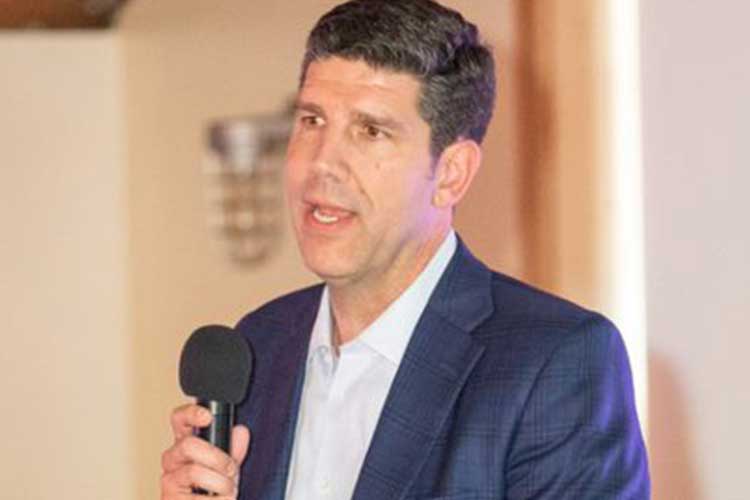
STACK provides digital infrastructure to scale the world’s most innovative companies. With a client-first approach, STACK delivers a comprehensive suite of campus, build-to-suit, colocation and powered shell solutions in the Americas, EMEA and APAC regions. With 500-plus employees and contractors across the globe, the STACK team provides the experience required to deliver scalable capacity with a commitment to excellence.
Describe your personal journey to becoming a CEO who “gets it.”
My personal journey began in the Army when I first observed the best leaders prioritize the welfare of the troops in their command. Leading the exercise, checking on the well-being of the soldier and taking care of themselves only after everyone else was accounted for was engrained in my memory. The visual has stuck with me throughout my career. I try to make sure everyone at STACK is prioritized before I worry about me. We live in such a dynamic time that it must start with the well-being of our employees. If we do not – at a minimum – prioritize human life in physical safety and mental health, I am not sure the rest of it matters.
Early in STACK’s growth, we recognized the inherent risks to workers in the construction trades and empathized with the challenges faced daily by the tradesmen and women. Although these workers are not direct employees of STACK, they are our partners, and they have people in their lives who count on them to come home safely. It is part of our culture to value these partners and do our part to ensure our buildings are safe to construct and operate. We can delegate the authority to help with a project to our partners, but the responsibility for safety at all levels resides with the CEO.
What is the biggest obstacle to safety at your organization? How do you work to overcome it?
A challenge for any data center developer and operator is ensuring safety for not only your own employees but all partners, contractors, vendors, clients, visitors and the like. STACK ensures all stakeholders harbor a deep and serious commitment to safety. During monthly leadership-level meetings with our key partners, I engage with the C-level leadership to align our safety cultures and discuss the latest innovations in safety. Each meeting’s goal is to understand what our partners are doing to continue to drive their safety culture and to ensure we’re all aligned in how we view safety. STACK established a full contractor qualification process, including an extensive section on safety, in the initial request for proposal, as well as one-on-one interviews with the senior leadership team to evaluate safety culture performance and alignment. I meet with the CEOs of our key partners to make sure our values align and that we maintain open and honest conversation related to safety. The qualification process is just one step in ensuring a global forum of safety and transparency within STACK’s sites across the world.
Why is safety a core value at your organization?
Safety should be a core value of any company. One of our values is: “Growth is hard: Work with empathy and safety.” We are a fast-growing company that is built on the foundation of safety, and thus, STACK has established itself as a prominent safety innovator in the industry. Rather than follow start-up methodologies, we have prioritized cutting-edge standards and technologies more commonly associated with larger companies, allowing STACK to scale for the future, and that has been all the difference.
To instill safety throughout our organization, STACK has implemented 100% fall restraint on scissor lifts; enforced an industry-leading review process of high-risk activities within development and operations; became early adopters of mandated climbing-style helmets at all data centers and construction sites down through sub-level; required that Change Action Board review meetings include high-risk safety activities for employees and clients that are elevated up to our chief data center officer; and initiated utilization of Kaizen principles, such as one-point lessons to share learnings and best practices with our entire portfolio, including the sub-contractor level. Consequently, safety is a firmly rooted value in every aspect of STACK.
How do you instill a sense of safety in employees on an ongoing basis?
I believe safety must be an intrinsic part of company culture, and STACK has enacted standards to ensure it is. We start by providing tools that enable any employee to easily report and identify concerns and issues, as well as recognize co-workers for great safety behavior and performance. This observation program has helped us to improve and engage all levels of the organization while providing valuable insights on areas that need further attention to achieve the desired safety success.
How does your organization measure safety? What are the leading indicators that show you how safe your organization is, and where do you see room for improvement?
STACK is committed to transparency in reporting of incidents and near misses and monitoring for trends weekly. To ensure communication, all construction and operations employees receive training on expectations for incident investigation and reporting. For any incident that is recordable or any serious near misses, the EHS team develops a full corrective action plan and tracks it to closure, with senior leadership engaged throughout the investigative process. We track many standard industry KPIs and are working on more innovative approaches that measure leadership engagement and safety innovations. We believe these new approaches will provide more predictive insights desired to prevent incidents. We seek out partners who are willing to think outside the box, be creative and explore fresh approaches to ensure worker safety.
What role does off-the-job safety play in your organization’s overall safety program? What types of off-the-job safety and health programs does your organization offer to employees?
The health and well-being of our employees on and off the job is important to STACK. To encourage and support health and safety, our critical operations leadership team instills annual goals, including the following: employees using all available paid time off, encouraging volunteerism outside of work, and engaging in community outreach and activities focused on physical and mental health. STACK-sponsored volunteer days support these goals, as well as our initiatives around building supportive teams. The better people know and understand one another, the more likely they are to recognize and reach out when they see a co-worker struggling mentally or with challenges outside of work.
Our teams have also sponsored fitness challenges, such as The Murph Challenge. This challenge supports veterans and appeals to our employees, of whom 30% are veterans. When we see our employees organically identifying opportunities to build teams and friendships in the workplace, we know we are on the right path to a strong and sustainable culture of safety and employee wellness.
We know we have two employee populations that experience the highest suicide rates: construction workers and veterans. That drives us to continue to do more with regard to mental health awareness and support. Training programs that help our managers and leaders identify warning signs, resources available through our benefits programs, and a culture committed to encouraging conversations about safety and health on and off the job is of high importance to STACK.
What have you done to support employee mental health and well-being within your organization?
It starts with creating an empathetic and energetic culture. Each STACK employee is charged with creating a welcoming and inclusive culture where learning and caring are prioritized. This is part of the interview process and reinforced at each opportunity. The positive energy allows for people to grow in their roles.
More tactically, STACK takes employee mental health and well-being very seriously. Within our company benefits program, multiple health insurance plans cover therapy, and we also offer an employee assistance program with up to three face-to-face sessions free of charge. Our ample paid time off of 20 days, plus eight holidays, enable employees to spend more time connecting with their thoughts, loved ones and faith practices throughout the year. Additionally, STACK offers an industry-leading corporate wellness solution that supports mental health journeys and sleep. Last year, STACK gifted all employees with a wellness box of items specifically designed to decrease stress. STACK deeply values our employees, and we take great pride in prioritizing their health and well-being throughout the year.
Ryan I. Daniel
CEO
St. Cloud Metropolitan Transit Commission
St. Cloud, MN
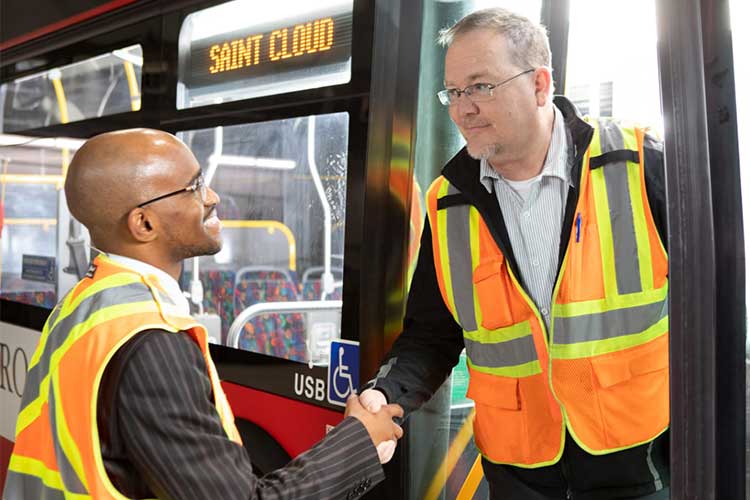
The St. Cloud Metropolitan Transit Commission, also known as Metro Bus, operates in central Minnesota, with the mission to provide safe, friendly and reliable public transportation services. Metro Bus has three primary divisions: Fixed Route, Dial-a-Ride paratransit and Northstar Link Commuter Bus service operated on behalf of three counties. Metro Bus and its 160 employees transport over 1 million passengers annually.
Describe your personal journey to becoming a CEO who “gets it.” What experiences or lessons brought you to where you are now?
I started my career in public transportation as a bus operator for the New York City Transit Authority. Along the way, I spent two years as a training manager for the Central Ohio Transit Authority, where I supported and operationalized the mission of training and safety by designing job-related and safety-focused learning systems in support of COTA’s workforce. Washington Metro Area Transit Authority was my next transit system, where I served as the manager of bus service. At WMATA, I directed the overall functions for day-to-day bus service delivery, trained staff and managed performance. I managed standards for improving safety culture, employee development and labor relations. These three transit authorities prepared me to be the CEO of St. Cloud Metropolitan Transit Commission and to navigate a pandemic no one knew was on the horizon. In New York City as a bus operator, I was part of a team of over 5,000 bus operators, where our goal was to safely move over 2 million people a day, 365 days a year, without accident or incident, no matter what the weather conditions were. That taught me the importance of being safe and that safety had no days off.
What is the biggest obstacle to safety at your organization? How do you work to overcome it?
Complacency is the biggest obstacle. We find that employees get too relaxed within their roles, and this is the time we must redouble our efforts with training and awareness. In 2016, we initiated new safety improvements that reduced preventable incidents by 55% from 2017 through 2021. The development and implementation of the Metro Bus Safety Program was the key management factor in improving safety results. Elements of the Metro Bus Safety Program include updating systems used for tracking, investigating and retraining as a result of accidents or incidents. The various programs and initiatives that are in place to help aid in overcoming complacency include annual refresher training, which is mandatory for all employees; the creation of a safety committee, which consists of employees from various departments in the organization; and safety messages displayed throughout all our facilities, which serve as reminders to all employees that safety is No. 1. The employees are also honored on the achievement of preset milestones, for going the distance without an incident.
Why is safety a core value at your organization?
Citizens who use public transportation in central Minnesota consider their mode of transit a personal asset for them to get to work, school, home and even for leisure purposes, as it assists in their life’s journey. As a result of being an asset, and having the trust of the community, safety is paramount in maintaining our position in the eyes of our riders, as well as our employees, thus the reason safety is a core value. We can have top-of-the-line buses with all the bells and whistles, but if they pose a risk to our bus operators, customers or community, we have done a disservice. Therefore, we keep safety at the forefront of our day-to-day operation, where it is measured, to ensure success.
How do you instill a sense of safety in employees on an ongoing basis?
A favorite saying of mine is, “You have to inspect what you expect, or employees will not take what you are saying seriously!” Therefore, we measure our incidents and reward all operators every time they collectively go 30 days without a preventable incident. We listen to our team through regular pulse surveys, suggestion boxes, committee meetings and act on all items that can enhance the service delivery experience, for both internal and external stakeholders. Our training and safety department, along with the safety committee, are leading top-level factors in making sure employees are given the tools they need to be safe and successful in their various roles. We also have a digital safety board that keeps a running count of the time since our last preventable incident. It is in a uniquely visible location between our Fixed Route and Dial-a-Ride garages. This keeps safety as a primary focus for all staff as they go about their duties. Our safety reporting system also provides employees with a tool to directly submit any issues or concerns they perceive as a safety hazard as they perform their daily tasks. Employees are continually reminded to stay focused on safety and report any incident they feel jeopardizes that commitment.
How does your organization measure safety? What are the leading indicators that show you how safe your organization is, and where do you see room for improvement?
Two of the many ways our organization measures safety is by looking at the number of preventable incidents and the mean distance between failures. MDBF measures our fleet’s mechanical reliability and success of preventative maintenance efforts. A higher MDBF value indicates we are improving the mechanical performance of our fleet, and thus providing better service reliability for our customers. This data is monitored on a monthly basis. Our leading indicators are audits and field inspections. As a result, we implemented a digital safety board, displaying the time since the last preventable incident for any in-service vehicle in real time. This encourages the operators to be mindful of their training and to not have an incident so the clock is not reset. If I had to select one area to improve upon, it would be reducing our total number of incidents in a year. We will remain faithful with our training and reinforcing these values, as we continue our downward trend toward the ultimate goal of zero incidents.
What role does off-the-job safety play in your organization’s overall safety program? What types of off-the-job safety and health programs does your organization offer to employees?
Off-the-job safety is still overall on-the-job safety from our perspective, therefore it plays a critical role. We cover 100% of our employee’s health benefits, with the hope they will take exceptional care of their body, mind and spirit. This benefit should afford each team member to bring their best selves to work each day. If an employee is indulging in illicit drugs off the job and experience side effects while at work, that is a liability to us. The world has seen an increase in mental health issues. We offer and encourage employees to use mental health resources. Our employee assistance program includes:
- Self-care mobile apps to help with insomnia, anxiety, depression, substance use, obsessive compulsive disorder and chronic pain
- Health and wellness articles, guides, webinars and podcasts
- Online assistance with elder care, child care and other family-life resources
- Help with teen and adolescent issues, including eating disorders and relationships
- Tips on parenting and grandparenting
- 24/7 phone consultation with licensed mental health professionals and referrals to supportive resources
- Ongoing personal coaching sessions with scheduled telephonic appointments, and more.
Metro Bus wants our employees to be authentic outside of work, and bring that same person to work, so we support a balanced, healthy and safe lifestyle.
What have you done to support employee mental health and well-being within your organization?
The mental and emotional health of our employees are of utmost importance. Metro Bus established an employee well-being program, featuring a committee comprising a cross-section of employees representing all departments who plan events, recommend ideas, provide well-being resources and coordinate initiatives. The well-being committee is empowered to fulfill the mission to “foster an environment that contributes to our employees’ social, financial, physical and emotional well-being.” The committee meets monthly to plan and develop programs to encourage employee engagement, fitness/nutrition practices, and other activities to promote employee morale, camaraderie and overall well-being. These programs provide access to well-being resources such as the employee assistance program, a library of materials for check out, and ongoing information related to mental/emotional health and how our employees can thrive. Some events our well-being committee has hosted include the Annual Fitness Challenge, Ugly Holiday Sweater Contest, Employee Softball Challenge and Casual Fridays. I must say, the Dunk Tank initiative is my favorite event. It is always a treat to see who wants to dunk the CEO – safely that is!
Paul Danos
CEO
Danos
Houma, LA
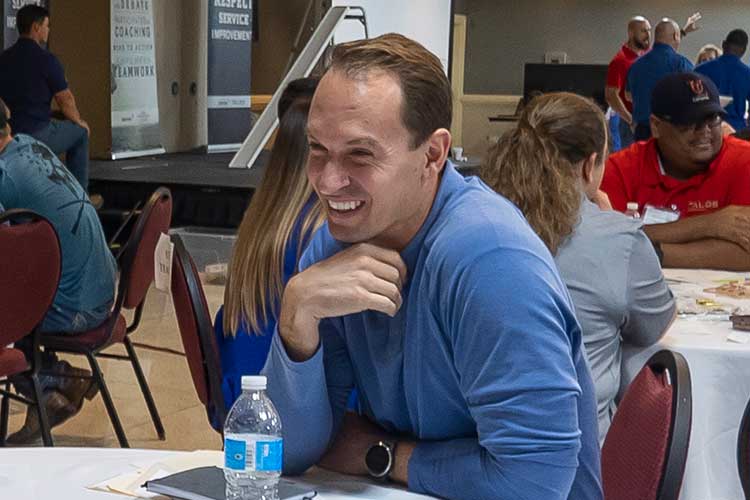
Danos is a 76-year-old, family-owned energy service company that employs more than 2,500 people who help build, maintain and operate customer assets. Danos is at the forefront of the energy industry as a company with a heart for service and a culture of safety. Since 1947, Danos has grown from a small South Louisiana oil and gas service company to a trusted, global energy partner with 13 service lines.
Describe your personal journey to becoming a CEO who “gets it.”
I am a third-generation family member in a family business that started in 1947. Part of the program for family members interested in working at the business is to work summers at various field locations during high school and college. From our fabrication shop in Larose, LA, to our shore base in Fourchon, LA, to a lift boat in Lake Maracaibo, Venezuela, I learned so much about our business during those work experiences. The most seminal component of that learning was the amazing Danos team members I got to know along the way. Our commitment to safety is rooted in our desire to set the standard for how we treat the people who work for this company. Spending summers getting to know the people on our front lines continues to drive my commitment to protect our people. Today, we continue to require that our leaders regularly engage with our team members who are working at field locations.
What is the biggest obstacle to safety at your organization, and how do you work to overcome it?
We work tirelessly to instill a commitment to safety in our people and provide the skills and knowledge to execute every task safely. However, most of our people leave their homes and go directly to a customer location without regular trips to our office locations. Because we do not control most aspects of our team members’ work environments and have limited face-to-face contact with employees, we must be creative about supporting, training and connecting with our people. There is no one silver bullet to overcome this challenge. Instead, we have a long list of activities, meetings, communications and engagements that enable us to support our people. It’s all rooted in safety being a value that enables a commitment to the resources required to continue all these activities.
Why is safety a core value at your organization?
We know that all people are created in the image of God. This means that every human being has intrinsic worth. We have a sacred obligation to protect our people.
How do you instill a sense of safety in employees on an ongoing basis?
I believe people are more likely to buy into a culture of safety if they understand where it comes from. We strive to ensure people feel cared for at Danos. We are committed to setting the standard for caring for employees. Once they see we are serious about this, they will be more likely to engage in all the safety meetings, read our safety alerts, share best practices with their teammates, provide recognition to people who are living our safety values and challenge someone who is falling short. We are also a listening and learning organization. Many of our policies and procedures are developed with the help of our field leaders. Giving them a seat at the table is essential to building our safe work culture. When our employees learn that our field leaders are engaged in our strategy for safety, they are all in.
How does your organization measure safety? What are the leading indicators that show you how safe your organization is, and where do you see room for improvement?
We track our total recordable incident rate and have for a long time (since 1979). That lagging indicator is near the lowest (best) we have ever seen and still has value for informing us of how we are performing. However, we feel like a combination of our near misses, behavior-based safety data, the potential severity of incidents (or near misses) and compliance with our Work Safe Oath (a promise to abide by our nine most critical safety commitments) is the best indicator of our overall safety health. Last year, we had a spike in our Work Safe Oath violations. We recognized the need to reinforce our collective commitment to that promise and had a blitz to get things moving in a different direction. We hold monthly Safety Management Team meetings attended by our executives, general managers, directors and division managers. In this meeting, we review our leading and lagging indicators and strategize our next steps for improvement. Each person on the leadership team is responsible for being an active and visible representative for safety. We are tasked with attending safety meetings, participating in job safety analyses, hand audits and our weekly companywide safety call. We track each person’s participation and measure our ownership of safety.
What role does off-the-job safety play in your organization’s overall safety program? What types of off-the-job safety and health programs does your organization offer to employees?
Off-the-job safety is critical to our success. Safety isn’t a value if we are only thinking about it at work. We don’t distinguish between on- and off-the-job safety when discussing culture and safety as a value. They must be integrated into how we teach, support and discuss safety. Our BBS program is open to anyone, so we encourage our spouses and children to be active. We open our mobile app to the public so that we can learn from all sources of information. Topics during the weekly safety call often deal directly with hazards away from the jobsite. Some examples include dehydration, health care topics, water safety, holiday hazards, hurricane preparedness, etc.
What have you done to support employee mental health and well-being within your organization?
Like many employers, we offer an employee assistance program that provides free support from licensed therapists. We encourage our team members to use this resource when needed. More importantly, we believe that our efforts to set the standard for caring for our employees enables and empowers our leaders and the folks who work alongside each other to help their fellow team members when they need it. One tangible example of what we are doing in this area is the “Danos Cares” arm of our foundation. We support employees who are going through difficult times. As more and more of our employees have become aware of this effort, I believe they are more attuned to the needs and challenges of their fellow Danos team members.
Les Hiscoe
CEO
Shawmut Design and Construction
New York, NY
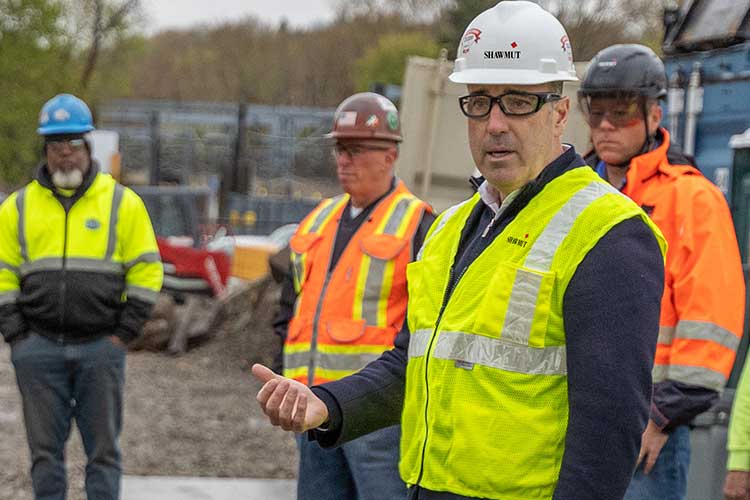
Shawmut Design and Construction is a $1.3 billion national construction management firm with a reputation for completing extraordinarily complex and logistically challenging projects. As a 100% employee-owned company, Shawmut has created a culture of safety, ownership, proactive solution-making and forward-thinking. The firm completes hundreds of projects annually with its 1,000-person workforce, tens of thousands of onsite workers and up to 8,000 unique subcontractor companies.
Describe your personal journey to becoming a CEO who “gets it.” What experiences or lessons brought you to where you are now?
I’ve worked in the construction industry for over 30 years – 24 of which have been at Shawmut. From studying engineering at the University of New Hampshire to starting my construction career in the field as a superintendent to becoming CEO, safety has always been my top priority. Having worked long hours on jobsites for many years, I’ve experienced firsthand the high-stakes, fast-paced construction environment. Everyone is working as quickly as possible to deliver projects on time and on budget, multitasking, and dealing with hundreds of people in a day – so, it’s not surprising that people could lose sight of safety. But in these environments, everything can instantly change to cause risks and incidents. Technology, protocols and standards have certainly evolved over the past 30 years, but I’ve carried the same essential lessons about safety throughout my career, including:
- Safety should always be the No. 1 priority. Don’t cut corners, make impulsive decisions or shirk protocols. It is always better to do things the right way, safely.
- Safety extends beyond the bounds of your team. It encompasses far more than employees – it reaches into the local community, general public and families of all involved.
- It’s not just about sending everyone home safely, but also sending everyone home more informed, so they come back even better the next day.
- Safety is not something you focus on just at the beginning of the year to check the box. Strive for continuous improvement and innovation by implementing new technologies, trainings and resources. It’s all day, every day.
What is the biggest obstacle to safety at your organization. How do you work to overcome it?
While incredibly rewarding, construction is one of the most taxing professions. Our frontline teams complete complex, physical work daily and can work long hours in intense, demanding environments. This work can take a physical and mental toll on workers – nearly 60% of construction workers recently reported struggling with mental health, and the industry experiences the second highest rate of suicide among major industries. Although this is an industrywide problem that won’t be solved overnight, we have resources dedicated to actively fostering a safe and injury-free environment that prioritizes the safety of the whole person, physically and psychologically. This is our No. 1 priority because there is nothing more important to me than not only sending everyone home safely every night but ensuring they feel safe and secure on the job.
We work tirelessly to drive engagement and buy-in of our safety and total worker health mindset not only with our 1,000-person workforce, but our entire subcontractor network. We implemented Culture of Care toolbox talks with the specific goal of making our jobsites more inclusive. They are shared monthly companywide, focused on topics ranging from empathy and mental health to racism and veteran awareness, and our teams gather all members of the field together to review each topic, demonstrating to all the importance of this work and our commitment to it.
Why is safety a core value at your organization?
The construction industry is consistently named one of the most dangerous. Therefore, the most critical component is safety, without question. Nothing else matters if each person doesn’t go home safely each night. Since Shawmut’s inception 40 years ago, safety has been a core value. Safety is embedded into Shawmut’s culture as a top-down and bottom-up business imperative. This drives a sense of ownership, with buy-in and engagement from every employee. It also drives results – seeing a decrease in incidents fuels an increase in employees working to uncover even more safety systems and technologies to push us closer to our goal of zero incidents. Everything we do is dedicated to every employee’s holistic health, safety and well-being.
How do you instill a sense of safety in employees on an ongoing basis?
Safety is at the forefront of everything our teams do – and what we call the Shawmut Way. We’ve created a culture of safety where everyone who walks onto a site or into an office knows that safety is our No. 1 priority. Our teams lead by example and hold our subcontractors and partners to the same high standard we’ve set. We pilot and implement new technologies to keep our safety program on the cutting edge, start every meeting with a safety moment, and constantly look for ways to push our program toward predictive safety. We were one of the first firms to celebrate the annual Safety Week, where we host a weeklong blitz of safety trainings and interactive events for our people, subcontractors and partners in a united effort to raise awareness and engagement.
When it comes to adopting new technologies, our philosophy is to maximize efficiency and automation through a buy-it-and-try-it mentality. Instead of rolling out technology stacks enterprisewide, we pilot and test multiple options on a smaller scale, eliminating the penalty of failure – which is the key to engagement and innovation. This allows us to cultivate safety champions who vet, pilot, and deploy new innovations and who aren’t afraid to fail fast and try and retry. This approach allows us to make informed decisions on larger-scale integration.
All of this creates a culture of safety and continuous improvement that drives a proactive, preventive safety program.
How does your organization measure safety? What are the leading indicators that show you how safe your organization is, and where do you see room for improvement?
Our goal will always be zero incidents, and there will always be room for improvement. Safety is our business imperative, and we pride ourselves on our world-class safety program that goes above and beyond what is mandated. Our corporate safety steering committee, shored up by our regional safety branches, ensures everyone adheres to our practices and expectations. Regional safety managers are our boots-on-the-ground safety champions who drive local initiatives, and large, complex projects have dedicated safety managers overseeing all operations. We also have a customized safety scoring platform that identifies project safety risks by pulling jobsite data from our different technologies and platforms. We track all the common items from a leading and lagging perspective, such as safety inspections, observations, quality of reporting, high-hazard issues and incidents. These all roll up into a safety score for each individual contributor as well as for the project, so we have real-time information on total safety engagement. Additionally, our safety team routinely audits our sites for additional leading indicators. Finally, our senior and executive leadership teams conduct quarterly safety blitzes to drive more top-down safety engagement. This allows us to address areas that need more resources and support before an incident occurs.
What role does off-the-job safety play in your organization’s overall safety program?
Off-the-job safety is just as crucial as on-the-job safety. Safety doesn’t just stop when you are off the construction site. We know that our teams do their best work safely when caring for themselves outside of work. We offer benefits and resources to help our employees be their best selves. Our employee assistance program offers confidential, 24/7 help, including counseling and information, as well as resources on emotional, financial, legal, family and work-life issues. Throughout the year, we host webinars covering topics from resiliency to managing worry and anxiety. Perhaps the most critical example of off-the-job safety is that the construction industry is currently facing an opioid crisis. To proactively combat this and provide resources for not only Shawmut but our entire network, we created a cross-functional opioid task force; supply all Shawmut jobsites with Narcan; and provide all field staff with substance use disorder training, including the administration of Narcan.
What have you done to support employee mental health and well-being within your organization?
We promote a culture of care where we look out for and support each other, work to break stigmas around mental health, and keep well-being at the forefront of everything we do to support our people and those they care about. Our leaders are taught to address the stigma head-on, lead by example, and model self-care and work-life balance. Our executive leadership team recently had an offsite with a mental health professional to help us with the challenges we face caring for our own mental health – and that of the 1,000 people at Shawmut who rely on us – with an emphasis on how to avoid or manage burnout. While the work is never done, we’ve laid the groundwork for a workplace where everyone is seen, heard and valued, allowing people to safely open up about their struggles – without blame, stigma or judgment. We recently introduced mindfulness training, and our enhanced toolbox talks address Total Worker Health and safety every month. We have an intentional benefits program designed to support mental health, with everything put in place to nurture and advance the wellness of our people. This starts with our robust health care package, employee assistance program, ample vacation and holidays, Shawmut Flex, and Summer Fridays. Research shows that improving worker safety from a mental health and well-being perspective can significantly reduce safety incidents. That is why our safety program encompasses both mental and physical health.
Anders Sjoelin
President and CEO
S&C Electric Co.
Chicago, IL
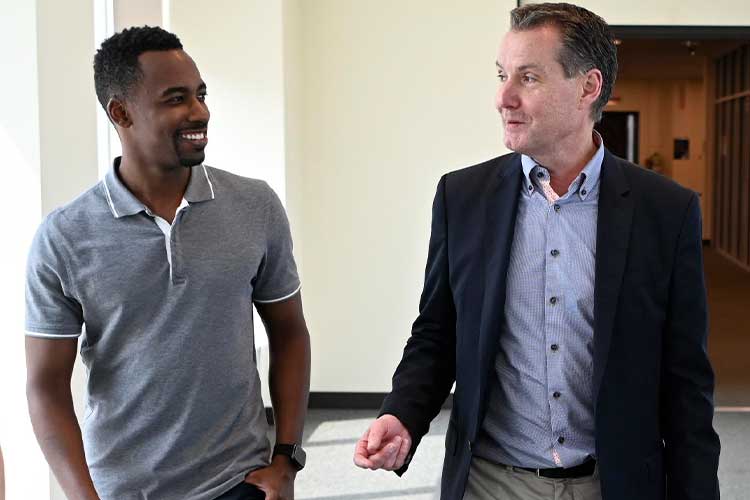
In 1909, S&C Electric Co. transformed the delivery of safe, reliable electricity with the invention of the Liquid Power Fuse. Today, as the world faces extreme weather events and the demand for electricity grows, S&C and its 3,500 employees continue to innovate and modernize the electrical grid, ensuring reliable and resilient power for homes, communities, and critical infrastructure around the world.
Describe your personal journey to becoming a CEO who “gets it.” What experiences or lessons brought you to where you are now?
I grew up in Sweden in a time when the country was really emphasizing car safety. Many know the Swedish car brand Volvo as one of the safest automobiles on the market. But what many do not know is that Sweden was one of the first countries to regulate front- and back-passenger-seat belt use. So, I feel that a safety mindset, and certainly a car safety mindset, was instilled in me at an early age.
I worked many years in factory settings before I transitioned to leading businesses, including those with remote construction sites. This is where it connected with me how important team member engagement is to safety performance and culture. With so much going on in these different environments, you really depended on everyone doing the right thing every day. I really began to see that safety is truly a team sport. You need everyone to participate and do their best to take care of themselves and their team members, every minute of every day.
I also had the privilege of working with an inspirational safety leader who taught me the value of building an engaging safety culture. From this, I have built my own safety values – leading with passion, working more with leading indicators, focusing on preventive actions and personal engagement, and reinforcing communication. These values support my vision that all incidents are preventable. If people believe that you care, you can make a difference.
What is the biggest obstacle to safety at your organization, and how do you work to overcome it?
There is no one big obstacle. Safety is complex. It is every day and every minute. You need to build a safety culture from the ground up. You can’t push it down from the top. I focus on building on our safety culture by emphasizing leading indicators, team member engagement and everyone knowing that I care about our team members’ safety.
Making sure that our team members are trained, that they have the right tools and that they feel empowered to speak up is extremely important. Ensuring a safe working environment is an ongoing activity that requires the daily attention and efforts of everyone.
Why is safety a core value at your organization?
Safety should be a core value at any organization, and it is fundamental at S&C. It is engrained in every aspect of our business around the world. S&C is an employee-owned company, and everyone feels ownership over their environment and is empowered to act. As I said, safety is a team sport, and it is everyone’s responsibility.
In fact, S&C’s commitment to safety was one of the aspects of the culture I was most excited to explore when I became CEO. Caring for our team members and our customers has long been at the core of the S&C culture, guiding the decisions S&C leaders make and extending the daily actions our team members take to help keep their co-workers and themselves safe and healthy.
I started at S&C at the onset of the COVID-19 pandemic, and S&C’s culture of safety proved essential in our response to keep our employees safe and continue to serve our customers with excellence. This also gave me the opportunity to share my passion for safety and prepared me to address COVID-19 with the urgency needed to keep our team members safe and the business running to serve our customers.
I am humbled that my team nominated me for this award. But as I said earlier, safety is a team sport. I genuinely believe this. My role is making sure that, when it comes to safety, everyone knows that it is my No. 1 value and something that we must always be vigilant about.
How do you instill a sense of safety in employees on an ongoing basis?
A sense of safety is not enough. We need to build a culture of safety, and there are no shortcuts when it comes to safety. It is important for everyone to understand that safety is a core value and that we care about their well-being. One way we help our team members understand this is through communication and leadership engagement. Every meeting, at all levels of the organization, starts with a safety moment. This reminds people that safety is an “every day, every minute” effort. We must lead by example because we want to show that, when we care, we can make a difference, and nobody gets hurt.
How does your organization measure safety? What are the leading indicators that show you how safe your organization is, and where do you see room for improvement?
As mentioned earlier, I learned early in my career the importance of leading indicators and fostering a culture of engagement. To that end, participation in our safety programs is one of the leading indicators we track. We measure this monthly based on completed HSE activities. We also track near-miss reports, quick safety fixes, behavioral-based observations and hazard identification reports.
Additionally, we leverage leadership “go and sees” in the production area to observe operations and identify potential concerns. It reflects the importance of safety to our team members and gives them an opportunity to engage and share their feedback. Across our sites, we have also established a common classification of safety data for better analytics. This helps us turn data into insight and action faster.
As for how we can improve, this is a continuous process. For example, we hire hundreds of new team members every year. So, we always need to reinforce the vision that all incidents are preventable. Safety is behavioral, and we need to make sure that safe behaviors are modeled at every level of the organization and that everyone is engaged. As I said, safety is a team sport – everyone must be engaged and feel empowered that if they see something, they say something.
What role does off-the-job safety play in your organization’s overall safety program? What types of off-the-job safety and health programs does your organization offer to employees?
Health and safety go together – they are an integral part of our everyday lives. Many of our programs and initiatives have components that are easily transferable to off-the-job safety. One good example is our pre-work warmup exercises and industrial athlete programs that stress the importance of being physically ready for the task at hand. We also conduct “winter safety,” “summer heat stress” and “slip/trip/fall” programs that include at-home safety recommendations.
As mentioned earlier, we start every meeting with a safety moment. Many of our safety moments include advice around home safety, including fire prevention and cybersecurity. We also offer active training around distracted and defensive driving and car safety, as well as how to keep your mind on tasks.
What have you done to support employee mental health and well-being within your organization?
Mental health must be woven into any discussion around safety. Addressing the stigma related to mental health is key to fostering an environment where team members feel safe to bring their whole selves to work. Our approach was – and remains – to encourage team members to lead with empathy, both for themselves and each other. For example, we knew that COVID-19 fatigue was a real concern, and social justice issues impacted the well-being of many of our team members. We encouraged open discussions around mental health, starting at our quarterly leadership meetings and in my internal communications to team members.
In addition, we directed people to the many resources available to them, including our employee assistance program, which offers free, confidential counseling for team members and their families; our AMP-UP wellness program; and our affinity groups programming.
These programs help our team members better manage their personal wellness, enhance their total well-being and reinforce a safety-first culture throughout the organization. Team members are the heart of S&C, and our passion for safety is rooted in our belief that everyone is essential and what we do matters. Safety is a team sport, and we win when everyone plays as a team.