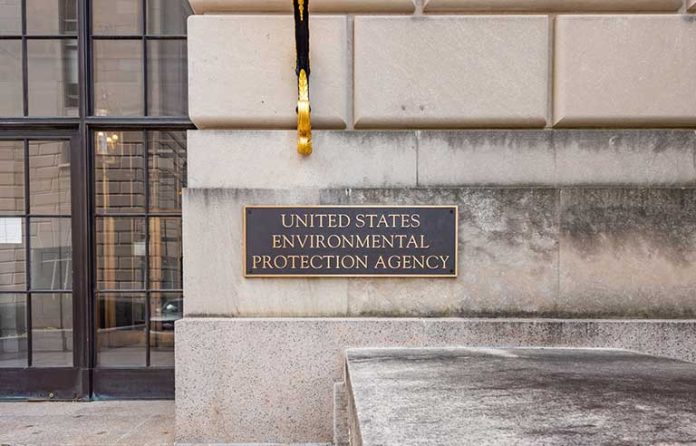
Washington — The Environmental Protection Agency wants to strengthen restrictions on two persistent, bioaccumulative and toxic chemicals already regulated under the Toxic Substances Control Act of 1976.
On Nov. 24, EPA published a proposed rule that would enhance worker protections from decabromodiphenyl ether (decaBDE) – a flame retardant used in textiles, plastics and polyurethane foam – as well as phenol, isopropylated, phosphate (3:1). PIP 3:1 can be a plasticizer, flame retardant, anti-wear additive or an anti-compressibility additive. Its uses include hydraulic fluid, lubricants and greases, and industrial coatings. It’s also used in consumer and commercial goods – such as cellphones, laptop computers, and other electronic and electrical devices – as well as industrial and commercial equipment.
Responding to Executive Orders and directives from the Biden administration, EPA in January 2021 issued final rules for five PBT chemicals. The agency is revisiting those for decaBDE and PIP 3:1.
Among the amendments for decaBDE:
- Require use of personal protective equipment for certain activities involving the manufacturing and processing of the substance and products that contain it.
- Prohibit releases to water during manufacturing, processing and distribution in commerce of decaBDE and products that contain it.
- Require notification to EPA for the export of decaBDE wire and cable to be used at nuclear power facilities.
- Require labeling on existing plastic shipping pallets that contain decaBDE.
For PIP 3:1:
- Require use of PPE during manufacturing and processing of the substance.
- Require engineering controls and PPE when the substance is used as an intermediate in manufacturing cyanoacrylate adhesives, including chemically resistant gloves and NIOSH-approved respirators.
“Persistent, bioaccumulative and toxic chemicals can remain in the environment and our bodies for long periods of time, which makes it particularly important that EPA ensures protections are in place for these chemicals,” Michal Freedhoff, assistant administrator of the EPA Office of Chemical Safety and Pollution Prevention, said in a press release. “Today’s proposed rule will better protect workers and communities from dangerous chemical exposures, while also ensuring that critical uses of these chemicals can continue safely.”
Comments are due Jan. 8.