
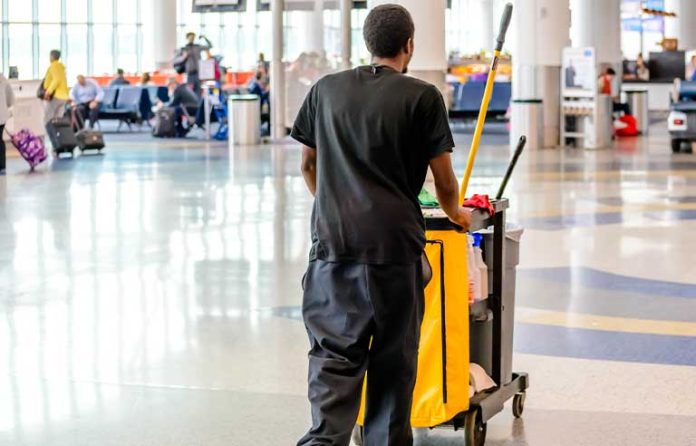
San Francisco — Janitorial workers can lower their risk of musculoskeletal injuries by rotating job tasks and, when possible, reducing force, University of California researchers say.
Their finding is included in a forthcoming report, which the researchers discussed during a recent webinar conducted by the Center for Occupational and Environmental Health at UC Berkeley.
Janitors “perform physically demanding work” that “can result in low back pain and other musculoskeletal disorders,” said study co-author Melissa Afterman, a certified ergonomist and instructor at UC San Francisco.
The team surveyed 416 janitors in California as part of the study and found that nearly 85% reported experiencing moderate to severe pain in at least one body region over the past month, with all regions affected similarly.
One reason for the high pain occurrence was the intersection of work pace, risk and organization, the researchers found. Although the nature of janitorial work carries inherent MSD risk, insufficient timing and organization of tasks also might lead to rushing, with a faster pace contributing to increased risk.
Recommendations for reducing MSD risk:
- Use different or modified tools to decrease force and/or hand activity.
- Combine tasks with varying levels of risk to allow for active recovery (for example, alternate between trash removal, which requires lifting, and wiping tables – a task that involves the use of the arms and hands).
- Allow for additional recovery time after tasks with higher ergonomic risk, such as disinfecting, scrubbing, wiping, washing windows and vacuuming.
Afterman encourages employers to seek worker feedback to develop additional solutions.
“Ergonomists can come up with a list and we can come up with a lot of ideas, but often the best ideas come from the workers themselves,” she said. “And so having a participatory approach to solving these problems is always advised.”