
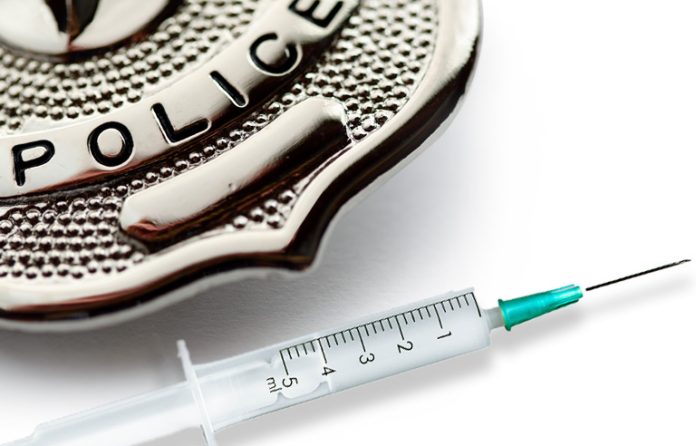
Washington — Aiming to help law enforcement officers avoid needlesticks and other sharps injuries that could expose them to bloodborne pathogens, NIOSH has issued a fact sheet.
The agency says officers are at risk when searching people, property, vehicles and homes.
Sharps injuries – involving syringes and needles, lancets and scalpels, auto-injectors, and other objects that make contact with body fluids – can expose people to hepatitis B, hepatitis C and HIV, among other pathogens.
The agency recommends training workers on:
- Search techniques
- Collecting evidence
- Proper use and removal of personal protective equipment
- Reporting workplace injuries and illnesses
Other tips include:
- Digital Partners -
- Ensure officers’ hepatitis B vaccinations are up to date.
- Ask people if they have any sharp objects before searching them.
- Use tactical mirrors and flashlights to search in crevices or under furniture.
- Wear gloves while conducting searches.
The fact sheet also covers safe disposal and handling of sharps, and what to do if injured.