
Responding are Jade Brainard, senior director of product management, and Taylor Thorn, senior director of construction solutions, KPA, Westminster, CO.
Frontline workers are at the center of any safety strategy. They work in environments where conditions shift quickly and on-the-spot risk management is critical. Whether they’re securing manufacturing floors, navigating construction jobsites or maintaining equipment in remote oil fields, there’s no time to flip through binders or return to a desktop.
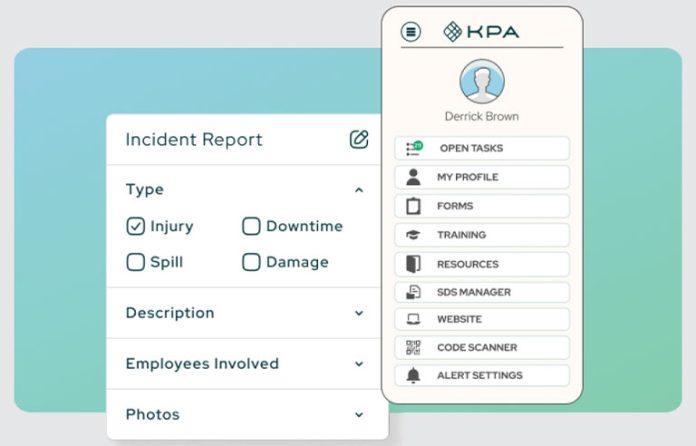
Mobile applications put safety and compliance tools into workers’ hands. They make it easy to communicate, identify and log hazards instantly, and provide access to safety tools on the go.
Use of real-time communication promotes shared safety responsibility
Mobile apps empower frontline users to communicate in real time, with features such as push notifications and two-way messaging. Whether it’s a sudden weather alert or a policy change, frontline workers receive immediate updates and can take quick corrective action.
Real-time communication helps facilitate two-way feedbacand reinforce a culture of shared responsibility. Frontline workers can ask questions or seek context from management within the app itself, which helps build a safety culture.
For example, say an important piece of equipment breaks down at a manufacturing center. Employees can instantly log and report the outage, and then convey any relevant details. Then, management can quickly send an inspection policy reminder and ensure similar outages don’t occur.
Report hazards instantly to enable proactive risk mitigation
Mobile apps also help workers identify and report hazards the moment they see them. From there, safety teams can eliminate the hazard or mitigate its risk to workers through policy changes, engineering controls or (as a last resort) personal protective equipment.
Say a technician notices a frayed power cable on a jobsite. From their mobile device, they can take a photo, document the location and provide a description.
That doesn’t just alert the safety team. Instead, it delivers a documented hazard report that can trigger investigations and result in bigger changes, including more frequent inspections or equipment upgrades.
Mobile hazard reporting helps reduce risk and ensure compliance in a number of ways – from simply alerting workers of risks to rooting them out altogether.
Deliver on-the-go access to safety tools and drive consistent compliance
Mobile apps help workers report live risks through real-time communication. They also help mitigate potential risks with hazard reporting. Finally, they ensure safety tools are never out of reach, even when no immediate threat is present.
Consider a construction site where operations are running smoothly. Workers are certified and trained, hazards are identified and controlled, and inspections are up to date. Even in this ideal scenario, mobile apps are critical to maintaining that standard.
With access to equipment checklists, safety training modules and inspection tools at the touch of a button, workers can stay compliant, reinforce best practices and catch small issues before they become major problems. Well-functioning safety programs don’t simply react to risk. They empower employees to do their jobs correctly and efficiently, while helping them get home safe at the end of the day.
Leverage mobile tools to keep safety and compliance within reach
Frontline workers operate in fast-moving, high-risk environments where safety decisions need to happen instantly. Mobile apps empower employees to communicate, report and access critical tools when and where they need them most. With everything from inspection checklists to training modules just a tap away, mobile technology ensures safety and compliance are always within reach.
Editor’s note: This article represents the independent views of the author and should not be considered a National Safety Council endorsement.