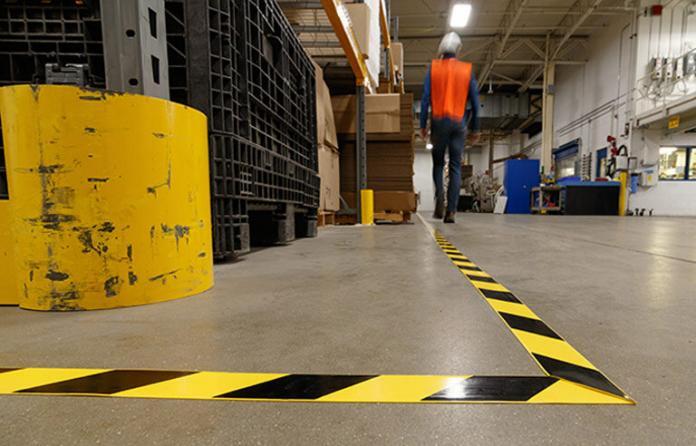
When you’re auditing your manufacturing site, it’s easy to overlook the critical role floor marking plays. Too often, facility managers put down floor tape or paint lines during the initial setup and make updates only when installing new machinery. Neglecting regular review of your floor marking system can lead to increased safety risks and a loss of operational efficiency.
Make floor marking part of regular audits
Regular safety audits are necessary to maintain a safe workplace. Usually, these inspections focus on more acute operating hazards, such as using proper personal protective equipment and reviewing lockout/tagout procedures. These hazards are more likely to be the direct cause of a workplace injury or near miss, so they stay top of mind. But unclear or degraded floor markings can contribute to workplace incidents and significant losses in productivity.
Mitigate wear and tear
Stay alert for signs of wear and tear on your floor tape. Heavy traffic, incorrect application, chemical exposure and spills degrade tape over time. And as the face gets scuffed and the adhesive degrades, the tape begins to lose its visual effectiveness. Plus, peeling, folding or crimping tape becomes a tripping hazard if left unchecked.
Here are a few key tips to ensure your tape lasts long and stays effective:
Select the right material. Consider the durability needs. Will the tape need to withstand forklift traffic? Does the adhesive need to hold up under cold conditions? Using the right material goes a long way in ensuring longevity.
Apply it properly. Follow all instructions when applying the tape, and don’t forget to clean and prep the surface before you start applying the tape.
Check and maintain regularly. Create a cleaning and maintenance routine so you can identify and replace damaged sections. Small repairs can prevent larger, more costly replacement projects.
Review pedestrian and vehicle pathways
Pedestrian walkways, forklift paths and material storage might have changed since the last time you painted lines or added floor tape. And as workflows change over time, workers will change their behavior to accommodate. Take these steps to ensure your floor marking stays optimized over time.
Optimize pathways. Walk through the facility to note any new hazards and identify inefficiencies and potential safety concerns. Solicit employee feedback and analyze any incident reports that might signal room for change.
Provide training. When updating to the newly optimized workflow, be sure to involve employees to discuss the practicality of the changes. Take this opportunity to review all safety policies and procedures, being sure to highlight any significant changes from the previous system.
Ensure color consistency. OSHA’s guidelines on floor marking are broad, stating that marking lines can be any color “so long as they clearly define the area.” When it comes to safety signage and equipment, the guidelines for the use of red and yellow include the following:
Red is the basic color for identification of:
- Fire protection equipment.
- Danger, such as containers of flammable liquids.
- Commands to stop, such as emergency-stop bars, buttons and electrical switches.
Yellow is the basic color for:
- Designating caution.
- Physical hazards, such as falling, tripping, striking against and being caught between.
.jpg)
It’s best practice to apply these guidelines to floor marking as well, though not required. Consider using red and white stripes to designate a “keep clear” area for fire extinguishers. Use yellow to mark walking lanes and crosswalks. A consistent color system helps workers quickly process potential hazards, which could be the difference between an incident and a near miss.
Brady can help from consultation to complete solutions
When was your most recent floor marking audit? If it’s been a few years, consider working with Brady to analyze and implement a new, efficient floor marking system. Our experts can help you map your facility and install all your floor marking. If you’ve got a handle on what you need, check out our full lineup of ToughStripe® tapes that are purpose-built for the applications and environments you face.