
Marietta, GA — Up to 80% of hazardous chemicals found in classrooms may be linked to emissions from 3D printers, a recent study from the Chemical Insights Research Institute suggests.
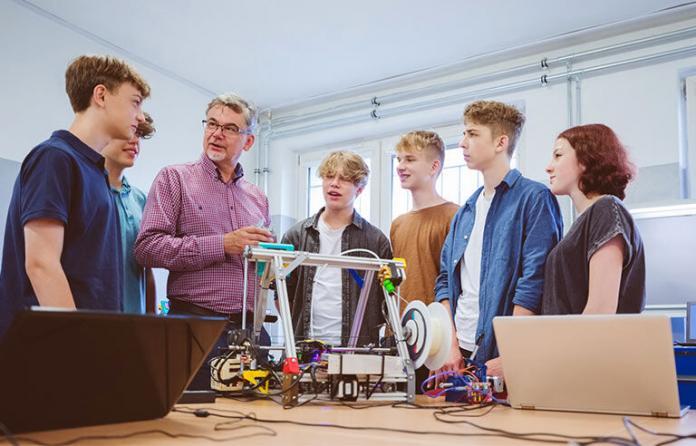
Researchers conducted air measurements in multiple K-12 schools and one university. Although the printers and materials tested were set to be “low emitting,” the researchers found that up to 80% of harmful chemicals present in classrooms “could be associated with 3D printers during use.”
Ultrafine particles and volatile organic compounds are emitted during 3D printing. Exposure to this particulate matter, the researchers say, is linked to short- and long-term health effects, “particularly on respiratory and cardiovascular systems, which could induce or aggravate allergic reactions, asthma and other associated diseases.”
The researchers also observed that “although there were portable air cleaners operated at some school classrooms, there was no maintenance or schedule for changing the filters, which may reduce the efficacy of air cleaners.”
They add, however, that using one or two low-emitting printers in classrooms “tended not to pose severe health risks.”
A NIOSH guide for safe 3D printing includes best practices:
- Use printer materials with lower emissions.
- Capture chemical emissions by using enclosures and ventilation.
- Keep as much distance as possible between the worker and printer, and reduce time spent near printers in operation.
The study was published in the journal Building and Environment.