Responding is Ryan Pfund, senior product manager, Bradley, Menomonee Falls, WI.
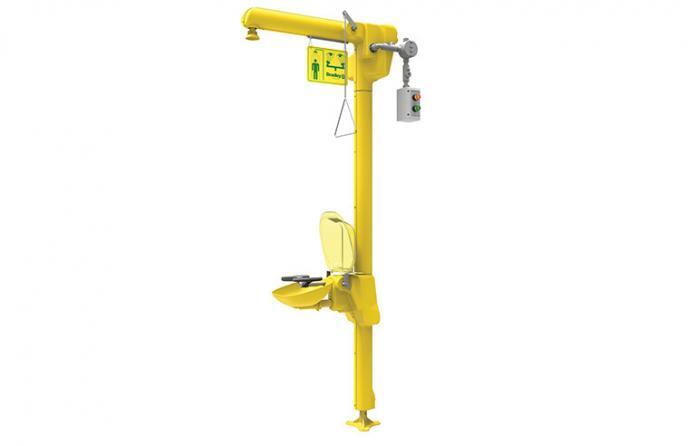
For many industries, emergency safety fixtures such as eyewashes and drench showers are the first line of defense against chemical exposure, burns or other hazards. In remote or exposed environments where they may be outdoors or unheated, including in the oil and gas, utilities, and construction industries, these fixtures, if frozen, can leave workers without protection when they need it most. That’s why winterizing isn’t optional – it’s a critical safety requirement.
The heat trace solution
One of the most effective ways to protect emergency fixtures in cold climates is with heat trace systems. Heat trace consists of electrically powered cables installed along the pipes and fixture components. These cables produce consistent, low-level warmth that prevents ice from forming and ensures water flow is available on demand. When paired with proper insulation, heat trace provides reliable freeze protection even in subzero conditions. Thermostatic controls can further optimize performance by activating the system only when temperatures approach freezing, which helps manage energy use.
Enclosed safety showers
In extreme winter conditions with snow, ice and wind chills, consider using an enclosed safety shower. These products provide a heated fiberglass enclosure that not only protects the eyewash and drench shower from freezing but also offers a comfortable environment for the user should the safety shower be needed. Double swing crash doors allow for quick entry into the enclosure during an emergency. In addition to the safety shower, the insulated fiberglass enclosure includes a space heater and lighting and can be equipped with a tepid water delivery system.
Key winterization strategies
Heat trace cables: Apply directly to supply lines, valves and fixture bodies to maintain flow.
Thermostatic controls: Automate heating so the system activates only when temperatures are near freezing, improving energy efficiency.
Insulated enclosures: When heated protection is needed for both the safety shower and the user, an insulated, enclosed safety shower provides the ultimate in freeze protection.
Regular testing: Conduct routine flow and activation checks throughout the winter months to confirm reliability.
Best practices for employers
Before winter, safety managers should audit all outdoor and unheated emergency fixtures to identify freeze-protection needs. Along with installing heat trace and insulation, employers should:
- Document a winter maintenance schedule for flushing and testing.
- Educate workers to recognize the signs of a compromised fixture, such as sluggish water flow.
- Ensure backup power sources are available to keep heat trace systems running during outages.
- Consult with manufacturers or safety suppliers to select fixtures specifically engineered for cold climates.
By taking these steps, employers go beyond compliance to protect their workforce. Winterized fixtures such as heat trace systems and enclosed safety showers not only ensure compliance, but, more importantly, safeguard workers by keeping lifesaving equipment ready when it’s needed most.
Editor’s note: This article represents the independent views of the author and should not be considered a National Safety Council endorsement.