Washington — Railroad conductors are at increased risk of death and injury when riding equipment during shoving movements, the National Transportation Safety Board warns in a new safety alert.
The agency issued the alert after a recent series of fatal incidents involving railroad conductors during shoving movements, which the Association of American Railroads defines as “when a locomotive is pushing a group of [rail] cars during a switching operation.” Of the 20 conductor fatalities reported to the Federal Railroad Administration between January 2020 and July 2025, 14 involved the dangerous practice.
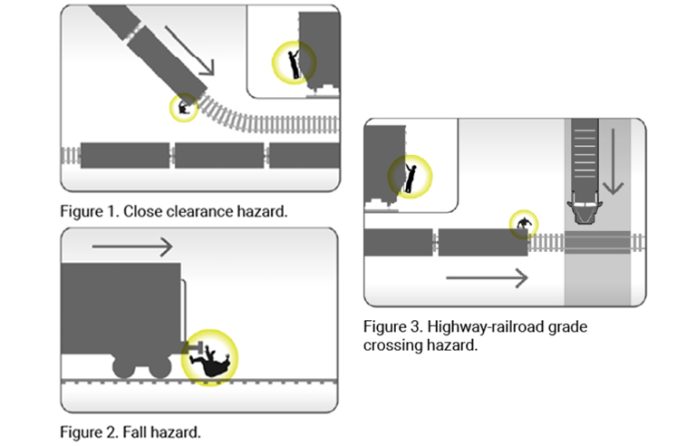
NTSB says conductors can be pinned or crushed when these movements pass through close clearances, which are common near buildings and switches, between close-set yard tracks, and at loading docks. Conductors positioned on lead railcars could fall into a train’s path, as some cars don’t offer secure riding positions.
The agency offers 12 recommendations for conductors during the four segments of shoving movements, including:
- When preparing to protect a shoving movement, identify and think about hazards you’ll encounter and determine whether walking or using a passenger vehicle is safer than riding the train.
- If walking conditions or a yard’s layout make riding the safest option, complete a thorough job briefing with all workers to determine ways to avoid or reduce hazards and identify the safer side of the train to ride.
- During preparation to ride the train, ensure the track ahead is clear and any switches are aligned properly. Find the most secure way to ride and always maintain three points of contact.
- When riding, face the direction of travel and watch for trains and other equipment on nearby tracks. Communicate with your engineer and avoid distractions.
The alert also features six recommendations for railroads. They include using cameras and other technology to protect shoving movements without placing workers on or near moving equipment and providing vehicles (such as trucks and carts) and safe walking conditions as alternatives to riding rail equipment.