
Responding is Mike Angwin, operations manager, Strongarm Technologies, Killeen, TX.
Every organization approaches safety differently, but nearly all rely on lagging indicators – metrics such as incident reports, equipment incidents or recorded injuries. These measures are valuable for understanding what went wrong, yet they only capture events after an incident has already occurred. As an organization’s safety culture matures, indicators that are leading in nature, such as near-miss reports, safety observations and proactive audits, become critical to addressing risk before incidents occur. Wearable technology can help bridge this gap, enhancing existing safety programs by generating data that both strengthens leading indicators and reduces reliance on lagging ones.
Wearables simplify and improve how safety data is collected. Instead of depending solely on manual reports or self-observations, wearable sensors can capture continuous, objective data on movement, posture, location and environmental exposure. This not only reduces reporting burdens but also validates assumptions that might otherwise be based on incomplete or subjective information.
Consider an organization struggling with ergonomics injuries in a specific job function. Traditional lagging indicators, such as injury reports, reveal that a problem exists, but they don’t clarify which interventions will be most effective. Employees may suggest process or environmental changes, but measuring their impact can be a challenge. Using assessment tools such as rapid entire body assessment and rapid upper limb assessment can help, but they require trained personnel and often only capture snapshots in time.
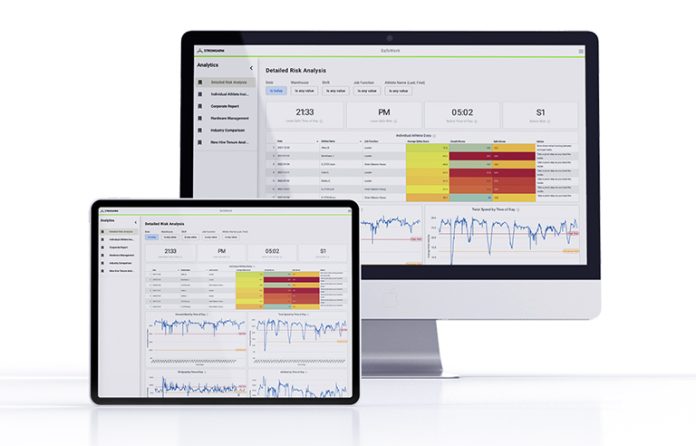
Wearable devices, however, make it possible to conduct data-driven testing across multiple options. For example, comparing how the risk profile of a job task is impacted by three different workstation adjustments. Continuous data collection by a wearable provides an extensive data set over full workdays and across different employees, allowing safety teams to identify which change delivers the greatest ergonomic benefit. Even more powerfully, ongoing use of wearables enables employers to track whether improvements are sustained over time.
Beyond problem-solving, wearables contribute to continuous improvement in safety programs. They transform safety from a reactive process into a proactive one by providing early warnings, quantifying exposure to risk and confirming whether corrective actions are effective. Over time, this creates a feedback loop – measure, adjust, validate – that strengthens safety culture and performance.
When implemented thoughtfully, wearables don’t replace existing safety programs – they enhance them. They integrate with current systems for incident reporting, training and auditing, adding a layer of real-time insight that supports decision-making at every level. The result is a more responsive, data-driven approach to workplace safety that reduces risk and builds trust among employees who see that safety improvements are based on hard evidence, not guesswork.
In the right hands, wearable technology becomes a strategic advantage. By combining objective data collection, proactive risk validation and continuous measurement, wearables empower employers to move beyond tracking what went wrong to actively ensuring things go right.
Editor’s note: This article represents the independent views of the author and should not be considered a National Safety Council endorsement.