Responding is Patrick Tanzillo, lab commercial product manager, Chicago Faucets, Des Plaines, IL.
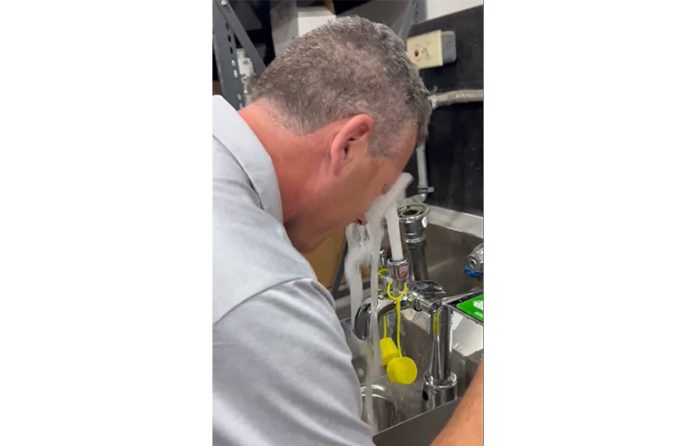
In any environment where corrosive or hazardous chemicals are present, the emergency eyewash station stands as a critical and immediate line of defense. It’s the moment of truth when a chemical splash occurs, and a worker’s long-term eye health hinges on a system working flawlessly – within seconds.
The effectiveness of this lifesaving equipment isn’t just about initial installation; it’s also about the ongoing vigilance and structured maintenance led by committed safety professionals. By moving beyond simple compliance checks to adopting a proactive “readiness blueprint,” safety managers can ensure these units perform exactly as intended during a crisis.
Core issues that undermine emergency readiness
Several recurring issues commonly surface during safety inspections. Addressing them through structured procedures significantly improves readiness and critical outcomes, proving a facility is truly prepared.
1. Blocked or obstructed access: the space challenge
This is often the most frequent deficiency and is easily preventable. Over time, laboratory equipment, storage containers, carts or temporary items can accumulate near emergency stations, making them difficult to reach.
The critical danger: Chemical exposures require a worker to flush their eyes within seconds. Any obstruction – even a small one – can reduce that response time and catastrophically worsen the injury severity.
The safety leader’s role: Routinely verify a clear, unobstructed path to the eyewash unit. Ensure clear and visible signage is maintained from key work areas. If space is at a premium – such as in smaller labs, educational facilities or tight workspaces – managers should consider innovative equipment solutions. For environments where square footage is a key concern, using compact emergency eyewash combination units with a faucet for handwashing can offer an accessible, compliant flushing solution without requiring dedicated floor space for a traditional station. Accessibility isn’t negotiable.
2. Inadequate flow or uneven water distribution
Another widespread issue involves inadequate flow or uneven water distribution. The ANSI/ISEA Z358.1 standard specifies that eyewash stations must provide a continuous, low-velocity flow that irrigates both eyes simultaneously.
The cause: Mineral buildup, valve degradation or infrequent activation can lead to erratic spray patterns or insufficient flow volume.
The proactive check: During evaluations, safety managers must look for uneven streams, weak pressure or splashing that might cause an injured worker to pull away during the vital irrigation process.
3. Temperature control challenges
Maintaining the correct water temperature is a subtle but critical challenge to compliance and user comfort. Water that’s too cold can lead a worker to stop flushing prematurely, while excessively warm water may exacerbate chemical reactions.
The standard: The ANSI standard defines “tepid” water as being within the range of 60°-100° F.
The solution: Maintaining this range requires regular verification of thermostatic mixing valves, recirculation systems or other temperature-management components.
4. Corrosion or chemical degradation
In some facilities, corrosion or chemical degradation affects valves, outlets and surrounding materials. High-humidity environments, acidic vapors and repeated chemical use can slowly impair performance.
The strategy: Implement routine visual inspections and proactively replace worn components to help prevent failures during emergencies.
The safety leader’s maintenance blueprint
To ensure full functionality at the moment of need, safety managers should follow a multilayered maintenance and testing program anchored in three core, essential procedures: weekly activation tests, annual comprehensive evaluations, and documentation and training (see table below). By pairing these procedures with ongoing training, clear signage and hazard-based equipment placement, safety managers become champions of readiness. The ultimate goal is simple and profound: ensure every eyewash station and related safety device will function immediately, consistently and effectively when a worker needs it most.
|
Procedure
|
Frequency and purpose
|
Key actions
|
|---|---|---|
| Activation tests |
Weekly: Flushes sediment, confirms valve movement and verifies flow pattern.
|
Briefly activate the unit (e.g., for portable or plumbed stations, or a faucet-mounted unit) to ensure the system is clear and flow is consistent. This simple step is one of the most effective ways to maintain long-term reliability.
|
| Comprehensive evaluations |
Annually: Detailed review to ensure compliance with ANSI/ISEA Z358.1.
|
Document the temperature, flow rate, activation behavior and accessibility. Confirm the equipment meets performance requirements and remains suitable for the workspace’s specific hazard level.
|
| Documentation and tracking |
Ongoing: Ensures accountability and visibility of performance trends.
|
Maintain written or digital inspection records. When deficiencies occur, assign and track corrective actions to help prevent repeated failures and ensure prompt resolution.
|
Editor’s note: This article represents the independent views of the author and should not be considered a National Safety Council endorsement.