

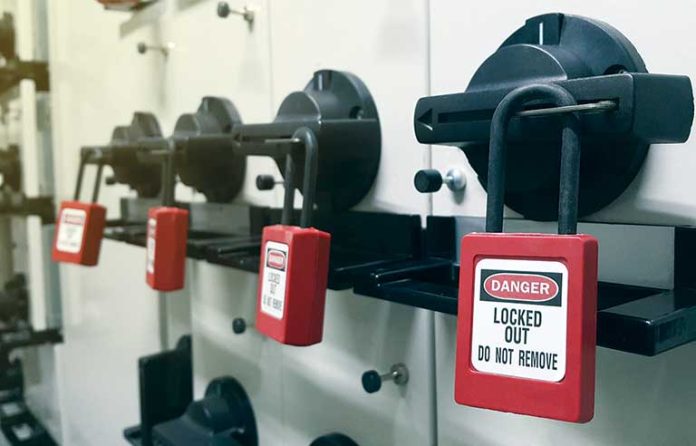
A mainstay on OSHA’s Top 10 list of most cited violations is the standard on lockout/tagout (1910.147).
Simply put, “lockout/tagout is a safety procedure used to make sure equipment and machines are properly shut off and not able to start during maintenance or repair work,” the Texas Department of Insurance says. “This is known as controlling hazardous energy.”
Help prevent the unexpected release of stored energy with these six steps from TDI:
- Prepare. An authorized employee, defined by OSHA as “a person who locks out or tags out machines or equipment in order to perform servicing or maintenance on that machine or equipment,” must identify and control all potential forms of hazardous energy.
- Shut down. Turn off the equipment using the proper procedures. Inform all employees who use the equipment about the shutdown.
- Isolation. Isolate equipment from energy sources. This may mean turning off power at a breaker.
- Lock and tag. Apply a lockout device to keep equipment in an energy-isolating position. Then, place a tag on the device with the authorized employee’s name who performed the lockout.
- Check for stored energy. Hazardous energy can remain in the equipment even after the energy source has been disconnected and the machine has been locked out.
- Verify isolation. Check again to ensure the equipment is isolated and deenergized before service or maintenance begins.