

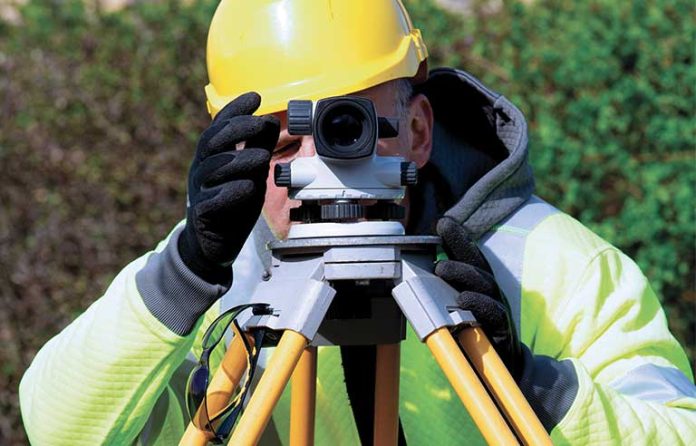
From a remote field or forest to a far-off cell tower site, an office building at 10 p.m. or a convenience store at 2 a.m., lone workers can be found in a wide variety of settings and industries.
Defining the term “lone worker” comes down to several key factors, says Dave Nickel, who is senior consultant and health and safety director, Midwest and South Atlantic, for Minneapolis-based ERM. The consulting firm has clients in more than a dozen industries, including oil and gas, mining and metals, chemical, manufacturing, and automotive.
“The way we categorize a lone worker is if we have workers who can’t be heard or seen by another individual during the course of work,” Nickel said. “They aren’t anticipated to be visited by someone throughout the course of a day. Nobody is visiting or dropping off supplies.”
Often, lone workers are in locations with limited emergency response and perform jobs with nonstandard work hours, so preparation is critical to their safety.
“There has to be a plan in place to let people work alone,” said Kathy Stieler, director of safety, health and compliance for NATE: The Communications Infrastructure Contractors Association. “You’ve got to have a safety policy.”
Stieler recently co-authored an industry safety manual that features a chapter on working alone.
“You have to have specific practices and procedures to minimize the risk of injury,” she added.
According to the National Safety Council’s “Safety Technology 2020” report, developed as part of the nonprofit’s Work to Zero initiative, lone worker monitoring was cited by safety professionals as the second most common technology used to mitigate hazardous situations. Situations in which lone worker monitoring tools most often are used are construction and installation, tending a retail establishment, emergency response, vehicle-pedestrian interactions, and inspections.
OSHA has no standard on employees working alone, but does have standards that apply to specific situations, such as emergency response and interior structural firefighting.
In response to a frequently asked question posted on its website, OSHA recommends that employers develop emergency procedures along with “providing a wireless electronic notification device and/or cellphone to those employees.”
Communication
The most important safety plan for lone workers revolves around communication.
“It is paramount,” Stieler said. “In our industry, there’s an awful lot of cellular phone use.”
Also common are GPS devices and mobile apps for monitoring workers, some of which detect motion and falls.
Nickel, who co-authored a presentation titled “Do You Have Your Lone Workers’ Back?” for the 2021 NSC Safety Congress & Expo, said organizations with lone workers should have a communication plan.
“We have an actual procedural form that we set up,” he said.
The form has phone numbers and a means of communication for workers to stay in contact, and vice versa. It also includes predetermined check-in times throughout a shift, establishing whether cell service is available before work begins and determining what different lines of communication can be used, such as a push-to-talk device or safety monitor.
“We want to have some built-in redundancy there so we can get a hold of our staff or they can get a hold of us,” Nickel said. “Technology is definitely coming along and allowing us to keep better tabs on our folks.”
A plan on how to respond to missed check-ins also should be considered. Other safety measures can include a project and site-specific safety plan, a job hazard analysis, and personal protective equipment.
When lone work is a no-go
Despite many workers going it alone, scenarios can arise in which lone work is a no-no. For instance, many cell towers are in remote areas, so lone workers assigned to those locales should never leave the ground, Stieler noted.
“When working from height, you cannot work alone,” she said. “There are some jobs you can do where you can work alone.” For tower workers, that includes checking cell tower anchors for damage. In addition, she and Nickel note that working alone with electricity or in confined spaces is never recommended.
“We have some definite deal-breakers,” Nickel said of lone work. “We’re not going to put someone in a difficult situation where we’re going to jeopardize their safety, security, health and well-being to be a lone worker.”
Those scenarios include working in, near or above water, along with subsurface clearance work. In addition, according to Nickel and the Canadian Center for Occupational Health and Safety, lone work should be avoided when:
- Severe weather conditions arise or are forecasted
- The risk of an avalanche is present
- Chemical exposure could incapacitate a worker
- Respirators or air monitoring is required to work
- Hazardous equipment (e.g., chainsaws, firearms) is used
- In public places where the potential for violence is present
Page 2 of 2
Snakes and gators and bears … oh my!
Lone workers who venture into remote places are often outnumbered by wildlife. Stieler said NATE member company workers have encountered a wide variety of creatures.
“Wildlife is a concern at a remote site,” she said. “You can have issues with snakes or bears or wasps or whatever. There are a lot of remote tower sites. Those are never fun to go to by yourself.”
One NATE member’s crew recently noticed a wild boar keeping tabs on them from nearby. Another group of workers in Florida was working on an anchor hole at a cell tower site when it had a scary encounter. “They crawled out of the anchor hole and they were eating lunch when an alligator crawled out of the hole 15 minutes after they did,” Stieler said. “That’s why we’re pretty cognizant about not going by yourself.”
And wherever animals live, hunters can follow. Keeping lone workers safe often involves being aware of local hunting seasons.
“We don’t want to be sending people off to properties doing survey work near where there might be active hunting,” Nickel said. “We may have to push ‘pause’ on the work for a couple of weeks.”
Kathy Stieler
Director of safety, health and compliance
NATE: The Communications Infrastructure Contractors Association
COVID-19’s impact
The COVID-19 pandemic halted work in a variety of industries, but many lone workers continued to do their jobs.
“The biggest impact was getting food and hotels when they were traveling,” Stieler said.
Because of the nature of not being around others, lone workers had a decreased exposure to the virus, except when in need of lodging.
“We have always encouraged our employees in these circumstances to let us know if they have personal concerns with the work or travel with respect to COVID-19,” Nickel said, “and we will respect their use of stop work so we don’t put them at risk for exposure to the virus.”
Responsibilities for lone workers
Although maintaining communication is perhaps the most important responsibility for a lone worker, knowing when to stop work and responding to changes in the job or environment are important as well, regardless of the industry.
“If they’re a lone worker,” Nickel said, “we’re going to have the same safety requirements across the board, whether they’re in an office location, at a facility that might be abandoned where we’re doing a check on things or if they’re going to be out doing field surveys.”
On a jobsite, unforeseen hazards can arise. In that case, stopping work and communicating with a project team or supervisor is recommended, Nickel said. As a first step when facing an emerging hazard, workers should find and go to a safe place, such as a vehicle or building onsite. It could mean stopping work for the day.
“Maybe it’s stop work, go back to the office location, and get additional tools or support,” Nickel said, “and maybe finding somebody else to be out there with that worker.
“We definitely want to make sure people are aware of their surroundings and what’s going on, and not getting themselves involved in any work that’s going to put them in harm’s way. Wait to put a safe plan together to complete the work.”

