

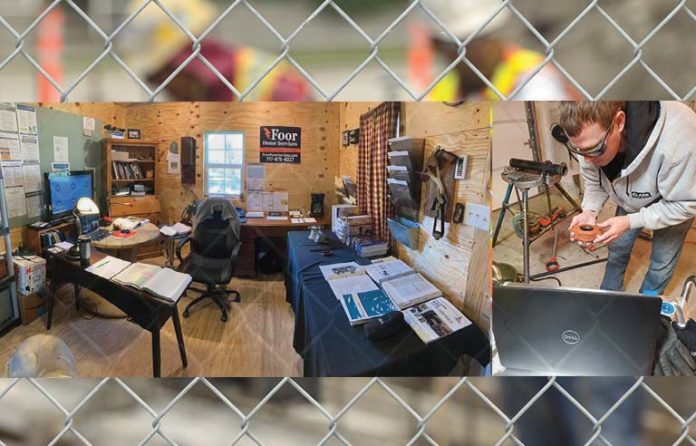
In a small studio in his home, John Newquist has just enough room to set up a platform ladder.
A former OSHA inspector, Newquist runs his own safety training company, educating workers – including those in construction – on topics such as ladder safety and fall protection.
The studio has gotten a lot of use during the COVID-19 pandemic, as in-person worker safety training has shifted to a mostly virtual environment.
“I can put that up in my little studio,” Newquist said. “They can see me climb it. And they can learn how to eliminate almost all their ladder falls.”
As some COVID-19 restrictions have eased, Newquist has begun to conduct more in-person training for small groups – but with others still attending virtually.
“I might be teaching an in-person class of nine or 10 people because that’s the social distancing requirement, then you have 60 people online all over the country,” he said.
This pivot, experts say, has demonstrated the construction industry’s ability to adapt.
A new normal
Associated Builders and Contractors is a national trade association representing the non-union construction industry. It has nearly 70 chapters, 800 training affiliates and 21,000 members nationwide.
“The beauty of the construction industry is that we’re pretty agile,” said Greg Sizemore, vice president of safety, environment and workforce development for the association. “We’re really good at solving challenges and issues as they come up on projects.”
One such challenge was the lack of in-person safety training during the early days of the pandemic. Rather than halt all education, ABC “called quite a few audibles,” Sizemore said. Those included ramping up virtual learning.
“Immediately, we recognized that we had to get the technology level up at our chapters,” he said.
In what he called a “significant investment” financially, Sizemore said ABC worked to ensure internet access was improved in some locations, mobile hotspots were made available and accessibility of training on mobile de-vices increased.
With each chapter, the challenge was different.
At a community college partner facility, the road to virtual learning proved to be quick. At other locations that were more dependent on in-person learning, more infrastructure was needed.
“You have to buy the tech, and then you have to have the bandwidth,” Sizemore said. “We went before our members and said, ‘We cannot afford not to do this.’”
The investment went beyond the learners, too.
ABC put more than 90 instructors through a training program led by a virtual education expert “to give them the skills and the confidence they needed to be effective in this new dimension of learning,” Sizemore said. “It took a lot of people coming together.”
Back to the jobsite
The pandemic has made online training a necessity not only for construction workers still on the job, but also those who are returning to work after being laid off.
According to an ABC analysis of data from the Bureau of Labor Statistics, the construction industry had a net loss of 3,000 jobs in January.
For those rejoining the workforce, training priorities should start with the basics, said Kevin Cannon, senior director of safety and health services for the Associated General Contractors of America.
“I would approach it as if they were a new hire starting from scratch, just entering the industry for the first time,” Cannon said. “Focus on the things that injure and kill the most construction workers: falls, electrocutions, struck-bys and caught in/betweens. Even if an individual has had fall protection training in the past, it doesn’t hurt to revisit training on fall protection. If it’s an equipment operator that’s been sidelined for some time, offer some brief introductory training on that.”
He added: “One of the things that we and the members on our steering committee have continued to stress is to focus on the things that you focused on prior to COVID. Whatever the most prominent hazard is that’s associated with the work you do, continue to focus on that. If you work at heights, continue to emphasize fall protection and enforce the policies.”
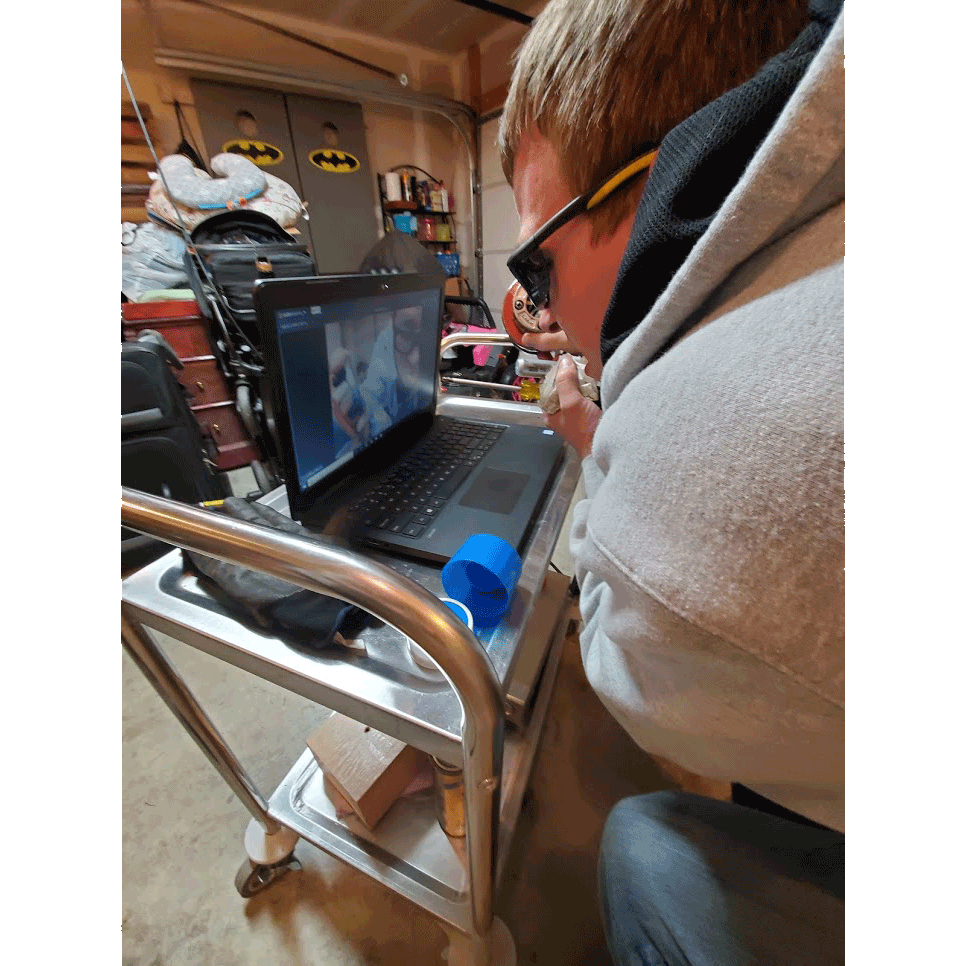
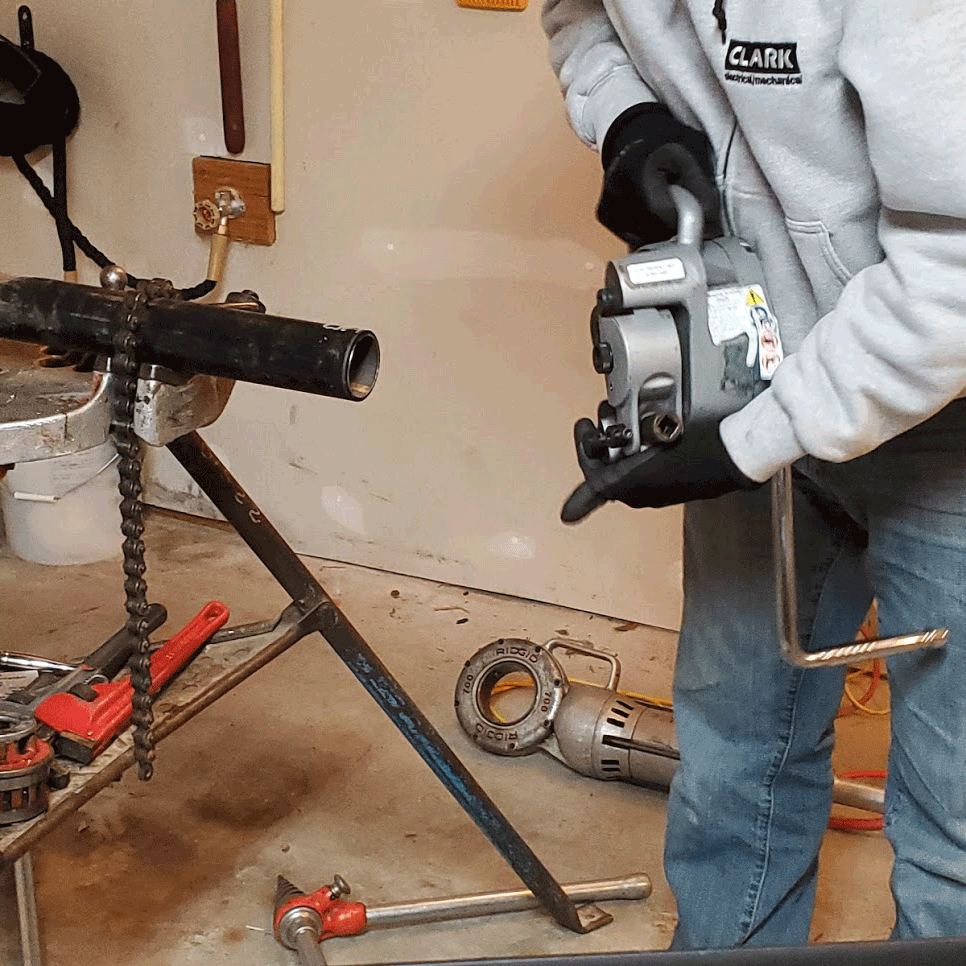
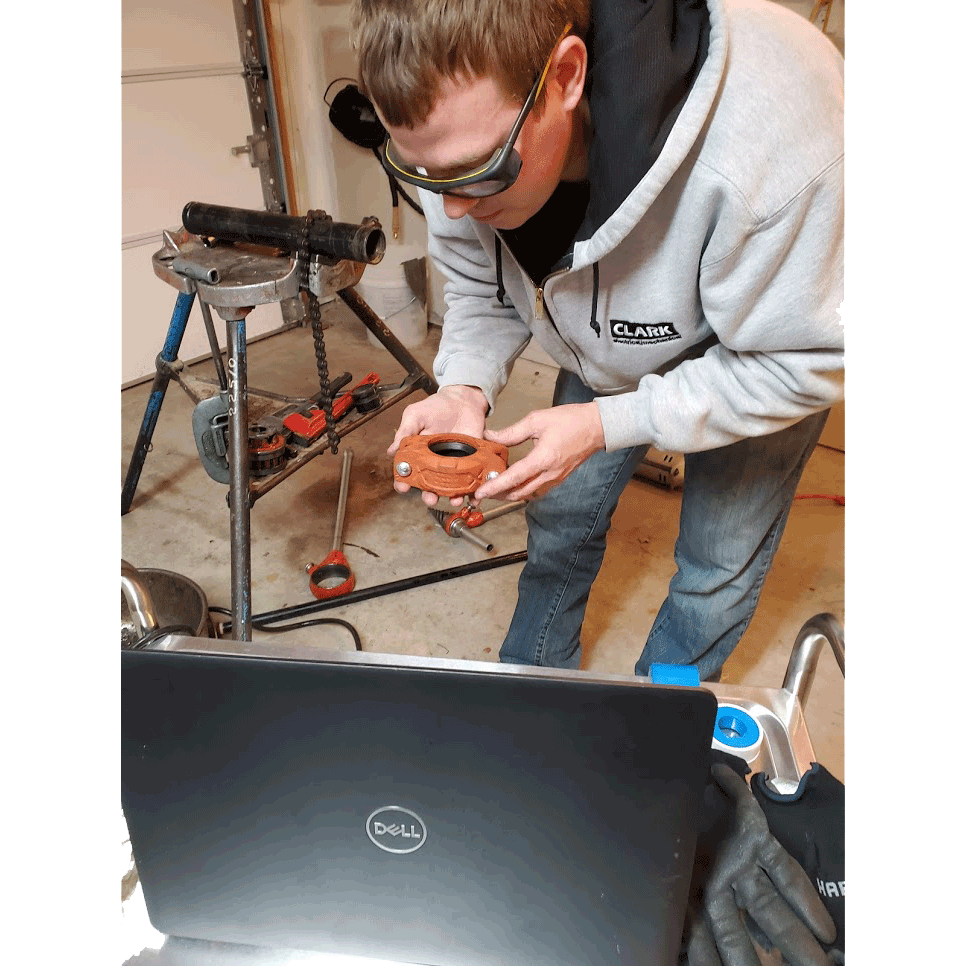

An instructor for Associated Builders and Contractors presents workplace safety training to a virtual audience during the COVID-19 pandemic.
Photos: Associated Builders and Contractors
Is virtual learning here to stay?
Cannon is still a believer in in-person training, “especially when you get into your more technical topics, such as cranes or fall protection or trenching.” But as virtual safety training has become more common in the construction industry during the pandemic, it’s more likely online classes will remain part of the education landscape.
In a virtual environment, trainers have the ability to gauge in real time how much their students are learning, Newquist said.
“With Zoom, we can set up quizzes,” he added. “If we’re talking about fall protection for an hour, you set up a quiz for the middle of class and say, ‘Let’s see how much we remember.’”
Online training also allows Newquist to share his presentation with students before each session.
“That gives them a chance to read up and ask questions,” he said. “If you give them the presentation in advance, they can follow along with it.”
For certification classes, such as forklift training, Newquist sees two possible options.
Trainers with large studios can bring in the equipment and film the training. Or, blending learning – combining virtual training with in-person training – could become more popular, particularly for comprehensive hands-on training that requires an extensive time commitment.
“There’s no reason that you couldn’t do three days online and a day at the training facility,” he said. “Even with something as simple as first aid and CPR, you take the online portion, then you come in and do the practicals. With OSHA standards, you could bring people in to do the practical exercises where you see the equipment or machinery or fall protection gear. People are going to be excited that there are so many ways to do this.”

