

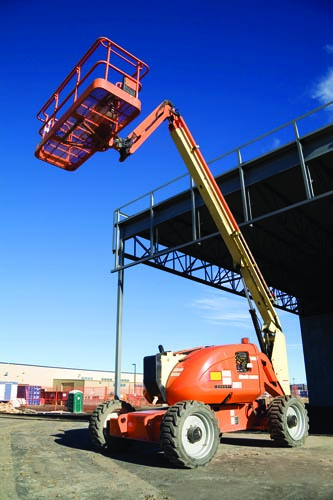
Aerial lifts not only make working at height easier, they also can help keep employees safe. “If used properly, an aerial lift can help you reduce the risks for back, neck and shoulder injuries caused by working at or above shoulder level,” states CPWR – The Center for Construction Research and Training.
However, when incidents involving aerial lifts occur, they can be deadly.
CPWR notes that major causes of death involving aerial lifts are falls, tip-overs and electrocutions resulting from contact with overhead power lines.
- Digital Partners -
Other hazards related to aerial lifts include ejections, structural failure and crushing/trapping injuries.
1-2-3
If a task requires the use of an aerial lift, CPWR recommends employers and workers follow three steps:
- Get properly trained. It is the employer’s responsibility to ensure every worker using an aerial lift is properly trained by a qualified person experienced with the model of the lift being used. Once workers are trained, they and the employer should always follow the manufacturer’s rules.
- Use a full-body harness. If a lift truck is struck by another vehicle, anyone who is not wearing proper fall protection could be thrown from the lift and killed. CPWR advises workers to use a suitable lanyard attached to an engineered anchor in the basket or on the boom – not a guardrail.
- Watch for overhead power lines. “The most frequent cause of death to a worker in a lift is electrocution,” CPWR states, adding that trees can obstruct a lift user’s view of power lines. To determine if power lines are a hazard on any jobsite, conduct a walk-through to check for obstructions. In addition, stay at least 10 feet away from all power lines.

