
One of the many things I love about my role as a global leader for NSC Networks is the opportunity to engage with safety professionals from various regions, cultures and backgrounds. Forums held across Europe, Asia Pacific and Latin America create space for networking and learning across multiple industries, disciplines and sectors. Although each region has its unique challenges, common themes are clearly emerging:
Serious incident and fatality prevention. Traditional metrics such as total recordable incident rate are being replaced with severity-based metrics that focus on how the most critical risks within the organization are being measured and controlled. The National Safety Council has been working with ASTM International on updating the E2920 standard for classifying injuries, as well as providing guidance on understanding SIF risks and engaging employees and leaders.
Artificial intelligence and technology integration. The rapid pace of AI and technology advances is having a huge impact on how the environmental, health and safety function is being performed. Solutions range from organizational capability to analyze large sums of data and extract actionable insights to the ability to monitor hazards in real time and provide interventions to avoid unwanted outcomes (but also include personal capability to manage productivity and administrative tasks). This requires EHS professionals to develop and expand the skill set needed to perform the function.
Organizational learning. This is expanding from how an organization learns and improves when things go wrong to how it studies and strengthens the aspects that are working well. Most organizations are approaching this with various methodologies, philosophies and tools, including lean manufacturing, continuous improvement, plan-do-check-act, learning teams, neuroscience, Human and Organizational Performance, visual workplace, etc.
Contractor management. From the organizational perspective, this typically encompasses the process of evaluating contractor competence through prequalification and the interaction and support for contractors working onsite. From the contractor perspective, it’s challenging to cater to diverse organizations and industries. Within NSC Networks, we’re working to help create global consensus.
Leadership engagement. EHS professionals are evaluating how leaders are aligned on EHS values, resources, messaging and execution, as well as identifying if their actions help drive meaningful engagement and results. Discussions during our forums typically involve how to influence positive behaviors, create executive champions, establish the right safety metrics and demonstrate the value of EHS.
Psychosocial risk and well-being. This covers not only how employees feel valued, but how work design elements and personal factors affect their ability to work. Organizations are taking various approaches, including structured risk assessments, employee perception surveys, mental health first aid services, cognitive and holistic ergonomics, and employee reporting and feedback mechanisms.
Workforce retention. Societal and generational shifts have changed worker priorities. The war for talent is becoming increasingly global, with the focus not only on attracting the best performers, but also on keeping them engaged. Compounding this issue is that traditional EHS requirements now include security; loss prevention; workers’ compensation; quality; consumer trust; data analysis; well-being; and environmental, social and governance reporting.
Moving forward
After dozens of international forums, one thing remains clear: No single approach is emerging as the best. The best organizations are leveraging internal and external resources and business partners to create clarity and alignment, and continuously seek to learn, embrace change and pivot when needed.
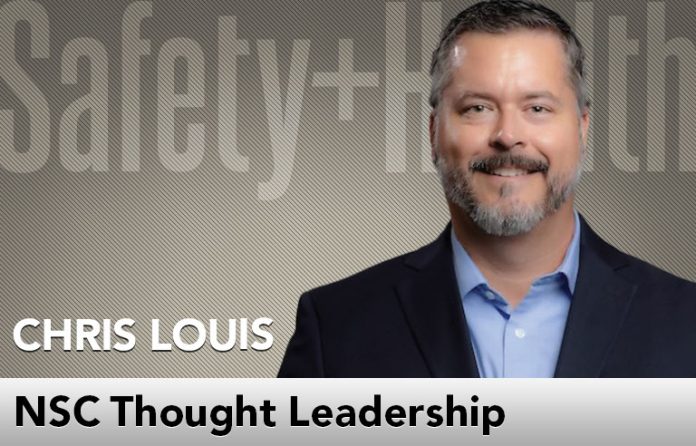
 Chris Louis is a senior leader with NSC Networks who leads the Global, Asia Pacific, European and Latin America Networks. He has 25 years of experience in industries such as manufacturing, automotive, health care, construction, packaged foods and consumer goods. His goal is to build collaborative partnerships that drive innovation by leveraging data analytics, human factors, learning modalities and continuous improvement philosophies.

