

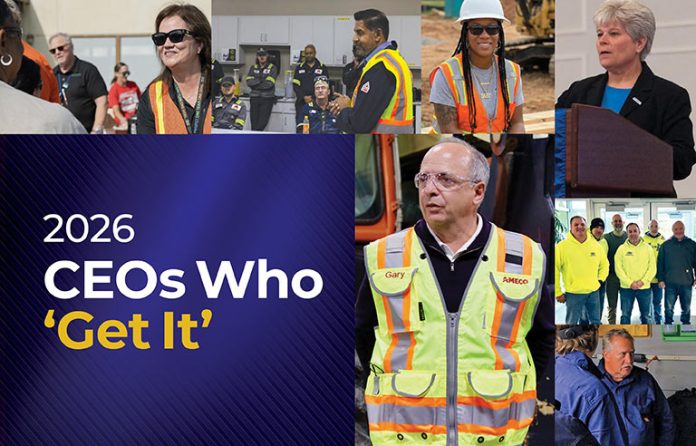
Every year, I’m reminded that great safety leadership starts with something simple and profoundly human: showing up for people – not just in moments of crisis, but in the everyday rhythm of work.
The CEOs recognized this year understand that safety becomes real when leaders make it personal. They pair operational discipline with genuine care for the people who make their organizations successful.
 Introduction by
Lorraine M. Martin
CEO
National Safety Council
These seven leaders prove that culture is shaped by what leaders prioritize. They’ve built systems that reduce risk and strengthen communication, so concerns are heard early. They’ve invested in tools and training that give teams the confidence to act. And more than anything, they’ve created workplaces where people feel valued, respected and supported. That combination is what defines a CEO who “gets it.”
These leaders create clarity and purpose. At AMECO, Gary Bernardez reinforces a simple message that guides every task: “Begin and end safe onsite: project, office, home.” Backed by strong planning expectations, daily analysis tools and consistent communication, he’s made safety a shared commitment across the organization. At Mascaro Construction Co., John C. Mascaro Jr. brings decades of field experience to every decision. His hands-on leadership and accountability systems ensure employees not only know what safe work looks like but feel empowered to speak up and help improve it.
They also recognize that improving safety requires investment in people. John L. Nickerson built JLN Associates from the ground up with that mindset, creating a training center that mirrors real-world risks and provides new professionals with pathways into the industry. His personal involvement on jobsites reinforces a culture of trust and shared responsibility. Similarly, at Axalta Coating Systems, Chris Villavarayan has paired a strong “goal zero” message with capital investment, leadership development and global training programs that have dramatically reduced injuries in a short period of time.
A CEO who “gets it” understands that communication and connection matter just as much as process. At Four Rivers Nuclear Partnership, Myrna Redfield has built a culture where employees take ownership and raise concerns early, supported by open forums, worker-led ambassador programs and her own consistent presence in conversations about safety. At OccuPros, Aarion Williams leads with a people-first philosophy that encourages engagement, creativity and community impact within a trust-based culture.
Safety leadership extends beyond prevention. It requires compassion and strong systems when incidents do occur. At the Public Employer Risk Management Association, Mary Beth Woods has built a model where data-driven insights, hands-on training and integrated return-to-work programs help public employers across New York state protect municipal employees.
These leaders show that when organizations combine operational excellence with authentic human connection, safety becomes more than a value – it becomes a shared promise. Their commitment reflects the mission of the National Safety Council and the belief that every person deserves to go home safe at the end of each shift.
On behalf of NSC, congratulations to the honorees.
- Does your CEO ‘get it?’ Tell us why on the submission form and your CEO could appear among the 2027 selections.
Gary Bernardez
CEO
AMECO
Greenville, SC
AMECO is The Site Services Co., a leading provider of integrated sitewide services that keep construction projects and operating facilities moving safely and efficiently. Founded in 1947, AMECO delivers solutions “inside the fence,” from sitewide power, tools, scaffolding and heavy equipment to fueling and hydration. Its comprehensive offerings can be deployed individually or as part of fully managed onsite programs designed to improve productivity, cost certainty and safety.
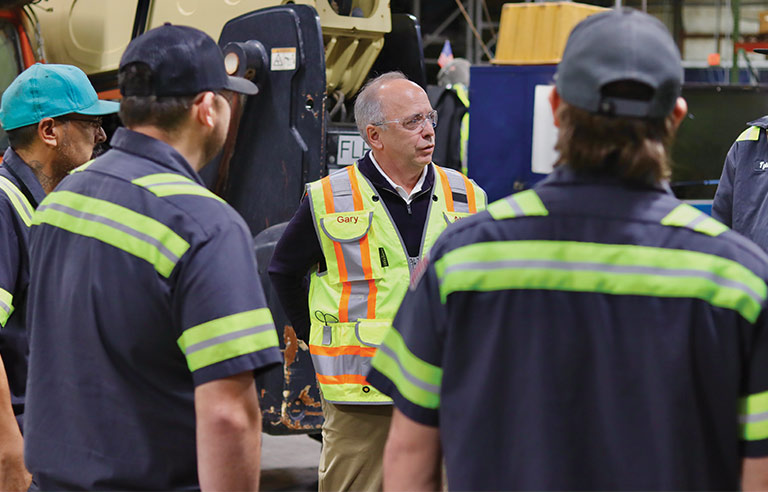
Describe your personal journey to becoming a CEO who “gets it.”
One of my first memories of senior level executives who “get it” was a former president of American Equipment Co., who was in that position when I joined the company. Commitment to safety was a very visible aspect of the culture and the culture of our former parent company. One morning, entering the gate of the company parking lot, that president was standing at the gate greeting everyone. He wasn’t just saying hello – he was checking to see if all of us were wearing our seat belts. That was a real “got it” moment for me. I’ve been respecting that legacy and building on it every day since.
What’s the biggest obstacle to safety at your organization?
One of our biggest obstacles is to consistently communicate and demonstrate our commitment to safety at client sites, AMECO offices and employee homes across our North American footprint. Keeping safety top of mind daily in each of these environments takes commitment, creativity and consistency.
Why is safety a core value at your organization?
Safety is essential to our employees, clients, business and supply chain partners, and the overall success of AMECO. Employee engagement and commitment, client relationships, and financial performance are all greatly impacted by our safety success. AMECO’s core values are safety, integrity, accountability, teamwork and adaptability – starting with safety.
How do you instill a sense of safety on an ongoing basis?
We do this a variety of ways, including:
- A robust HSE proctor team that connects safety leaders at all operating locations and client sites throughout North America, led by our chief operating officer and senior HSE manager.
- A robust incident review process that formally assesses near misses and incidents within a specified time frame. This process includes the actual employees/parties involved in the near miss or incident to ensure both clarity of what happened and solidify lessons learned and actions taken from the review. I participate in these IRPs to help ensure consistency of process, that all participants are included, and to reinforce a “lessons learned” mentality and action-oriented response from the review.
- A robust observations program throughout AMECO. Employees log observations – positive or negative – on all things related to safety that they see on a daily basis through the AMECO HSE Power App or written submittal. This is one way that helps us focus on behaviors versus reporting historical performance.
- A robust commitment to stop-work authority.
How does your organization measure safety?
We measure safety through traditional metrics such as total case incident rate and experience modification rate, as well as quantity of observations in our HSE Power App. We’re working to expand the group of employees that submit observations to broaden the sets of eyes on our operations/working environments.
What role do off-the-job safety and mental health and well-being play in your organization’s overall safety program?
Our HSE motto, “Begin and end safe onsite: Project I Office I Home,” extends the AMECO culture and commitment to our employees’ homes. This drives off-the-job awareness and shows our AMECO team that we care about them and their families. AMECO cares about the “whole employee,” not just when they’re at work. Mental health and well-being are particularly challenging in the construction industry, so we openly discuss difficult topics such as substance misuse and suicide prevention. In 2024, we changed our employee assistance program providers to increase the number and variety of emotional well-being and work-life balance resources available to our employees, with an emphasis on continuity of care.
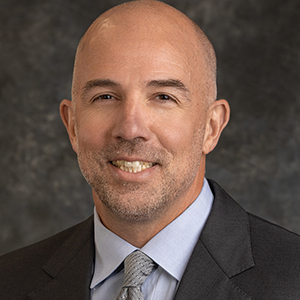
John C. Mascaro Jr.
President and CEO
Mascaro Construction Co. LP
Pittsburgh
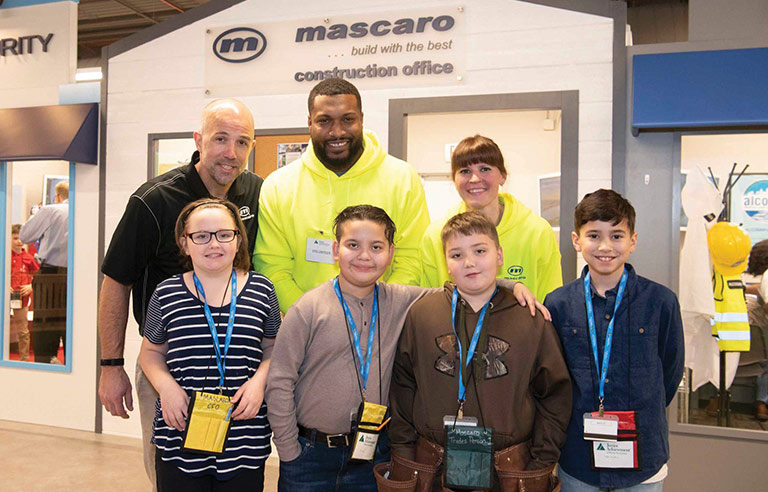
Describe your personal journey to becoming a CEO who “gets it.”
I began my career in construction at the age of 14, tending stone masons. I moved up to be a union laborer throughout my college years. I then spent several years as a hands-on superintendent after graduation and later landed in the position of vice president of field operations.
Through the years, I really got to understand the daily risks and hazards that our union tradespeople face each and every day. Safety remains central to our company because it isn’t only a key metric of project success but, more importantly, a commitment to ensuring everyone returns home safely. By doing things right the first time, always having each other’s back and maintaining a proactive safety department, we reinforce this commitment at every level.
To support these efforts, the director of health, safety and environmental reports to me directly. Safety is so important to our company and to me personally, as I believe Mascaro’s people are our most valuable resource. One of the most important lessons I have learned is that “we” are smarter than “I.” Together, we’ll develop the best plan and safest means and methods. By compiling knowledge from the construction team, learning from our near misses and following our motto of “planning the work and working the plan,” we strive to have the safest jobsites possible.
What’s the biggest obstacle to safety at your organization?
Construction is an inherently dangerous business. At Mascaro, we believe our people are our most valuable resource and keep them alert and trained in their tasks. We provide our skilled tradespeople with task-specific training and the latest advancements in personal protective equipment. We make sure there’s continuous training at all levels of our organization, including best methods and techniques when it comes to management, leadership, and best practices regarding motivating and inspiring our employees.
I’m an active participant on Mascaro’s HSE committee. I weigh in on the outcome – and learning opportunities – of both Mascaro and subcontractor partner incident and near-miss investigations. We make sure a healthy stop-work authority culture exists on all our jobs, which is critical to completing the work safely. I seek out opportunities to reinforce Mascaro’s commitment to safety.
Why is safety a core value at your organization?
We’re a family-owned company, and everyone on every job is considered part of our construction family. It’s Mascaro’s goal to send each employee home to his or her family in the same condition their families sent them to us. Safety is a core value because our employees aren’t just some number – they’re someone’s dad, husband, wife, mother, sister, brother. These are the people who are constructing our projects and, at the end of the day, they have their immediate family to go home to.
How do you instill a sense of safety on an ongoing basis?
I try to lead by example by participating in the following activities:
- Monthly HSE committee meetings
- Quarterly project safety recognition lunches
- Bimonthly project safety review meetings
- Incident investigation report reviews
- Promoting the “near miss/good catch” process and investigation of each incident assigned a potential severity level of greater than 2.5
- Ensure training is completed and our youngsters have mentorship on task-specific training through our New Employee Development program
- Support annual frontline supervisor HSE training, keeping everyone’s skills sharp
My favorite thing to do is to visit jobsites on a regular basis. I know my employees’ names and families. I want them to know that they’re important to me, and I show that by visiting their sites. It’s when safety falls from the forefront that incidents can happen.
How does your organization measure safety?
We measure safety very simply. We have a unified goal of “ZERO.” Always doing the right thing is key. We develop project-specific programs on every job, which is included in our subcontracts, and we proactively make sure we always follow it. Beyond OSHA logs, experience modification rates and total recordable incident rates, we have developed a potential severity level measure. The PSL is assigned to all incidents, first aids and near misses. It tells us what’s trending and what we should focus on. At Mascaro, our continuous improvement process is based on three leading indicators: management commitment, employee engagement and accountability. To support our continuous improvement process, we have developed a number of key performance indicators, including:
- Pre-task planning
- Document and delivery audits
- Project team onsite inspections
The monthly CIP performance is captured on a project scorecard, which is completed by the project team and reviewed by top management monthly.
At Mascaro, we measure the success of our projects by a five-metric scale. Safety is the top and most important of those five metrics. Our goal for safety on every project is zero incidents. Project teams that can maintain the zero-incident metric on their jobsite for a 12-month period are rewarded at the Platinum Safety Awards Celebration. At this event, jobsites and their employees are recognized with apparel and accessories for maintaining a safe site. We’re always trying to make our company better and safer.
What role do off-the-job safety and mental health and well-being play in your organization’s overall safety program?
Our employees’ total wellness is important whether they’re on the site or at home. Mascaro’s wellness program focuses on the three pillars of wellness: physical, financial and mental. We provide our employees with the resources needed for each pillar. Access to mental health professionals through various outlets, financial advisors and seminars, and health coaches are all accessible through our wellness program. We also mail the information to employees’ homes to make sure it’s reaching their families, because their whole family has access to these programs.
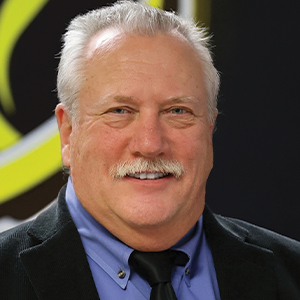
John L. Nickerson
Principal and CEO
JLN Associates LLC/JLN Safety
Old Lyme, CT
JLN Associates LLC is a multidiscipline safety and fire protection organization that supports industrial, power generation, construction, manufacturing, pharmaceutical and other high-risk work environments across the United States. Through JLN Safety, the team provides third-party safety oversight, outage and project safety support, confined space rescue teams, training, and risk assessments designed for complex operations where conditions can change quickly.
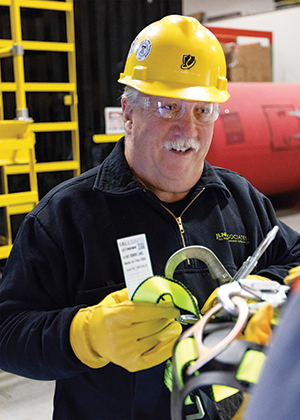
Describe your personal journey to becoming a CEO who “gets it.”
I didn’t come to leadership through a traditional executive path – I earned it in the field. My background as a fire chief, nuclear safety professional and trainer put me in environments where decisions carry real consequences and where trust and accountability aren’t optional. Those experiences taught me early on that leadership isn’t about titles; it’s about responsibility to the people beside you. I’ve seen firsthand how powerful it is when leaders invest in people instead of simply managing them.
One of the earliest experiences that shaped where I am involved confined space work – helping me realize the importance of programs that are directed by the hazard, not the regulation. In 1982, I worked as a field safety technician on a construction site building a nuclear power plant. It was my responsibility to monitor confined spaces for entry. One morning while testing a valve pit, the O2 monitor sounded an alarm during the test. This space had been tested dozens of times without an alarm. With a second meter, the condition was confirmed to be hazardous. Upon investigation, it was determined that an argon purge line had been left on from the previous day’s welding. If the management team I worked for didn’t have the diligence to test all spaces (not just tanks), within a half hour of my test, six to eight workers would have entered the low-level space, straight into a hazardous atmosphere. To this day, I think about what could have been a totally tragic outcome.
I credit the safety supervisors and management in the nuclear field who mentored me in the early 1980s, setting a strong example by recognizing confined space hazards and addressing risks in real time as work was performed. This has set a baseline thought process about managing the risk in the field with procedure and regulatory guidance and mentoring the staff that works with me. It was this early experience that also gave me the drive to be a mentor to people I interact with, whether they worked for me or I worked around them.
Today, I make it a priority to create those same opportunities for my team, to invite them into growth, leadership and decision-making. I believe strong organizations are built by empowering people to step up, learn and lead in their own way. At the JLN Safety Training Center, we use full-scale mock-ups to create an environment for all industries to learn as if they were out in the field. When you give people real opportunity and support, they rise and the entire organization becomes stronger.
What’s the biggest obstacle to safety at your organization?
The biggest obstacle to safety is complacency. When people are highly skilled and experienced, it’s easy to grow comfortable and assume today will look like yesterday. That’s when small details get overlooked and risk starts to creep in.
At JLN, we work to stay ahead of that by reinforcing the idea that conditions are always changing – every site, every shift, every job. My team puts an emphasis on slowing the process down when needed, talking through the work before it starts and ensuring everyone feels empowered to speak up if something doesn’t feel right. No one is questioned for pausing a job in the interest of safety. Like my power plant’s confined space, the atmospheric test may classify as “no hazard” for dozens of days and if complacency steps in and the test is not done to standard, the outcome can be tragic. The attention to detail during those risk management actions must be maintained and reinforced whenever the opportunity presents itself to my team. Our team actively participates in nationwide initiatives as well, such as the national Stand-Down For Safety campaign and the National Fire Protection Association’s Fire Prevention Week.
Safety is about real people, real consequences and making it home at the end of the day. Leadership sets the tone by being present, listening and backing teams when they make safe decisions. When safety is clearly supported, it becomes part of how people work – not something extra they have to think about.
Why is safety a core value at your organization?
Safety is a core value at JLN Associates because it’s personal. The work we do carries real risk, and behind every role is a person with a family, responsibilities and a life outside the job. Safety isn’t about checking a box or meeting a minimum requirement; it’s about making sure people go home in the same condition they showed up, or better.
Throughout my career, I’ve seen what makes safety effective in the field and what doesn’t. Too often, safety stops at paperwork or turns into enforcement alone – the “safety cop” approach that focuses on catching mistakes rather than supporting people. Although enforcement has its place in rare situations, it has never been the foundation of how we lead at our organization.
At JLN, we believe in being safety coaches who provide real solutions. We work alongside frontline supervisors and workers to navigate procedures and regulations in ways that support success, not punishment. That means identifying and managing risk collaboratively, as well as understanding the pressures of production schedules, outages and emergencies – while never allowing those pressures to outweigh someone’s well-being.
When safety is truly a core value, it shows up in decisions at every level. We back our people when they speak up or slow work down, even when it’s inconvenient. That trust is what drives both a strong safety climate and strong performance, because one can’t exist without the other.
How do you instill a sense of safety on an ongoing basis?
The best safety practices are integrated into normal work routines, showing up in regular conversations and pre-job check-ins, and leadership that’s present and accessible. When something doesn’t feel right, people are encouraged to speak up immediately, and they know their concerns will be taken seriously. Feedback is critical. Consistency is critical. Safety expectations don’t change based on deadlines or client pressure. If a job needs to slow down or stop, our team knows leadership will support that decision. That consistency builds trust and reinforces that safety is not negotiable.
Training and procedures matter, but culture matters more. We focus on looking out for each other and holding one another accountable in a respectful way. Over time, that creates a work environment where safety isn’t forced – it’s just part of how people think, work and make decisions every day. Our organization is managed with a focus on being a safety coach. We stress not to focus on “I gotcha” safety moments, but to address observations with an “Excuse me, what are we trying to accomplish? I believe if we can perform the task this way, we accomplish the task safely” type of approach. This has been successful in building a safety partnership with the workforce versus a punitive approach to safety compliance.
How does your organization measure safety?
We look at safety through more than just incident rates. Recordables and near misses are important, but they usually tell you what went wrong after the fact. What matters just as much, if not more, are the everyday behaviors that show how work is actually being done. We pay close attention to things like participation in pre-task planning, how often hazards are identified and fixed before work begins, and whether people feel comfortable speaking up. When employees ask questions, stop work when something doesn’t feel right and talk openly about risk, that’s a strong sign of a healthy safety culture. At its core, safety comes down to trust and communication.
Our teams work across many environments, so we encourage sharing near misses as learning opportunities, not “blame” moments. We want supervisors and frontline leaders, not just the safety team, involved in those conversations. We measure engagement through regular briefs, near-miss discussions and daily check-ins.
Where we see room for improvement is in consistency and communication across different sites and teams. As we have grown, making sure expectations, lessons learned and best practices are shared clearly and quickly becomes more challenging. We even infuse those lessons into our own hands-on training programs at the JLN Safety Training Center. We’re always working to tighten those feedback loops so learning happens in real time – not after an incident – and safety continues to improve alongside our operations.
What role do off-the-job safety and mental health and well-being play in your organization’s overall safety program?
What happens outside of work doesn’t stay outside of work. Stress, fatigue, mental strain and off-the-job injuries all show up on the job and can directly impact safety if they’re ignored. We look at safety through a human performance lens, recognizing that life circumstances affect focus, decision-making and a person’s ability to perform tasks safely.
Our leadership team is expected to be aware of what employees may be bringing with them to work and adjust job tasks when appropriate. We take a practical, human approach by normalizing check-ins and encouraging open communication. Addressing concerns early (whether related to stress, sleep or physical strain) is far more effective than reacting after an incident occurs.
Off-the-job injuries or personal challenges don’t only affect the individual; they impact their family, their co-workers and the overall safety of the work environment. When employees feel comfortable speaking up, we can make informed adjustments that reduce risk and prevent minor issues from becoming serious events. Ultimately, supporting the whole person, not only the job they perform, creates a safer, more resilient organization. This can only happen with a good safety culture that fosters communication.
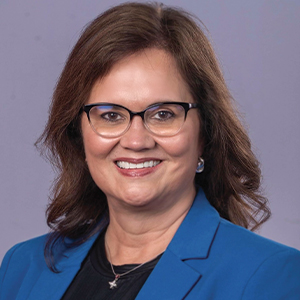
Myrna Redfield
President, CEO and Program Manager
Four Rivers Nuclear Partnership LLC
Paducah, KY
Four Rivers Nuclear Partnership, an Amentum-led joint venture with Fluor and BWX Technologies, was awarded a $1.7 billion contract with the U.S. Department of Energy in 2017 to perform environmental cleanup and deactivation of the Paducah Gaseous Diffusion Plant. FRNP and its 744 employees are achieving the DOE mission at the Paducah site by reducing surveillance and maintenance of site uses and structures, deactivating former uranium enrichment facilities, and leveraging innovative technical solutions to achieve the cleanup goals at the Paducah site.
Describe your personal journey to becoming a CEO who “gets it.”
Of course there are many, many occurrences and lessons that brought our team to where it is and, in fact, that is in itself lesson No. 1, which is to never let any significant event go by without making it a learning experience. Some groups focus on “follow the path that gives us success” and others focus on “learning from mistakes.” I’ve tried to instill into our team that I want us learning from all of them. When things work, make sure we know why they worked and put that in place again while continuing to look for ways to get better.
What’s the biggest obstacle to safety at your organization?
It’s hard to select one thing to be the biggest obstacle, but it’s likely complacency with small incidents. When a minor incident occurs, it can seem like it has little impact. FRNP uses the lesson model to overcome the tendency to overlook these. Treat each event as a chance to learn. That means FRNP looks at what situation allowed an incident to occur. We take feedback from those incidents and apply varying levels of investigations right up to a formal root cause evaluation. Our continual goal is to improve that process by soliciting feedback in the field and passing it up the chain when we have something requiring attention.
Why is safety a core value at your organization?
Safety is a part of everything FRNP does. A safety-conscious work environment and a strong safety culture is reinforced as our organization’s No. 1 priority at every level. FRNP is committed to the belief that injuries and incidents are preventable, and this belief drives how work is planned and executed. FRNP employees have multiple ways to engage with safety, including our award-winning Take Two for Safety campaign; employee involvement in employee safety council meetings; and the implementation of the Integrated Safety Management System, embedding safety expectations and hazard controls into every step of work. Safety isn’t just important because everyone deserves to leave work safely – good safety performance directly contributes to quality, reliable operations and mission success.
How do you instill a sense of safety on an ongoing basis?
FRNP instills a strong and continuous sense of safety in employees by establishing clear expectations through training, engagement and communication. This begins when employees walk in the door: New-employee orientation introduces workers to the Worker Safety and Health Program. FRNP continues to engage with employees and safety through a comprehensive planning process that defines work scope, identifies hazards and implements controls before tasks begin.
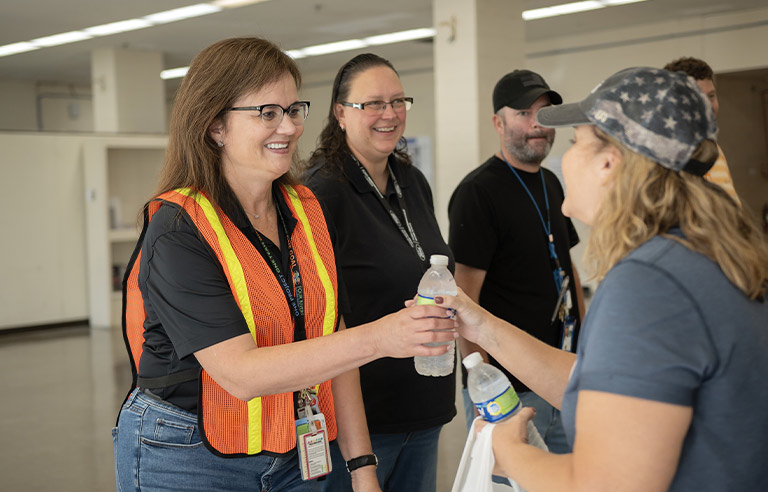
We start each day with a management safety meeting. Managers then have a pre-job safety meeting, and we also have our formal, monthly safety meeting. We have each group represented with our Safety Culture Ambassador program working on an ongoing basis to focus on instilling this culture. We also employ four full-time union safety representatives to make sure that we have several avenues of communication from the workforce back to management and from management back to the workforce. Our method of instilling this line of communication back and forth happens every day, and that’s what it takes to make sure everyone knows we truly believe in a “no incident” policy.
FRNP’s core values of safety are reinforced through safety observations, safety suggestion forums, CEO roundtable meetings, our Employee Safety Council (which encourages employees to participate actively in identifying risks and offering improvements) and a Safety Ambassador Program.
How does your organization measure safety?
FRNP uses many metrics, from vehicle incidents to first aids to mistakes logging into our radiological work permit process. These metrics show our track record and provide an indicator for trends and measurement of success. That said, FRNP has found that good metrics are not showing the true picture if the culture isn’t there. We work tirelessly to instill good safety culture into our team at all levels and have developed numerous ways to measure that. Employees are encouraged to give feedback about how they perceive the culture, and FRNP provides situations and forums to foster that feedback. FRNP’s overall goal is to increase our worker feedback and to make sure that our employees know that we appreciate any feedback.
What role do off-the-job safety and mental health and well-being play in your organization’s overall safety program?
FRNP views health and safety holistically with the belief that maintaining a strong safety culture extends beyond the immediate work environment. FRNP has many programs focused on the overall health and wellness of employees while cultivating a workforce that feels supported, alert and capable of safely performing duties.
FRNP promotes “mental health champions” – employees who are committed to open and honest communication about mental illness. Mental health champions help co-workers with peer-to-peer support and advise FRNP on resources that emphasize the importance of mental health for employees at work and at home.
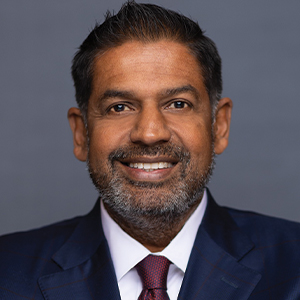
Chris Villavarayan
President and CEO
Axalta Coating Systems
Philadelphia
My first exposure to the far-reaching impact of even a single injury came early in my career. It was a formative moment for me. A co-worker in a manufacturing plant was injured, and I saw firsthand how it rippled outward: impacting him (of course), his family, his immediate team and even the broader workplace. It led me to understand how even a single injury can have such a big impact, and that perspective has guided me my entire career. In fact, you could say it’s still rippling today as I and my executive team have made safety a core value at Axalta.
What’s the biggest obstacle to safety at your organization?
Often, when people think of workplace risk, they think of big things like explosions or other catastrophic events. But throughout my career, I’ve come to recognize that it’s actually the simple, very routine tasks that drive incidents and create a culture of increased risk. When people don’t follow a procedure to the letter or skip a step, there may not be an immediate negative impact, but ultimately an injury occurs at a future date.
That’s why all tasks are considered important and required to be followed in accordance with procedures unless and/or until procedures are changed properly and/or tasks are eliminated.
Our responses to injuries are driven by our learning culture and commitment to zero incidents.
First, all injuries require an investigation, which includes a root cause analysis. In addition, the investigation also looks at corrective actions that include implementing mistake/error proofing and designing out issues to prevent a reoccurrence.
Second, every investigation is reported out during a monthly environmental, health and safety “lessons learned” session. These monthly sessions are attended by every plant leadership team as well as commercial leaders.
Third, for every injury, we share global flash alerts related to the injury. This provides an opportunity for other locations to review if similar behaviors and/or conditions exist so they can prevent the same injury and make the corrective actions once determined. Our goal with this process is to drive down our rates of injury by continuous examination, learning and action.
Why is safety a core value at your organization?
It’s simple: Our employees are our most important and valued asset. We emphasize, encourage and reward a zero-incident culture in everything we do. If we don’t have safety, it’s hard to do anything else well.
How do you instill a sense of safety on an ongoing basis?
Safety begins with me and my leadership team. Every leadership team meeting starts with safety moments, and each leader receives a flash safety alert for all injuries. Details of the safety alerts are covered by each function and during each shift start-up of every plant operation. We also have a global safety day, during which everyone in the company takes a pause and reflects on what they can do better to keep ourselves and our teammates safe, whether it’s in our personal lives or during work hours. We also have a “STOP” work program. This program encourages all employees to stop any actions or work if it could lead to an injury. This program covers other topics such as our environment and quality processes, in addition to safety.
How does your organization measure safety?
Like many companies, we measure the total recordable injury rate. But TRIR is a lagging indicator; we believe in taking proactive steps to ensure our zero-incidents culture, so we track leading indicators. These include the number of first aid occurrences, “good catches/near misses” (i.e., incidents that don’t happen because of preventive measures such as our “STOP” program, or just plain luck), and the closure rate of those good catches/near misses. The closure rate of the good catches is a recent addition because our continual analysis determined that just preventing something bad from happening isn’t enough if you’re not changing processes, behaviors, techniques, etc., to prevent it from happening again.
What role do off-the-job safety and mental health and well-being play in your organization’s overall safety program?
We absolutely emphasize the importance of safety and mental health outside the workplace, because how an employee thinks about safety overall and how team members take care of themselves, their family and their teammates are inextricably linked. During our Global Safety Day and throughout the year, we share examples not only of being safe at work, but also at home or outside the work environment. Our teams are also encouraged to look out for each other, check on each other to make sure our teammates are OK. Our safety programs cover all employees, including external third-party contractors. We want everyone who works/enters our premises to be safe, keep their peers safe and return home safely.

Aarion Williams
CEO
OccuPros
Arlington, TX
As an OSHA-authorized training provider and certified minority/woman-owned business enterprise, OccuPros delivers engaging safety training that goes beyond regulations to build cultures where workers genuinely look out for one another. OccuPros partners with organizations across construction, manufacturing, logistics, health care and education to transform workplace safety from a compliance checkbox into a competitive advantage and genuine expression of care for employees. The organization has 10 full-time employees, two part-time employees and 36 contractors.
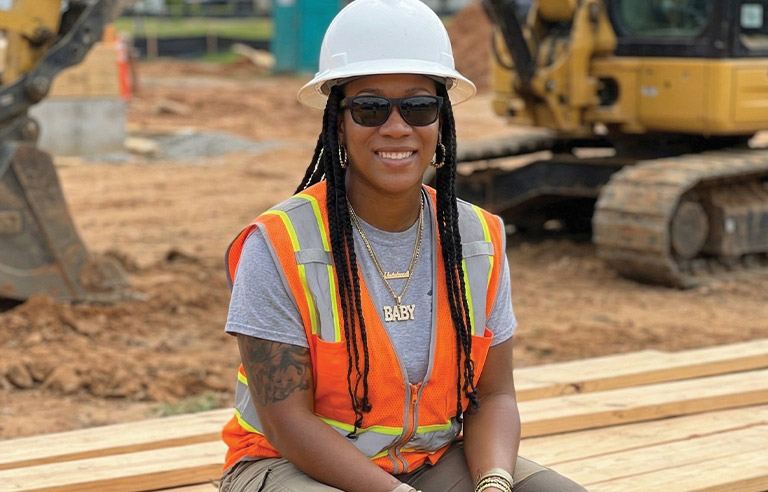
Describe your personal journey to becoming a CEO who “gets it.”
My path to safety leadership didn’t start in a hard hat. It started in a classroom. For eight years, I served as an elementary school teacher, where I learned that creating safe environments is the foundation for everything else. Children can’t learn when they feel unsafe. Workers can’t perform when they’re worried about getting hurt.
That insight became deeply personal as I grew closer to the occupational safety profession. I began hearing stories of preventable injuries and fatalities, accounts of workers who didn’t come home to their families. These weren’t statistics; they were fathers, mothers, sons and daughters. The weight of those stories changed how I understood the stakes of this work.
When I stepped into executive leadership at OccuPros, I brought my educator’s perspective to workplace safety. I saw an industry that often spoke in regulations and citations rather than human terms. I was determined to build something different: an organization where “safety is love” isn’t just a slogan but an operating philosophy that drives every decision we make.
The lesson that guides me daily is simple: People protect what they care about. My job isn’t to enforce compliance. My job is to help organizations genuinely care about the people who show up every day. When that caring becomes authentic, safety stops being a burden and becomes instinctive.
What’s the biggest obstacle to safety at your organization?
The biggest obstacle we encounter, both internally and with clients, is the perception that safety is separate from the “real work.” Too many organizations treat safety as something that slows down production, adds cost and exists only to avoid penalties.
We overcome this by reframing the conversation entirely. Safety isn’t overhead. It’s an investment in human capital that generates measurable returns. When workers feel protected, they’re more engaged, more productive and more loyal. When organizations prevent injuries, they eliminate the hidden costs of turnover, lost time and escalating insurance premiums.
Internally, we model what we teach. Every team meeting begins with a safety moment – not as ritual, but as genuine practice. We give our staffers the authority to stop any operation if they see a hazard, without fear of pushback. That empowerment creates authentic buy-in across the organization.
With clients, we focus on quick wins that demonstrate value: A mock OSHA inspection that identifies hazards before regulators arrive, a training session that workers actually enjoy and remember, a staffing solution that puts certified professionals onsite within days. When people experience safety done well, their resistance transforms into advocacy.
Why is safety a core value at your organization?
Because safety is love in action.
That might sound unusual coming from a business leader, but it’s the foundation of everything we do at OccuPros. When an employer invests in safety, they’re making a powerful statement: “You matter. Your well-being matters. Your family needs you to come home tonight, and we’re going to make sure that happens.”
We chose this industry because the work has profound meaning. Every hazard we identify, every training we deliver, every safety professional we place, and every program we build has the potential to prevent a life-altering injury or save a life. That isn’t hyperbole. That’s the daily reality of workplace safety.
As a minority- and woman-owned business, we also understand what it means to be overlooked. Many workers in high-hazard industries feel like expendable resources rather than valued human beings. Our core value challenges that mindset directly. OccuPros exists to help organizations see their workers as people first: people with families, dreams and the fundamental right to go home safely every single day.
How do you instill a sense of safety on an ongoing basis?
Drawing from my teaching background, I know that learning isn’t a one-time event. It’s an ongoing process that requires engagement, repetition and relevance. We apply those same principles to safety culture development.
First, we make safety personal. During training sessions and safety meetings, we ask workers to think about who’s waiting for them at home. A photograph of a child or spouse is more powerful than any OSHA poster. When safety becomes about protecting your ability to be present for the people you love, it stops feeling like corporate policy and starts feeling like personal responsibility.
Second, we give workers a voice and ownership. The best safety insights come from the people doing the work every day. We train supervisors to genuinely listen when workers raise concerns, and we celebrate employees who identify hazards before they cause harm. Recognition reinforces the behaviors we want to see.
Third, we make safety visible: daily toolbox talks, safety moments at the start of meetings, regular walk-throughs where leadership demonstrates that safety isn’t delegated but led from the top. When executives put on personal protective equipment and participate in safety activities, it sends a message that words alone can’t convey.
Finally, we make it engaging. Traditional safety training puts people to sleep. Our approach uses storytelling, real-world scenarios and interactive elements that help workers actually retain and apply what they learn.
How does your organization measure safety?
We measure safety through both leading and lagging indicators, but we place greater emphasis on leading indicators because they help us prevent incidents rather than simply count them after the fact.
Our key leading indicators include near-miss reporting rates, which we actively encourage because more reports mean better visibility into hazards. We also track safety observation frequencies, training completion and comprehension scores, hazard identification response times, and employee participation in safety committees and initiatives. High engagement in these areas signals a healthy safety culture.
For lagging indicators, we track recordable incident rates, lost-time injuries and workers’ compensation claims. Although these metrics matter, we view them as outcomes of culture rather than measures of it. An organization can have low incident rates simply because they have been fortunate. Leading indicators tell us whether that good fortune is likely to continue.
Where we see room for improvement is in predictive analytics. The industry is moving toward using data to anticipate where incidents are most likely to occur before they happen. OccuPros is investing in tools and strategic partnerships that will help us identify patterns in leading indicators that predict elevated risk, allowing for targeted intervention before incidents occur.
What role do off-the-job safety and mental health and well-being play in your organization’s overall safety program?
A worker’s well-being doesn’t clock in and out. The person who arrives at work distracted by financial stress, exhausted from caregiving responsibilities or struggling with depression is at elevated risk for injury. Comprehensive safety programs must address the whole person.
Off-the-job safety is essential to our approach. More workers die from motor vehicle incidents during their commute than from many on-the-job hazards. We incorporate defensive driving awareness, home safety education and family emergency preparedness into our programming. When workers practice safety consciousness at home, they bring that mindset to work with them.
Mental health has become central to how we serve our clients. The construction industry, which represents a significant portion of our client base, has one of the highest suicide rates of any profession. We train supervisors to recognize warning signs, connect workers with resources and create psychologically safe environments where people can speak openly about struggles without stigma or fear of retaliation.
This aligns directly with our “safety is love” philosophy. If we truly care about our workers, we care about all of them, not just the parts that show up on a jobsite. Addressing mental health, fatigue, stress and off-the-job risk factors isn’t mission creep. It’s recognizing that human beings are complex, and comprehensive safety programs must be equally comprehensive in their care.
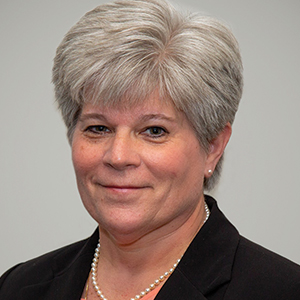
Mary Beth Woods
Executive Director
Public Employer Risk Management Association Inc.
Latham, NY
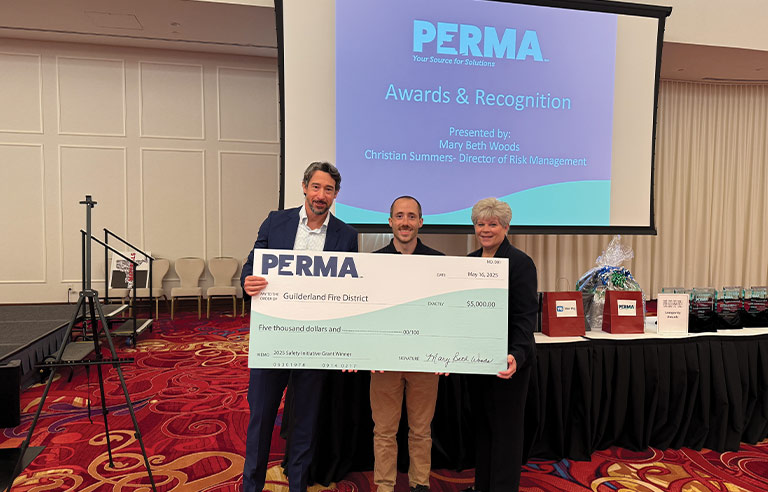
PERMA is a member-owned, not-for-profit association dedicated to advancing workplace safety and risk management for public entities across New York state. Since 1982, PERMA has provided innovative workers’ compensation solutions and proactive claims management, serving over 800 public organizations. Its team of approximately 85 professionals provides in-house claims management services including nurse case management, risk management, underwriting and account management services.
Describe your personal journey to becoming a CEO who “gets it.”
My path has been shaped by firsthand experience, tough lessons and a lot of listening. I spent over 20 years working as a regulator for the New York State Workers’ Compensation Board. There, I saw how important it is to balance the needs of both businesses and workers. We spent a considerable amount of time talking about benefits and costs, but I quickly realized that real progress meant ensuring appropriate medical care and recognizing the importance of putting safety and prevention first.
When I joined PERMA four years ago, I was drawn to the program’s focus on safety and prompt treatment and rehabilitation for injured workers. We regularly discussed injury trends and loss prevention and enhanced our new claims system to provide more in-depth data analytics. Cross-functional teams were set up to deliver comprehensive support to members. Our team developed a system of alerts to quickly flag issues – such as unsafe practices or catastrophic events – to the right service team for immediate action.
Experiences such as members dealing with serious workplace incidents really drive home the importance of never becoming complacent. These experiences pushed us to keep rethinking and improving our safety programs, and to work together even more closely. I have learned that creating a culture where everyone owns safety isn’t just a slogan, it’s the only way to succeed.
We also worked hard to change the way our programs reward safety. By advocating for legislation that lets us offer large deductible plans, we made it possible for members who focus on safety to receive the benefits and motivate those with more losses to step up. It’s all about encouraging positive change and making sure safety is not just a box to check, but a real priority. Every step of this journey has taught me to lead with empathy, to stay curious and to be open to new ideas.
What’s the biggest obstacle to safety at your organization?
The biggest obstacle to safety for our members is achieving consistent buy-in from both their management and staff. When not everyone is fully committed, safety programs risk becoming routine formalities rather than true priorities, which can erode best practices and increase the likelihood of incidents. Public entities also struggle to fund safety initiatives on top of existing budgetary challenges. Therefore, over the past two years, we have successfully secured millions of dollars for more than a dozen targeted safety grants authorized by our board of directors. Without broad engagement and adequate resources, employees may overlook procedures or fail to report unsafe conditions. Additionally, near-miss incidents where harm was narrowly avoided may go unaddressed, missing key opportunities for improvement.
This challenge is heightened by their high staff turnover, especially as experienced employees retire and newer staffers are still gaining familiarity with safety protocols. The loss of institutional knowledge and inconsistent training can leave gaps in the safety culture, making it even more crucial for everyone to be united in their dedication to workplace safety.
To overcome this obstacle, we actively lead by example and continuously reinforce the message that safety is everyone’s responsibility. We foster open communication, encourage reporting of hazards and near misses, and provide ongoing training to ensure both new and seasoned team members are equipped to contribute to a safer environment. We have also focused on strengthening communication with our members through general communication addressing seasonal risks and claim trends, as well as targeted emails and social media specializing in the unique risks for certain segments of our membership. Through vigilance, shared commitment and proactive education, we strive to ensure every employee gets home safely at the end of the day.
Why is safety a core value at your organization?
PERMA is committed to partnering with public entities that are proactive about safety. We encourage our members to participate in safety initiatives and training, supporting a safer workplace for everyone. By working together to implement strong safety protocols, we create a more secure environment for all participants. Previously, the focus was more about offering affordable coverage to all public entities, regardless of their commitment to our safety programs. This shift also reinforces the importance of safety to our staff and across our membership.
Safety is a core value at our organization because we represent municipal workers whose daily efforts protect the public and maintain the well-being of our communities. These essential employees often operate behind the scenes, and their commitment ensures everything runs safely and smoothly. When incidents occur, it becomes clear just how crucial their work is – making their health and security our top priority.
We believe it’s our responsibility to safeguard these workers, ensuring they return home safely to their families each day. When incidents do occur, our approach goes beyond simple cost considerations – we prioritize rehabilitation and prompt medical care, reflecting our deep respect for public servants. By fostering a culture of safety through proactive initiatives, member alerts and open communication, we honor their service and keep their protection at the forefront of our mission.
Ultimately, safety is embedded in our organizational values because it not only protects our workforce but also strengthens the communities we serve. By working alongside public entities to promote strong safety protocols and continuous improvement, we help ensure a secure environment for everyone involved. This safety culture also provides financial rewards as injuries are less frequent and less severe, costing our members less. This helps us keep our members’ annual costs down and return money to our members in the form of dividends and new safety grants.
How do you instill a sense of safety on an ongoing basis?
We make safety an everyday priority, woven into both our words and actions. It’s not just about policies; it’s about showing consistently that we genuinely care about everyone’s well-being. Our leadership leads by example and our board of directors actively supports safety initiatives, sending a clear message that protecting our members and staff is a core value and a genuine priority.
We communicate openly about safety at all levels, encouraging everyone to take ownership of their well-being and the safety of their co-workers. By fostering an environment of trust, employees feel empowered to share ideas for creative risk solutions and speak up about potential hazards. This kind of ongoing reinforcement turns safety into second nature and helps prevent incidents before they happen.
In practical terms, we have rolled out programs for our entire membership, as well as targeted risk segments such as schools, public works and public safety, led by our risk specialists who have practical experience as retired professionals in those areas. Some of the programs rolled out to our members include “Remote Learning,” providing essential equipment and on-demand training to smaller organizations that might not have access otherwise, school sensory equipment to assist with deescalation of special needs students, and gear washers to remove toxic chemicals from firefighters’ clothing after fires. We also encourage our staff to pursue ongoing professional development, which benefits both our team and the communities we serve.
Finally, we celebrate safety achievements with our new Award in Excellence, presented at our annual conference. By recognizing and sharing these successes, we hope to inspire a culture where safety is always top of mind and everyone feels valued and protected.
How does your organization measure safety?
We measure our members’ safety using a comprehensive approach that includes both individual and collective member assessments. To determine how safe our members are, we conduct reviews of safety performance, identifying areas where targeted interventions may be necessary. This process is part of our regular member review cycle, though it can occur more frequently if warranted. We have established regular rotational schedules to ensure members meet Public Employee Safety and Health/OSHA standards and are instilling a strong safety culture where possible. Additionally, we evaluate the overall performance of our members to gauge the effectiveness of our safety initiatives and identify trends or areas for improvement.
Some leading indicators we use to measure risk and performance include the analysis of top types of injuries, reviewing near-miss incidents and the rate of completed safety training sessions. For example, we have invested in a slip simulator to help address our No. 1 injury type: slips and falls. This state-of-the-art mobile training center allows PERMA to educate its members on effective ways to avoid falls. Research shows that candidates participating in the simulator can reduce the likelihood of an injury by as much as 70%. Similarly, reviewing data on near misses helps us proactively address potential hazards before they result in injuries. Also, monitoring training participation ensures our workforce is equipped with the knowledge to maintain a safe environment and meet federal training guidelines. By analyzing these indicators, we can pinpoint opportunities to enhance our safety programs and further reduce risk.
Alongside these measures, we also conduct a financial assessment at year-end to demonstrate responsible stewardship of public resources. Our commitment is to deliver cost-effective, fiscally sound programs supported by proactive claims management and robust safety practices; always seeking ways to improve based on the insights provided by our leading indicators.
Our belief is that there’s always room for improvement, and we continue to look for creative ways to engage our members in safety. We also work to instill a sense of trust with our staff so they feel confident raising concerns or suggesting new ideas. We continue to celebrate successes and wins so everyone knows it takes all of us to continue to help PERMA thrive.
What role do off-the-job safety and mental health and well-being play in your organization’s overall safety program?
We recognize the importance of caring for our staff as they care for our members and their employees, as well as working to balance issues that arise in their personal lives. Supporting our staff’s mental health and well-being, both on and off work, is essential. We have a great health and wellness committee comprising members of our staff who work to find relevant topics of interest and provide valuable resources. We also offer an employee assistance program that can provide several services, including mental health counseling, educational courses and personal legal assistance.
We believe in hosting employee events and activities both onsite and offsite throughout the year to promote a positive work environment. These events allow us to get to know our co-workers on a personal level and give us an opportunity to show our appreciation for all their hard work and dedication!
CEOs Who “Get It” through the years
Browse CEO picks from the
class of 2015 through the present.

